Travellers who want Ta Prohm's atmosphere without the crowds
Temples and ruinsType
In short
Banteay Kdei is a late 12th-century Buddhist monastery temple in the Angkor Archaeological Park, built by King Jayavarman VII in the Bayon style. It lies just east of Ta Prohm, opposite the Srah Srang royal pool, and is known for its face-tower gateway, Hall of Dancers and quiet, tree-shaded galleries. Entry is included in the Angkor Pass.
Small Circuit, Angkor Archaeological Park, just east of Ta Prohm
Built
From about 1181, under King Jayavarman VII
Style
Bayon style; Buddhist monastic complex
Ticket
Covered by the Angkor Pass ($37 for 1 day, $62 for 3 days, $72 for 7 days)
Opening hours
Daily, reported as 7:30 am to 5:30 pm; confirm locally
Time needed
45 minutes to an hour
Best time
After sunrise at Srah Srang, or late afternoon
Opposite
Srah Srang, the royal bath, a quiet sunrise spot
Dress code
Shoulders and knees covered
Discovery
Fragments of 274 buried Buddha statues found here in 2001
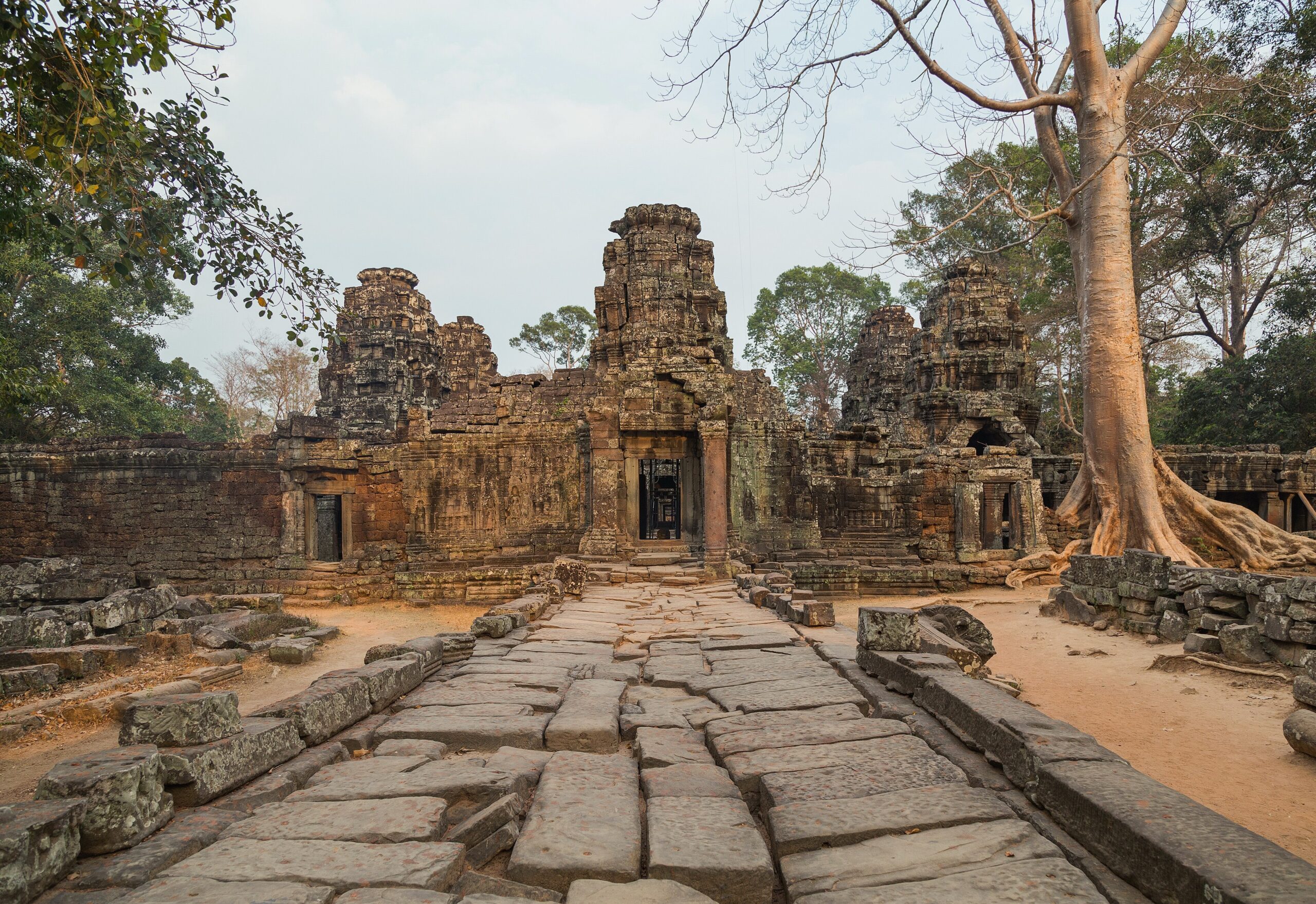
Banteay Kdei is a late 12th-century Buddhist monastery temple in the Angkor Archaeological Park, just south-east of Ta Prohm. Built by King Jayavarman VII in the Bayon style, it has carved face towers, galleries of dancing apsaras and trees growing through its stones. It sits opposite the royal pool of Srah Srang and sees far fewer visitors than Ta Prohm.
Late 12th centuryBuilt by Jayavarman VII
BuddhistA monastic complex
274Buried Buddha fragments found in 2001
45 to 60 minTime to allow
Angkor PassEntry included
The name Banteay Kdei is usually translated as “citadel of chambers” or “citadel of monks’ cells”. It suits a temple that feels like a warren of low corridors, doorways and courtyards. It is similar in plan to Ta Prohm and Preah Khan, but smaller and simpler. Much of it is still partly collapsed, which is exactly its appeal: you can wander at your own pace through quiet galleries where the only sound is birdsong.
History of Banteay Kdei
10th century
An earlier temple may have stood here. The royal pool of Srah Srang opposite is dug in this period.
From about 1181
King Jayavarman VII begins Banteay Kdei as part of his great building programme, alongside Ta Prohm, Preah Khan and the Bayon. It is dedicated to Buddhism and serves as a monastery.
13th century
After Jayavarman VII’s death, a Hindu revival sees many Buddha images across Angkor defaced or removed.
2001
A team from Sophia University in Tokyo, working at the temple for a decade, uncovers a cache of fragments of 274 sandstone Buddha statues buried in the grounds. It is one of the most important finds at Angkor in modern times.
Today
The temple is partly ruined and under ongoing conservation. Some areas are shored up with timber and steel supports.
Built quickly and with lower-quality sandstone than earlier temples, Banteay Kdei has suffered more collapse than some of its neighbours. Several galleries have fallen, and the central sanctuary is partly propped up. The carvings that survive are superb, especially the devatas and apsaras set into the walls.
What to see
The entrance
Face-tower gopura
The eastern gateway is crowned by the four serene faces typical of the Bayon style, gazing out over the approach. Garuda figures decorate the corners.
Inner complex
The Hall of Dancers
A pillared hall with four small open courtyards, named for the rows of dancing apsaras carved on its pillars and walls. It is a lovely place to stop and look closely.
The carvings
Devatas and apsaras
Graceful female divinities stand in niches throughout the galleries. Look for the finely carved jewellery, headdresses and flowing skirts.
Nature
Trees and roots
Silk-cotton and strangler fig trees rise over the outer galleries, their roots spreading across the stones. It gives some of the Ta Prohm atmosphere without the crowds.
The centre
Central sanctuary
The inner sanctuary is a cluster of towers linked by galleries, partly collapsed and shored up. Its narrow corridors and doorways are the heart of the “citadel of chambers”.
Photography
Light and framing
Long corridors of doorways make natural frames. Early morning and late afternoon bring warm light through the galleries.
Srah Srang, across the road
Directly opposite the eastern entrance lies Srah Srang, the “royal bath”. This large rectangular reservoir dates from the 10th century and was later given an elegant sandstone landing stage by Jayavarman VII, guarded by lions and naga balustrades.
Srah Srang is one of the quieter places to watch sunrise at Angkor. The sun rises over the water, and locals sell coffee on the landing. A popular plan is sunrise at Srah Srang, then walk straight across the road into Banteay Kdei as it opens.
Tickets and opening hours
Ticket
Angkor Pass: 1 day $37, 3 days $62, 7 days $72. Buy at the official ticket office or online, not at the temple
Opening hours
Daily, reported as 7:30 am to 5:30 pm; confirm locally
Srah Srang sunrise
Open from early morning for sunrise; confirm locally
Time needed
45 minutes to an hour
Best time
Straight after sunrise at Srah Srang, or late afternoon
Dress code
Shoulders and knees covered
Access
Uneven stone floors, steps and low doorways; not step-free
How to get there
Banteay Kdei is on the Small Circuit, about 12 kilometres from central Siem Reap and a few minutes east of Ta Prohm. Most visitors arrive by tuk-tuk or private car as part of a day on the Small Circuit, which also takes in Angkor Wat, Angkor Thom and the Bayon.
The main entrance faces east, across from Srah Srang. If your driver drops you on the western side, you can walk through the temple and be collected on the other side, so agree the pick-up point first.
Tips for your visit
Our advice
Pair it with Srah Srang at sunrise. It is quieter than Angkor Wat, and you can walk straight into Banteay Kdei afterwards.
Visit after Ta Prohm, not before. Ta Prohm fills up fast, so go there first and let Banteay Kdei be your quiet reward.
Watch your head and step. Doorways are low and the floors are uneven, with fallen blocks in places.
Respect the barriers. Parts of the temple are unstable and propped up; stay out of roped-off areas.
Our private Angkor days are timed around the light and the crowds, with a licensed local guide who knows the quiet corners. Banteay Kdei fits naturally into our Siem Reap slow travel journey and our Cambodia classic highlights tour, and we can add a sunrise at Srah Srang to any trip.
Questions travellers ask
What is Banteay Kdei?
Banteay Kdei is a Buddhist monastery temple built by King Jayavarman VII in the late 12th century, in the Bayon style. It stands in the Angkor Archaeological Park near Ta Prohm, opposite the Srah Srang reservoir.
What does Banteay Kdei mean?
The name is usually translated as 'citadel of chambers' or 'citadel of monks' cells', a reference to its many small rooms and corridors.
Is Banteay Kdei included in the Angkor Pass?
Yes. Entry is covered by the Angkor Pass, which costs $37 for one day, $62 for three days and $72 for seven days.
What are the opening hours of Banteay Kdei?
It is reported as open daily from 7:30 am to 5:30 pm. Srah Srang, across the road, is open earlier for sunrise. Confirm current hours locally.
How long do you need at Banteay Kdei?
45 minutes to an hour is enough for most visitors; photographers may want longer.
Is Banteay Kdei worth visiting?
Yes, especially if you want the jungle-temple feel of Ta Prohm with far fewer people. Its apsara carvings and Hall of Dancers are highlights.
What is Srah Srang?
Srah Srang is a 10th-century royal reservoir directly opposite Banteay Kdei, with a sandstone landing stage added by Jayavarman VII. It is a quiet place to watch sunrise.
What was found at Banteay Kdei in 2001?
Archaeologists from Sophia University in Tokyo uncovered fragments of 274 sandstone Buddha statues buried in the temple grounds, one of the most significant modern finds at Angkor.
How do I get to Banteay Kdei?
It is on the Small Circuit, about 12 km from central Siem Reap. Most people visit by tuk-tuk or private car along with Ta Prohm and Angkor Thom.
What should I wear to Banteay Kdei?
Cover your shoulders and knees, and wear comfortable shoes for uneven stone floors.
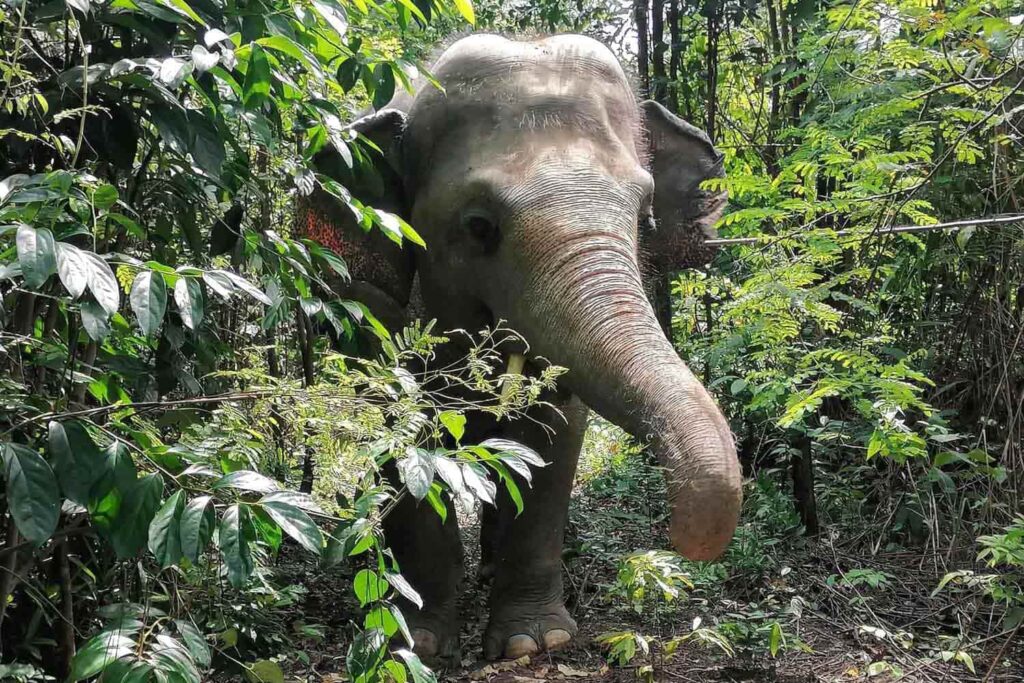
Cambodia Wildlife Sanctuary is an elephant rescue and forest conservation project about 100 km north of Siem Reap, developed with the Save Elephant Foundation. It protects…
Where
About 100 km north of Siem Reap, on the edge of Kulen Promtep Wildlife Sanctuary