Photographers, and anyone who wants to see the jungle holding the stone
Temples and ruinsType
In short
Ta Prohm is a Buddhist temple and monastery at Angkor, founded in 1186 by King Jayavarman VII in honour of his mother. It was deliberately left largely unrestored, so huge silk-cotton and strangler fig trees still grow out of its galleries, and it is known as the Tomb Raider temple after the 2001 film. Entry is covered by the Angkor Pass and most visitors spend about an hour.
East of Angkor Thom on the small circuit, Angkor Archaeological Park, Siem Reap
Built
Founded 1186 by King Jayavarman VII as Rajavihara, the royal monastery
Dedicated to
The king's mother, as Prajnaparamita, goddess of wisdom
Ticket
Covered by the Angkor Pass ($37 for 1 day, $62 for 3 days, $72 for 7 days)
Opening hours
Daily, reported as 6:00 am to 6:30 pm; confirm locally
Time needed
About an hour, or 90 minutes for photographers
Best time
Opening time, before the tour groups, or late afternoon
Dress code
Shoulders and knees covered
Access
Walkways, uneven stone and some steps; not step-free
Film fame
Location for Lara Croft: Tomb Raider (2001)
Ta Prohm is the jungle temple of Angkor, a 12th-century Buddhist monastery where giant silk-cotton and strangler fig trees still grow out of the galleries. It was deliberately left much as the French found it, and walking through its half-collapsed corridors is the closest Angkor comes to the feeling of discovery.
1186Year of foundation
Jayavarman VIIThe king who built it
12,500People who lived and worked here
1 km by 650 mSize of the outer wall
About 1 hourTime most people spend
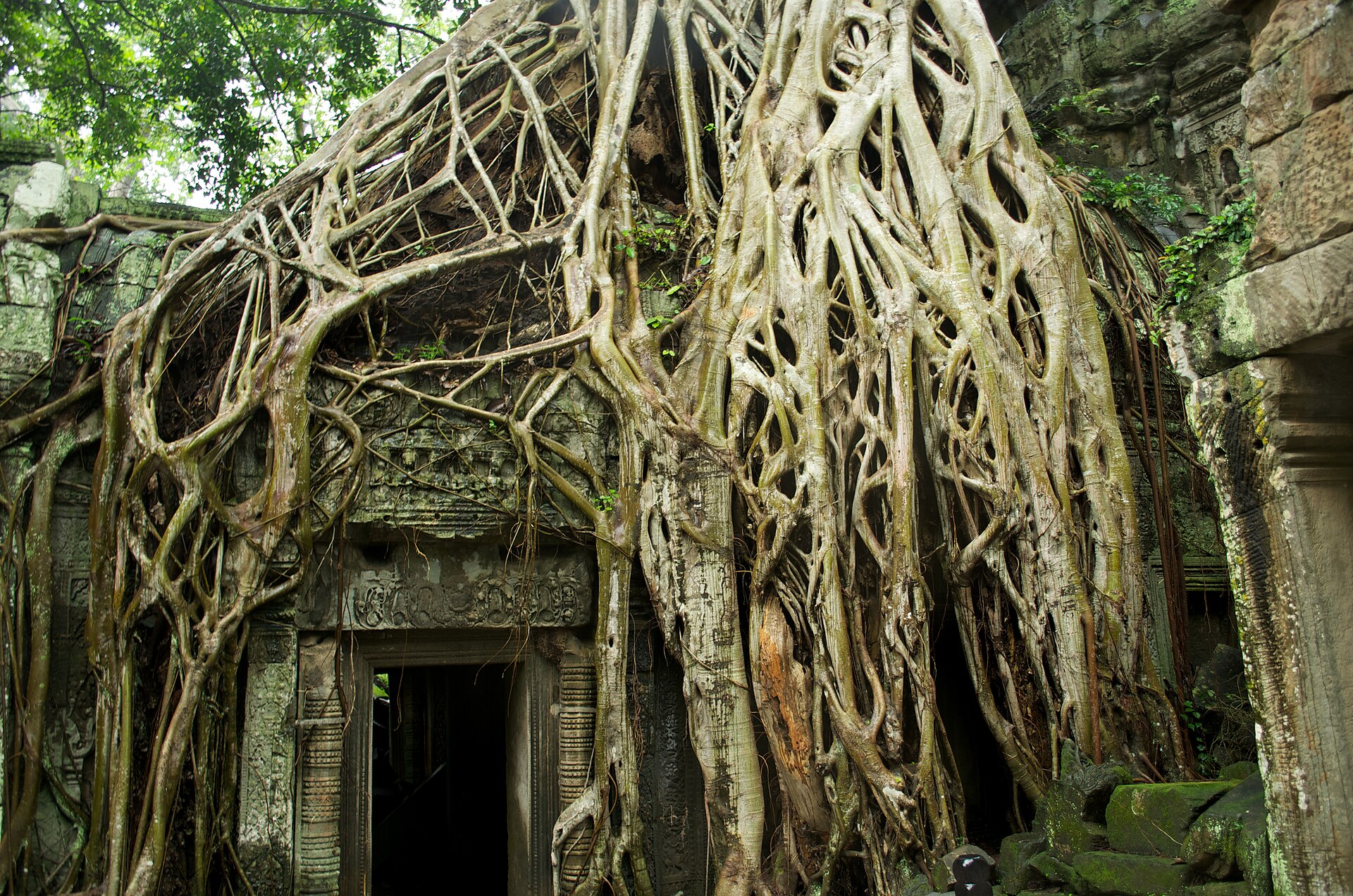
Most of Angkor has been cleared, rebuilt and tidied over the last century. Ta Prohm is the exception. Here the roots still pour over walls like wax from a candle, stones lie where they fell and the light comes green through the canopy. It is the temple that people remember from photographs before they ever arrive.
History of Ta Prohm
1186
King Jayavarman VII founds the temple as Rajavihara, the “royal monastery”. Its main image is Prajnaparamita, the Buddhist goddess of wisdom, carved in the likeness of the king’s mother.
Late 12th century
Ta Prohm becomes a great Mahayana Buddhist monastery and centre of learning. Its foundation stele records about 12,500 people living and working here, including 18 high priests and 615 dancers, supported by tens of thousands more in surrounding villages.
13th century onwards
After Jayavarman VII’s death, Buddhist images are defaced under later Hindu kings. Over the following centuries the monastery is abandoned and the forest moves in.
Early 20th century
The École française d’Extrême-Orient decides to leave Ta Prohm largely as it is found, clearing only enough to allow access, as an example of how the temples looked when the forest held them.
2001
Scenes of the film Lara Croft: Tomb Raider are shot here, and the “Tomb Raider temple” nickname sticks.
2000s to 2013
The Archaeological Survey of India, working with the APSARA National Authority, stabilises the most fragile structures, rebuilding collapsed sections and adding walkways.
November 2022
Restoration of the Hall of Dancers, one of the temple’s most complex buildings, is completed.
The trees and why they were left
Two kinds of tree dominate Ta Prohm. The tall, pale giants with buttress roots that drape over the gallery roofs are usually identified as silk-cotton trees or Tetrameles nudiflora, known locally as spung. The smaller trees whose roots grip the stone in a tight net are strangler figs.
The trees are both the charm and the problem. Their roots have pushed walls apart and brought galleries down, yet in many places they now hold the stones together. Cutting them out would bring down the very walls they wrap. Conservation teams monitor the largest trees, prop up the weakest walls and prune carefully, trying to keep the balance between ruin and forest.
Our advice
Look up as well as through doorways. The most dramatic roots are often above your head, spilling from the gallery roofs.
Bring a wide lens or a phone with a wide setting. The courtyards are tight and the trees are enormous.
Be patient at the famous trees. Queues form at the best-known roots from mid-morning. A few minutes’ wait usually gives you a clear frame.
What to see
The icon
The Tomb Raider tree
A spung tree whose roots cascade down over a doorway in the inner enclosure. It is the most photographed spot in the temple and is signposted for good reason.
Hidden face
The Buddha in the roots
A small carved face peers out from between the roots of a tree, almost swallowed by the wood. Ask your guide to show you, as it is easy to walk past.
Restored
The Hall of Dancers
A pillared hall near the east side, carved with dancing apsaras. Its restoration was completed in 2022 and it shows how the monastery looked in its prime.
Curiosity
The “stegosaurus”
A small round carving on a doorway pillar that looks, to modern eyes, like a dinosaur with plates on its back. Most scholars read it as a rhinoceros or boar against a leafy background.
Details
Devatas and false doors
Graceful female guardians and finely carved false doors line the inner galleries, many softened by moss and lichen.
Atmosphere
The collapsed courtyards
Heaps of carved blocks lie where they fell. Walk slowly and you will find lintels, pediments and apsaras among the rubble.
Tickets and opening hours
Ticket
Covered by the Angkor Pass: 1 day $37, 3 days $62, 7 days $72
Where to buy
Angkor ticket office on Road 60, or online through Angkor Enterprise
Children
Under 12 free; bring a passport as proof of age
Opening hours
Daily, reported as 6:00 am to 6:30 pm; confirm locally
Time needed
About an hour, or 90 minutes if you love to photograph
Access
Wooden walkways, uneven stone and some steps; not step-free
Best time to visit
Ta Prohm is at its best early in the morning. Arrive at opening time and you will have the courtyards to yourself for a precious half hour, with soft light filtering through the trees. The tour groups usually arrive from about 8:30 to 9:00 am, straight after the sunrise at Angkor Wat and a visit to the Bayon.
Late afternoon is the second choice, when the groups have moved to sunset points. The canopy keeps Ta Prohm cooler than the open temples, which makes it a good choice in the hot months of March to May. In the green season from June to October the moss is vivid and the stone darkens after rain, which many photographers prefer.
A route through the temple
Tuk-tuks usually drop visitors at the west entrance and collect them at the east, so you walk the temple in a single line. A simple plan:
0 to 10 minutes Walk the forest path from the west gate, past the outer wall with its face tower
10 to 30 minutes Enter the central enclosures and find the Tomb Raider tree and the Buddha in the roots
30 to 45 minutes Explore the collapsed courtyards and inner galleries at your own pace
45 to 60 minutes Head east through the Hall of Dancers and out along the eastern causeway to meet your driver
Etiquette and tips
Please do
Stay on the wooden walkways and marked paths
Cover your shoulders and knees, as at every Angkor temple
Wear shoes with grip; the stone can be slippery after rain
Carry insect repellent in the wet season
Please don’t
Climb on the roots, walls or fallen blocks
Step over barriers for a better photo; they protect unstable stone
Touch the carvings or lean on the trees
Fly a drone without a permit
Watch the barriers. Several areas are roped off because walls are propped up or at risk of collapse. They look photogenic, but they are closed for your safety and to protect what is left.
How to get there
Ta Prohm is east of Angkor Thom on the “small circuit”, the classic loop that also takes in Angkor Wat, the Bayon and Ta Keo. From central Siem Reap it is about 20 to 30 minutes by tuk-tuk. Most visitors fit it into a first day at Angkor, and it pairs naturally with Banteay Kdei and the royal pool of Srah Srang just to the south-east.
If Ta Prohm leaves you wanting more, Preah Khan offers the same trees and ruins on a bigger scale with far fewer visitors, and Beng Mealea is wilder still.
Visiting with My Travel Factory
We time our Angkor days so you reach Ta Prohm at the quiet ends of the day, with a Khmer guide who knows where the hidden carvings are and how the temple is being saved. It is part of our Cambodia Classic Highlights and our Siem Reap Green Journey, and we can add it to any Cambodia trip. Send us an enquiry and we will build your temple days around you.
Questions travellers ask
What is Ta Prohm?
Ta Prohm is a 12th-century Buddhist temple and monastery at Angkor, founded in 1186 by King Jayavarman VII. It is famous for the giant trees growing out of its ruins, which were left in place when the rest of Angkor was cleared.
Why is Ta Prohm called the Tomb Raider temple?
Scenes from the 2001 film Lara Croft: Tomb Raider, starring Angelina Jolie, were filmed here. The nickname has stuck with guides and visitors ever since.
Is Ta Prohm included in the Angkor Pass?
Yes. Ta Prohm is covered by the standard Angkor Pass, which costs $37 for one day, $62 for three days and $72 for seven days.
What time does Ta Prohm open?
The main Angkor temples, including Ta Prohm, are reported to open daily from 6:00 am to 6:30 pm. Hours can change, so confirm locally.
How long do you need at Ta Prohm?
About an hour is enough for most people. Keen photographers often stay 90 minutes.
What is the best time to visit Ta Prohm?
Early morning at opening time, before tour groups arrive, or late afternoon. The tree canopy also makes it one of the cooler temples in the heat of the day.
What trees grow at Ta Prohm?
The largest are silk-cotton trees, or Tetrameles nudiflora, with pale trunks and huge buttress roots. The smaller trees that grip the stone in a net of roots are strangler figs.
Why was Ta Prohm not restored?
French archaeologists in the early 20th century chose to leave it much as they found it, to show how the temples looked when the forest held them. Only the most fragile parts have since been stabilised.
Is there really a stegosaurus carving at Ta Prohm?
There is a small round carving that looks like a dinosaur with plates on its back. Most scholars think it shows a rhinoceros or boar against a leafy background.
Can you climb on the trees at Ta Prohm?
No. Stay on the walkways and behind the barriers. Climbing damages the roots and the stone, and some walls are unstable.
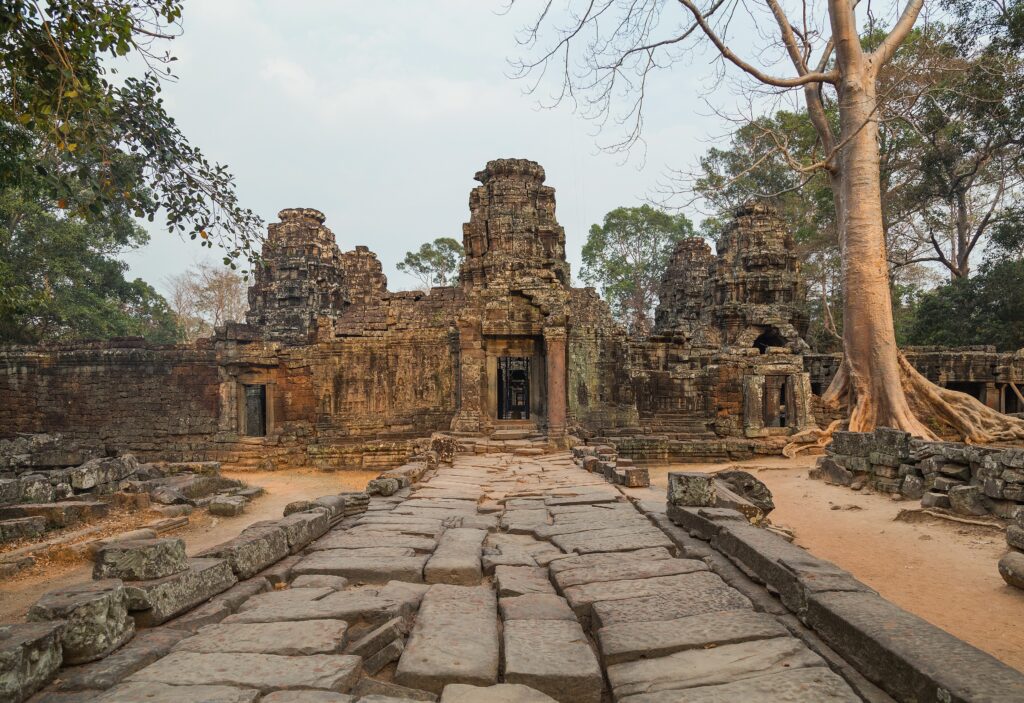
Banteay Kdei is a late 12th-century Buddhist monastery temple in the Angkor Archaeological Park, built by King Jayavarman VII in the Bayon style. It lies just…
Where
Small Circuit, Angkor Archaeological Park, just east of Ta Prohm
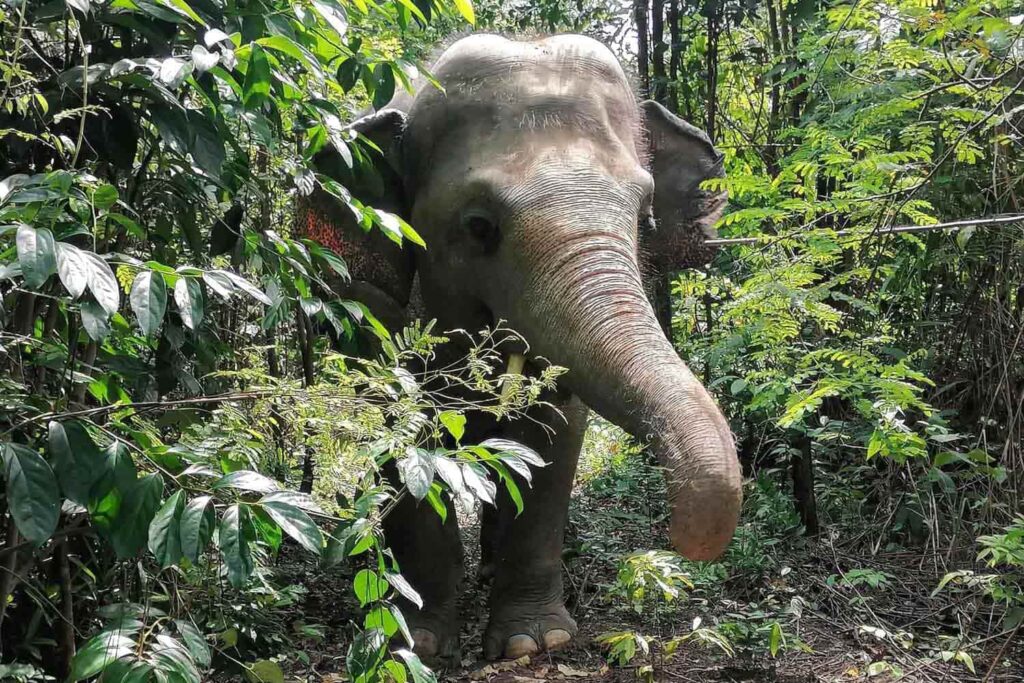
Cambodia Wildlife Sanctuary is an elephant rescue and forest conservation project about 100 km north of Siem Reap, developed with the Save Elephant Foundation. It protects…
Where
About 100 km north of Siem Reap, on the edge of Kulen Promtep Wildlife Sanctuary