Adventurous travellers who want a ruin that still looks like a ruin
Temples and ruinsType
In short
Beng Mealea is a large Hindu temple built in the early 12th century, probably under Suryavarman II, about 40 km east of the main Angkor group and 65 to 75 km by road from Siem Reap. It has been left almost entirely unrestored, with collapsed galleries, trees growing from its roofs and wooden walkways that let visitors cross the ruin. A standalone ticket costs $10, and several recent guides report the Angkor Pass is also accepted, so confirm locally.
About 40 km east of the main Angkor group; 65 to 75 km by road from Siem Reap
Built
Early 12th century, probably under Suryavarman II
Religion
Hindu, with some Buddhist carvings
Ticket
$10 standalone; recent guides report the Angkor Pass is also accepted; confirm locally
Opening hours
Daily from early morning to late afternoon; confirm locally
Drive time
About 1 hour 15 minutes to 1 hour 40 minutes by car from Siem Reap
Time needed
One to two hours on site
Best time
Early morning, before the day-trip groups
Access
Wooden walkways with steps; rough, unstable stone off the walkways
Combine with
Koh Ker or Phnom Kulen for a full day
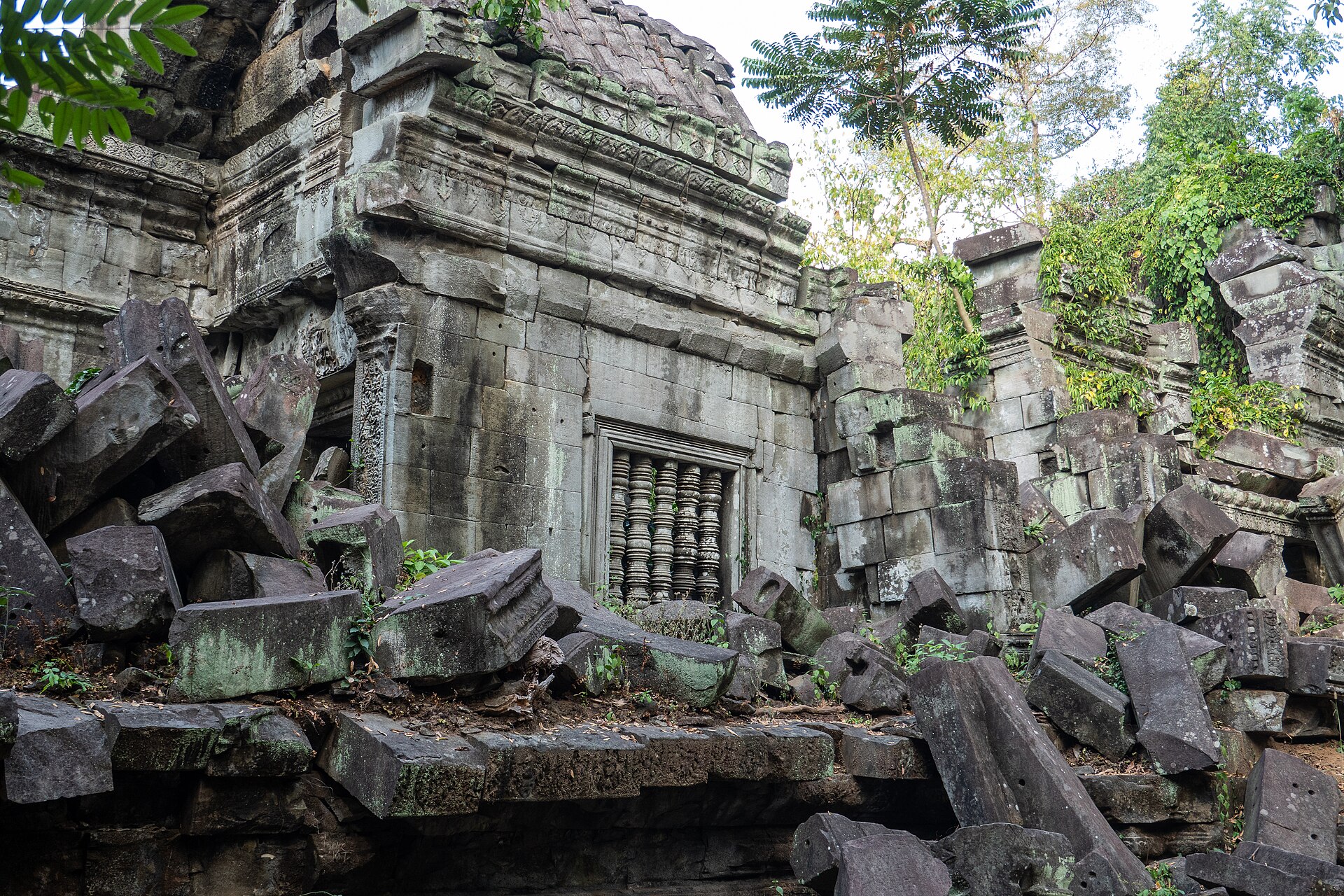
Beng Mealea is a vast 12th-century temple about 40 kilometres east of the main Angkor group, left almost entirely unrestored in the forest. Its galleries have collapsed into mountains of carved sandstone and trees grow from its roofs, so a visit to Beng Mealea feels like walking into an explorer’s sketchbook.
Early 12th centuryBuilt in the Angkor Wat era
40 kmEast of the main Angkor group
1 km by 875 mSize of its moat
UnrestoredLeft largely as it fell
1 to 2 hoursTime to allow on site
Where Ta Prohm was tidied just enough to walk through, Beng Mealea was barely touched. Whole galleries lie in heaps, doorways lead into rubble, and the forest has taken back its courtyards. Raised walkways let you cross the ruin safely, and a local guide can lead you over and under the stones for a closer look.
History of Beng Mealea
Early 12th century
Beng Mealea is built, almost certainly during the reign of Suryavarman II, the king who built Angkor Wat. No inscription has been found, so its date comes from its architecture and carving style.
12th century
It is a Hindu temple, though some carvings show Buddhist scenes. Its plan of three galleries around a central sanctuary, linked by cross-shaped cloisters, closely resembles Angkor Wat’s.
Angkor period
The temple stands on the ancient royal road running east from Angkor to Preah Khan of Kompong Svay, one of the great highways of the Khmer Empire.
Later centuries
Abandoned to the forest, the temple slowly falls apart. Trees split its walls and whole galleries collapse under their own weight.
Today
Beng Mealea has been made safe to visit with walkways and cleared paths, but it has been deliberately left as a ruin.
The name Beng Mealea means “lotus pond” in Khmer. The temple sits just 7 kilometres from the sandstone quarries of the Kulen hills, which may be one reason it was built on such a scale here.
What to see
The approach
The naga causeway
The walk in crosses the wide moat past naga serpent balustrades, the guardians found at the approaches of so many Khmer temples. It sets the scene for the ruin beyond.
The ruin
Mountains of stone
Inside, galleries lie in great heaps of carved blocks. Climbing the walkways over them gives you views across the collapsed roofs to the treetops.
Atmosphere
Trees on the roofs
Trees grow from the tops of the galleries and wind their roots down the walls, and moss covers much of the stone.
Details
Carved pediments and lintels
Look among the rubble and on the standing walls for pediments, lintels and devatas carved in the style of Angkor Wat, some with scenes from Hindu mythology.
Hidden corners
The dark corridors
Some galleries are still roofed and pitch dark inside. With a guide and a torch you can pass through them, stooping under fallen lintels.
Outside
The libraries and moat
Library buildings stand within the enclosures, and the 45 metre wide moat, now overgrown, shows how grand the setting once was.
How a visit works
Most visitors follow the main wooden walkway, which leads from the entrance through the heart of the temple and around the central area. It is the easiest and safest way to see the ruin, with good views down into the collapsed courtyards.
Local guides at the site offer to take visitors off the walkway, clambering over the stones and through dark passages. This is more adventurous and brings you closer to the carvings. Go only if you are sure-footed, wear proper shoes and stay with your guide.
0 to 15 minutes Walk in from the entrance and cross the moat to the outer gate
15 to 45 minutes Follow the main walkway into the temple and over the collapsed galleries
45 to 75 minutes Explore the central area and look for carvings among the fallen stones
75 to 90 minutes Return along the walkway, or walk around the outer wall to see the libraries
Our advice
Wear proper shoes. Trainers or walking sandals with a good grip, not flip-flops. The stone is uneven and slippery when wet.
Bring a torch. A phone light is enough for the dark corridors, but a small torch is better.
Arrive early. The day-trip groups from Siem Reap tend to arrive mid-morning. Early mornings are quiet and cool under the trees.
Tickets and opening hours
Standalone ticket
$10, sold near the site entrance
Angkor Pass
Several recent guides report that a valid Angkor Pass is also accepted; policy has changed before, so confirm locally
Opening hours
Daily from early morning to late afternoon; exact times vary between reports, so confirm locally
Time needed
One to two hours on site, plus the drive
Access
Walkways with steps; very uneven if you leave them; not step-free
Facilities
Car park, toilets, stalls and simple restaurants near the entrance
Best time to visit
Early morning is best. The forest keeps Beng Mealea cooler than the open temples, and before the day-trip groups arrive you may have whole sections to yourself. Late afternoon can be quiet too, but leave enough time for the drive back to Siem Reap before dark.
The dry season from November to April makes the stones easier to walk on. In the green season from June to October the ruin is at its most atmospheric, green and moss-covered, but the stone is slippery and the moat fills with water. Take extra care after rain.
Safety and etiquette
Please do
Cover your shoulders and knees, as at every temple
Stay on the walkways unless you are with a guide
Test each step on loose stones before you put your weight on it
Carry water and insect repellent
Please don’t
Climb on unstable heaps or under leaning walls
Take or move any stone, however small
Wander into the surrounding forest away from marked paths
Fly a drone without permission
Children and mobility. The main walkway is manageable for most families, with steps in places. Off-walkway scrambling is not suitable for young children or anyone unsteady on their feet.
How to get there
Beng Mealea is about 40 kilometres east of the main Angkor group as the crow flies, and roughly 65 to 75 kilometres from central Siem Reap by road. The drive takes about 1 hour 15 minutes to 1 hour 40 minutes by car on paved roads, passing villages and rice fields. A tuk-tuk can do it, but it is a long, dusty ride; a car with air conditioning is far more comfortable.
Most people visit on a day trip by private car or on a small-group tour. Plan to eat lunch at one of the local restaurants near the entrance.
Day trips with Koh Ker or Phnom Kulen
Beng Mealea sits on the way to two other great sites, which makes it easy to build a full day:
With Koh Ker: continue north to the 10th-century capital with its seven-tiered pyramid, now a UNESCO World Heritage Site. It is a long day, but a superb one. Koh Ker has its own ticket.
With Phnom Kulen: the sacred mountain with its waterfall, river carvings and reclining Buddha is close by. Kulen also has a separate entrance fee.
With a village stop: the road passes through rural Siem Reap province, and many travellers stop at a roadside palm-sugar stall or a local market.
Visiting with My Travel Factory
We take our guests to Beng Mealea early, in a comfortable private car with a guide who knows the safe routes through the ruin. It is part of our Hidden Temples Heartland and Northern Temple Trail dirt bike expedition journeys, often paired with Koh Ker. See our adventure experiences, or send us an enquiry and we will plan a day that suits your pace.
Questions travellers ask
What is Beng Mealea?
Beng Mealea is a large 12th-century Hindu temple east of Angkor, left almost entirely unrestored. Its collapsed galleries and forest setting make it one of the most atmospheric ruins in Cambodia.
How far is Beng Mealea from Siem Reap?
It is about 65 to 75 km by road from central Siem Reap, a drive of about 1 hour 15 minutes to 1 hour 40 minutes by car.
Is Beng Mealea included in the Angkor Pass?
Several recent guides report that the Angkor Pass is accepted, while a standalone ticket costs $10. The rules have changed before, so confirm locally when you book.
How much is the Beng Mealea entrance fee?
A standalone ticket costs $10 per person. Check locally whether your Angkor Pass is accepted instead.
How long do you need at Beng Mealea?
One to two hours on site is enough for most people. With the drive, allow half a day, or a full day if you add Koh Ker.
Who built Beng Mealea?
No inscription has been found, but its architecture points to the early 12th century, during the reign of Suryavarman II, who also built Angkor Wat.
Is Beng Mealea safe to visit?
Yes, if you stay on the walkways. Off the walkways the stone is loose and uneven, so only go with a guide and in proper shoes.
What does Beng Mealea mean?
Beng Mealea means lotus pond in Khmer.
Can you visit Beng Mealea and Koh Ker in one day?
Yes. It is a long day by private car from Siem Reap, but the two temples combine well. Koh Ker has its own ticket.
Is Beng Mealea worth visiting?
If you enjoy ruins and a sense of adventure, yes. It is the best place near Angkor to see a great temple as the forest left it.
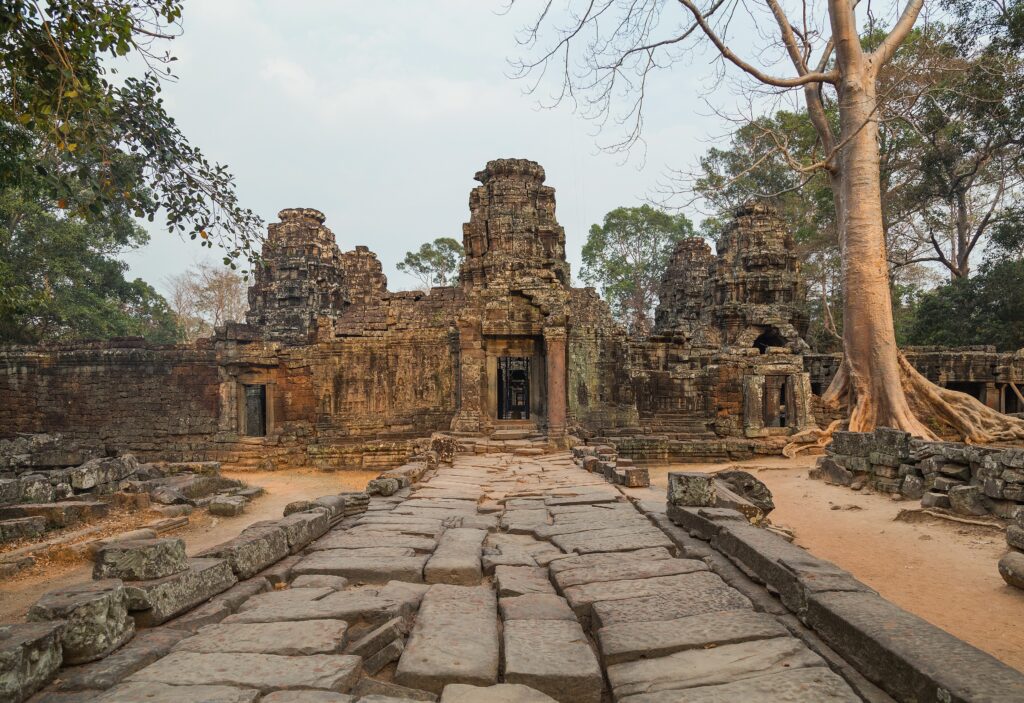
Banteay Kdei is a late 12th-century Buddhist monastery temple in the Angkor Archaeological Park, built by King Jayavarman VII in the Bayon style. It lies just…
Where
Small Circuit, Angkor Archaeological Park, just east of Ta Prohm
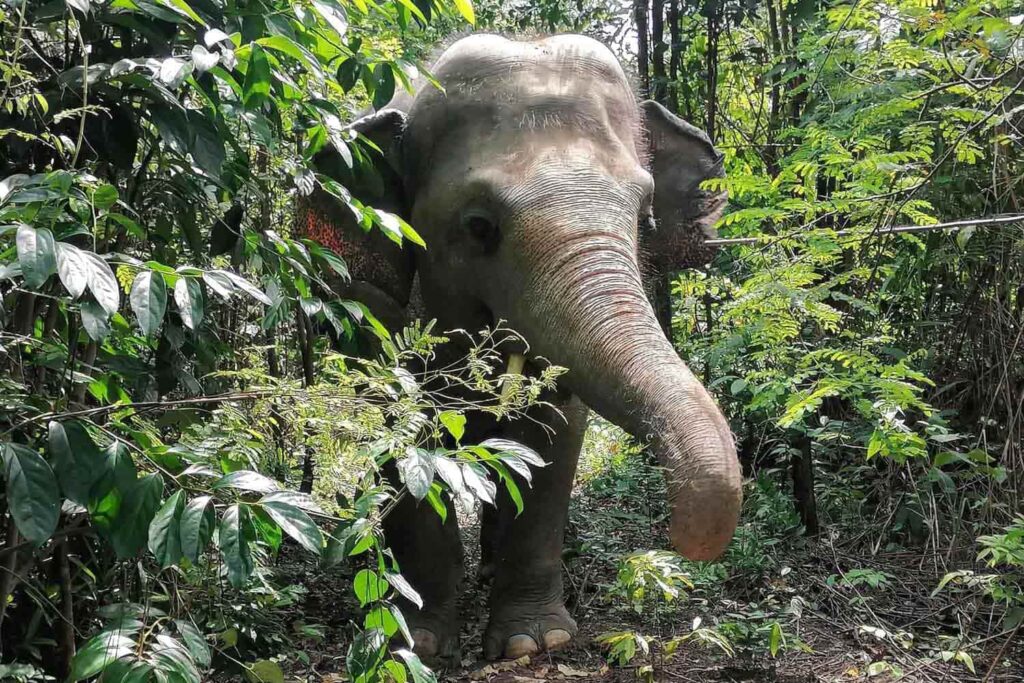
Cambodia Wildlife Sanctuary is an elephant rescue and forest conservation project about 100 km north of Siem Reap, developed with the Save Elephant Foundation. It protects…
Where
About 100 km north of Siem Reap, on the edge of Kulen Promtep Wildlife Sanctuary