A half-day countryside escape from Phnom Penh, ideally on a bicycle
Rivers, lakes and beachesType
In short
Koh Dach, known as Silk Island, is a rural island in the Mekong roughly 15 km north-east of central Phnom Penh, famous for families who hand-weave silk on wooden looms beneath their stilt houses. It is reached by tuk-tuk and a short vehicle ferry in 45 to 60 minutes, and a half day is enough to cycle the island, watch the weavers and visit village pagodas.
Mekong island north-east of Phnom Penh, Chroy Changvar district
Distance
Roughly 15 km from central Phnom Penh
Travel time
45 to 60 minutes by tuk-tuk, including the ferry
Getting across
Small vehicle ferry for people, bikes and tuk-tuks
Entry
Free
Time needed
Half a day
Best way round
By bicycle; the island is flat and the lanes are quiet
What to see
Silk weaving households, village pagodas, dry-season sandbanks
Best time
Morning, in the dry season from about November to April
Bring
Cash in small notes, water and sun protection
Silk Island, or Koh Dach, is a long, flat island in the Mekong just north-east of Phnom Penh, where families still weave silk on wooden looms beneath their stilt houses. A short ferry ride from the city, it offers quiet lanes, village temples, riverside huts and the easiest countryside escape from the capital.
15 kmFrom central Phnom Penh, roughly
45 to 60 minDoor to door by tuk-tuk
Half dayTime to allow
MekongReached by a short ferry
It is only an hour from the traffic of Phnom Penh, but it feels like another world. Children cycle home from school, cows graze under palm trees, and the clack of looms drifts out from under the houses. It is the best place near the capital to see rural Cambodian life at an easy pace.
About Koh Dach
Koh Dach is one of several islands in the Mekong where it flows past Phnom Penh. It is long and narrow, with a single main road running up its length, lined with wooden houses, fruit orchards, vegetable plots and pagodas. The island belongs to Phnom Penh’s Chroy Changvar district, but it is thoroughly rural.
Its English nickname comes from the silk weaving that many households have practised for generations. A neighbouring island, Koh Oknha Tei, reached by an old bridge, has more weaving villages and is often included in the same visit.
Life here follows the river. In the wet season the Mekong rises high around the island; in the dry season it drops to reveal sandbanks and small beaches along the shore.
The silk weavers
Weaving is done at home, usually by women, on large wooden looms set up in the shade beneath raised houses. Most families combine it with farming and other work, so the loom is part of daily life rather than a factory.
Step one
Preparing the thread
Silk thread is dyed, wound onto spools and set up on the loom. Preparing the warp for a single sampot, the traditional wrap skirt, can involve around 2,500 threads and take two or three people about a fortnight.
Step two
At the loom
The weaver works the pedals and shuttle by hand, building up the pattern row by row. Intricate designs are slow, and a weaver may finish only a few sampot a year alongside her other work.
The patterns
Colour and design
Look for rich purples, reds and golds and traditional motifs. Many pieces are made for weddings and ceremonies, the busiest time for weavers.
To take home
Buying direct
Scarves, krama, sampot lengths and small silk items are sold from the houses and small shops. Buying here puts money straight into the weavers’ hands.
Most weaving households are happy to let visitors watch for a few minutes, especially if you come with a guide who can introduce you. There is no charge to look, but it is polite to consider buying something or to leave a small tip.
Weaving on the island has declined as younger people move to factory and city jobs, and not every loom you pass will be in use. Visiting, and buying, helps keep the craft going.
What to see and do
Cycle the island. The main road is flat and mostly quiet, and cycling is the best way to see the villages. Bicycles can sometimes be hired on the island, or come on a guided cycling tour.
Watch the weavers. Stop at a few households to see different stages of the process, from spinning and dyeing to weaving.
Visit the pagodas. Several village wats line the road, with colourful murals and, at one, a large golden reclining Buddha. Monks are often happy to say hello.
Relax on the river. In the dry season, simple bamboo huts are set up on the sandbanks at the island’s edge. Rent one for a small fee, or use it free when you buy lunch.
Eat local fruit. The island’s orchards grow mangoes, bananas and other fruit. Roadside stalls sell whatever is in season.
Koh Dach is not a place for big sights. Its charm is in slowing down: a cold coconut in the shade, a conversation with a weaver, the view across the Mekong to the city skyline.
How to get there
From central Phnom Penh, head north across the Chroy Changvar bridge and along the east bank of the Mekong to the ferry landing. A small vehicle ferry carries people, bicycles, motorbikes and tuk-tuks across to the island in a few minutes.
Distance
Roughly 15 km from central Phnom Penh
Travel time
45 to 60 minutes by tuk-tuk, depending on traffic
Tuk-tuk
Agree a price for a half-day return trip before you set off
Ferry
A small fare per person, with extra for vehicles; confirm locally
By boat
Some river cruises from the Phnom Penh riverside stop at the island
By bicycle
Possible from the city for keen cyclists, though the first stretch is busy
Entry
Free; small fees for beach huts and bicycle hire
Your tuk-tuk can cross on the ferry with you and wait while you explore, or you can cycle and meet it later. Ferries run from morning until the evening; check the time of the last crossing on the day.
Best time to visit
Go in the morning or late afternoon, when it is cooler and the light is soft. The weavers are usually at work from mid-morning, and midday is hot for cycling.
The dry season, roughly November to April, is the most comfortable, and it is when the sandbank beaches appear. In the wet season the island is greener and the river runs high, but some lanes can be muddy after heavy rain.
Tips and etiquette
Our advice
Bring cash in small notes. There are few, if any, card payments or ATMs on the island.
Pack sun protection and water. There is limited shade on the road between villages.
Buy silk carefully. Genuine hand-woven silk is not cheap. If a price seems too low, it may be a blend or machine-made.
Take a guide if you can. A Khmer-speaking guide opens doors to weaving households and can translate your questions.
Please do
Ask before photographing people and inside homes
Cover your shoulders and knees at the pagodas
Greet people with a smile and a “sua s’dei”
Buy directly from the weavers where you can
Please don’t
Walk into homes or under houses without being invited
Hand out sweets or money to children
Ride fast through villages; there are children and animals on the road
Leave litter on the sandbanks
A suggested half day
8:00 am Leave central Phnom Penh by tuk-tuk
8:45 am Cross by ferry to Koh Dach
9:00 am Cycle or ride along the island, stopping at weaving households and a pagoda
11:00 am Coconut or lunch in a riverside hut
12:30 pm Ferry back and return to the city
In the afternoon you could visit the Royal Palace or the National Museum. If textiles have caught your interest, the silk stalls at the Russian Market make an interesting comparison.
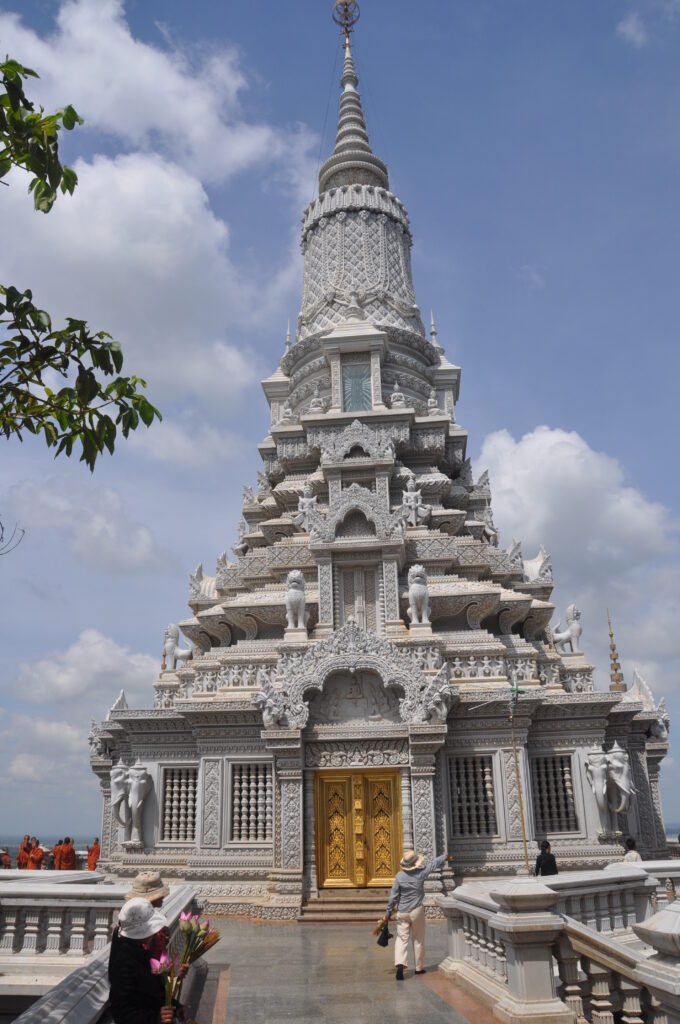
Make a day of it by combining Koh Dach with Oudong Mountain, Cambodia’s former royal capital, about 40 km north-west of Phnom Penh.
Visiting with My Travel Factory
We run relaxed half-day trips to Koh Dach by bicycle or tuk-tuk, with a local guide who knows the weaving families. It is a highlight of our Phnom Penh & Angkor Discovery journey, and you can find more rural and river days among our village experiences and river experiences. Tell us your pace and we will plan it around you.
Questions travellers ask
How do I get to Koh Dach from Phnom Penh?
Take a tuk-tuk north across the Chroy Changvar bridge and along the Mekong to the ferry landing, then cross on the small vehicle ferry. It takes 45 to 60 minutes in total.
Is there a bridge to Silk Island?
The island is reached by a short ferry crossing. Your tuk-tuk, bicycle or motorbike can cross with you.
How much does the Koh Dach ferry cost?
A small fare per person, with extra for bicycles, motorbikes and tuk-tuks. Fares change, so confirm locally, and carry small riel notes.
Why is Koh Dach called Silk Island?
Many families on the island have woven silk for generations, working on wooden looms under their stilt houses.
Can you buy silk on Koh Dach?
Yes. Weaving households and small shops sell scarves, krama and sampot lengths, and buying direct supports the weavers.
Is Koh Dach good for cycling?
Yes. It is flat, mostly quiet and one of the best easy bike rides near Phnom Penh. Bicycles can sometimes be hired on the island, or join a guided ride.
How long should I spend on Silk Island?
A half day is ideal. Allow more if you want to relax at a riverside hut or cycle both Koh Dach and neighbouring Koh Oknha Tei.
Is Koh Dach worth visiting?
Yes, if you want a glimpse of rural Cambodian life and traditional silk weaving without a long journey from the capital.
When is the best time to visit Koh Dach?
Mornings are cooler and good for seeing the weavers at work. The dry season, roughly November to April, brings the sandbank beaches.
Are there beaches on Koh Dach?
In the dry season, sandbanks appear along the river with simple bamboo huts to rent. In the wet season the river rises and covers most of them.
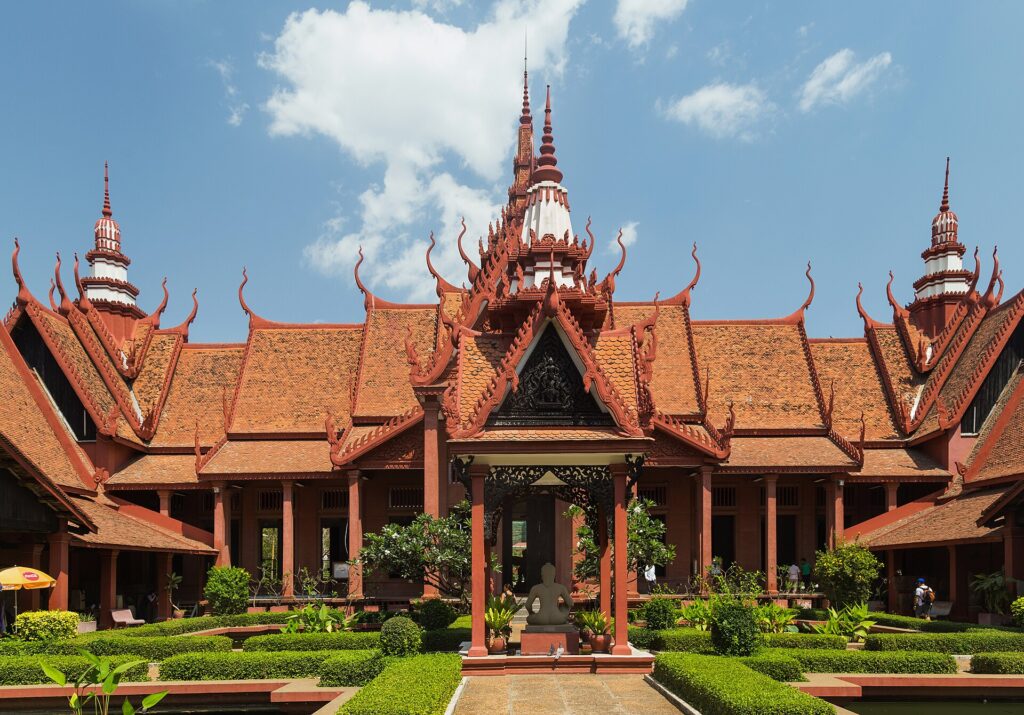
The National Museum of Cambodia in Phnom Penh holds the world's largest collection of Khmer art, more than 14,000 objects from prehistory to the post-Angkor period.…
Where
Corner of Street 13 and Street 178, beside the Royal Palace, Phnom Penh
Opened
13 April 1920, designed by George Groslier
Read more
Free, no-obligation enquiry
Tell us about your trip
Enquiry received
Thank you — a local specialist will be in touch within 24 hours.