Seeing Angkor's finest sculpture before you visit the temples
MuseumsType
In short
The National Museum of Cambodia in Phnom Penh holds the world's largest collection of Khmer art, more than 14,000 objects from prehistory to the post-Angkor period. Opened in 1920 in a red, temple-style building designed by George Groslier, it stands beside the Royal Palace and is open daily from 8 am to 5 pm, with a $10 ticket for foreign adults.
Corner of Street 13 and Street 178, beside the Royal Palace, Phnom Penh
Opened
13 April 1920, designed by George Groslier
Collection
More than 14,000 objects, from prehistory to the post-Angkor period
Opening hours
Daily, 8:00 am to 5:00 pm (last tickets 4:30 pm)
Tickets
$10 foreign adults, $5 aged 10 to 17, free for children
Time needed
90 minutes to two hours
Photography
Not allowed in the galleries; fine in the courtyard
Must-see
West Mebon bronze Vishnu, Jayavarman VII, the Leper King
Pair with
The Royal Palace and Silver Pagoda, five minutes' walk
Best time
Early morning or late afternoon, as the galleries are not air conditioned
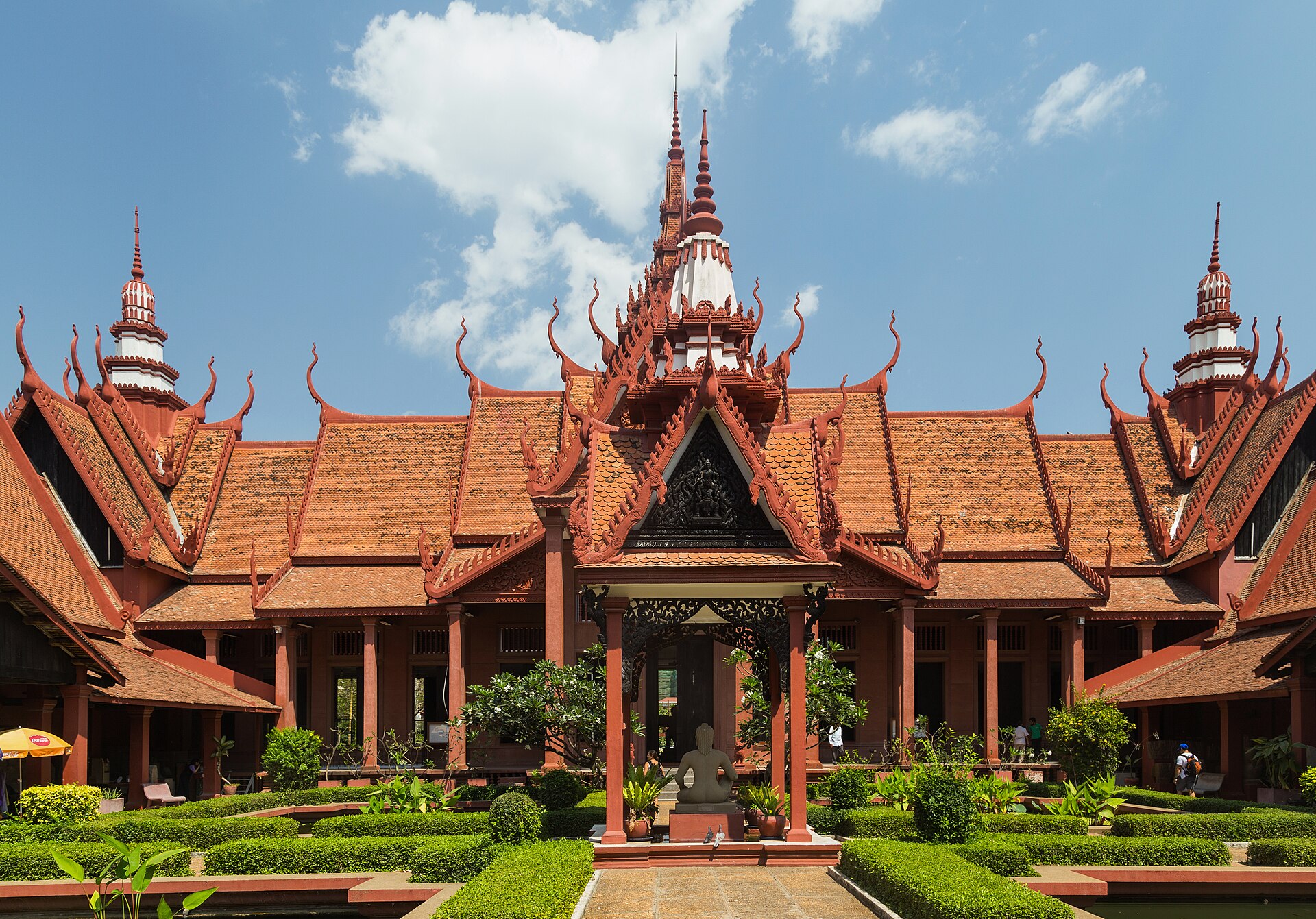
The National Museum of Cambodia in Phnom Penh holds the world’s finest collection of Khmer sculpture, from pre-Angkorian gods to the serene face of Jayavarman VII. It sits in a terracotta-red pavilion beside the Royal Palace, built around a garden courtyard that is one of the calmest corners of the capital.
1920Inaugurated at Khmer New Year
14,000+Objects in the collection
$10Foreign adult ticket
8 am to 5 pmOpen every day
90 min to 2 hrsTime to allow
If you are travelling on to Angkor, come here first. Many of the temples you will walk through in Siem Reap are missing their statues, and a good number of the originals are in these galleries. Seeing them up close, at eye level and in good light, changes how the empty niches and headless pedestals read later on.
History of the museum
The museum was the project of George Groslier, a French historian, painter and curator who was born in Phnom Penh and spent much of his life studying Khmer art. He designed the building himself, drawing on the temple pavilions shown in ancient bas-reliefs, and he also founded the School of Cambodian Arts to keep traditional crafts alive.
15 August 1917
The foundation stone is laid on a site just north of the Royal Palace.
13 April 1920
The museum is inaugurated during Khmer New Year in the presence of King Sisowath. It is later named the Musée Albert Sarraut, after a Governor-General of French Indochina.
1924
Extensions are added, giving the building the four wings around a central courtyard that you see today.
1951
Management passes from the French to Cambodian authorities.
1975 to 1979
Under the Khmer Rouge the museum is closed and abandoned. Many of its staff die during the regime.
13 April 1979
It reopens, in poor condition, with a damaged roof and the collection in disarray.
1990s to 2000s
Restoration, conservation training and the removal of a huge bat colony from the roof space bring the museum back to international standard.
2020s
A series of statues looted during the civil war years is returned from collections abroad, and several now stand in the galleries once more.
Highlights of the collection
The collection runs to more than 14,000 objects, although only a fraction is on display at any time. The galleries are arranged broadly by period, so a slow loop takes you from prehistoric pottery through the pre-Angkorian kingdoms, the height of Angkor and the centuries that followed. These are the pieces most worth your time.
Bronze
The West Mebon Vishnu
The head, shoulders and arms of a colossal bronze reclining Vishnu, found at the West Mebon temple in the West Baray at Angkor. It is the largest Angkorian bronze known, and even in fragments it dominates its room.
Pre-Angkorian
The eight-armed Vishnu
A towering sandstone Vishnu from Phnom Da in Takeo province, one of the masterpieces of early Khmer sculpture. It predates Angkor Wat by several centuries and shows how accomplished Khmer carvers already were.
Portrait
Jayavarman VII
A seated portrait of the king who built the Bayon, eyes lowered in meditation. It is one of the few Khmer sculptures thought to show a real person, and many visitors find it the most moving piece in the building.
Angkor Thom
The Leper King
The original statue from the Terrace of the Leper King at Angkor Thom. The figure at the site today is a copy, so this is where to see the real one.
Koh Ker
Sculpture from the 10th-century capital
Dynamic, larger-than-life figures from Koh Ker, including a goddess Uma. The style is more muscular and theatrical than anything at Angkor.
Later periods
Bronzes, ceramics and royal objects
Small bronzes, Khmer ceramics, wooden Buddhas from the post-Angkor centuries and ethnographic pieces, including a royal barge cabin and palanquins.
Photography is not allowed inside the galleries, which is no bad thing. With no one holding a phone up, the rooms feel quiet and people actually look at the sculpture.
The building and courtyard
The building is a highlight in its own right. Its four long wings, with tiered roofs, carved gables and deep verandas, wrap around a square courtyard laid out with lotus ponds, clipped hedges and frangipani. At the centre stands a small pavilion. The galleries open onto the courtyard, so you move between cool, shaded rooms and bright garden all the way round.
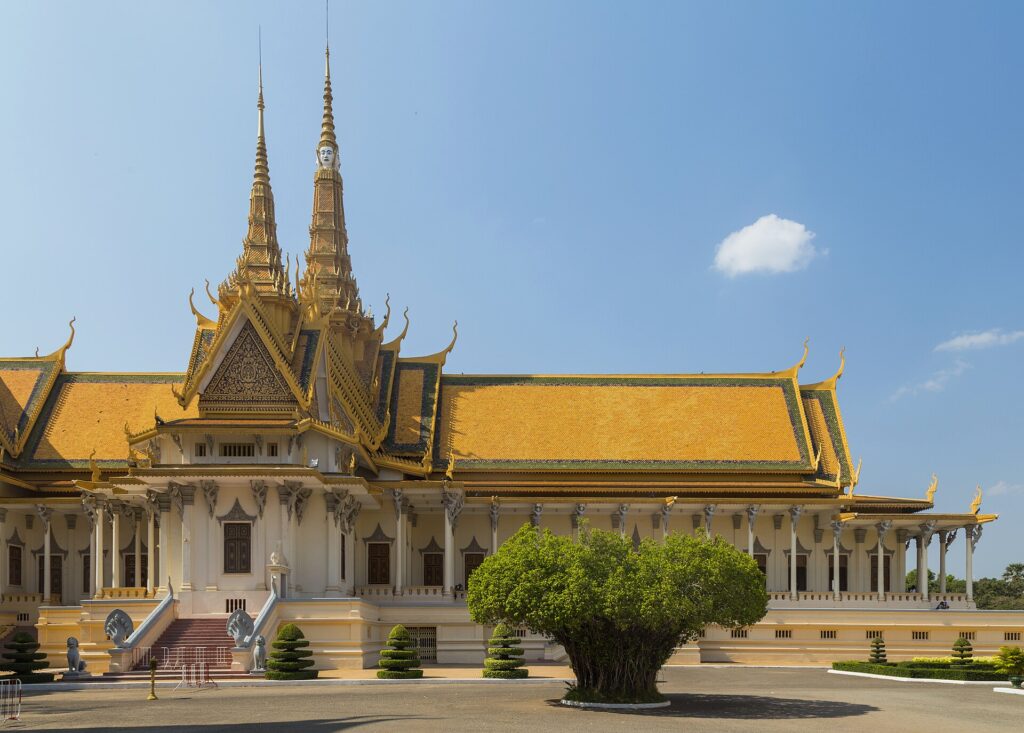
Groslier chose a deep red for the walls, now one of the most photographed colours in Phnom Penh. The best view of the whole facade is from the lawn on the east side, facing the Royal Palace, where the roofs line up one behind another. You are free to photograph the exterior and the courtyard.
In the evening, the grounds are sometimes used for performances. Cambodian Living Arts has staged classical dance and theatre here, so check their programme if you want to combine a show with your visit.
Opening hours and tickets
Opening hours
Every day, 8:00 am to 5:00 pm
Last tickets
4:30 pm
Foreign adults (18+)
$10
Foreigners aged 10 to 17
$5
Cambodian nationals
500 riel
Children and school groups
Free
Guided tours
Can be arranged in Khmer, English, French and Japanese
Photography
Not allowed in the galleries; allowed in the courtyard and outside
Facilities
Cloakroom for large bags, toilets and a museum shop at the entrance
Prices are as published by the museum. They change from time to time, so confirm at the ticket desk before you go.
Tips for your visit
Our advice
Go early or late. The galleries are naturally ventilated rather than air conditioned. The first hour after opening and the last hour before closing are the most comfortable.
Take a guide. The labels are brief. A knowledgeable guide can tell you which temple each piece came from, which gods you are looking at and how to tell one period from another.
Visit before Angkor. You will recognise the styles, gods and stories when you reach the temples, and the gaps where statues once stood will make sense.
Save the courtyard for last. The benches around the ponds are a good place to sit and take in what you have seen.
Use the cloakroom. Large bags are checked at the entrance, so travel light.
There is no formal dress code, but the museum is a place of national importance and many of the objects are still sacred to Cambodians. Clothing that covers your shoulders and knees also means you are ready for the Royal Palace next door, where it is enforced.
Please do
Leave large bags in the cloakroom
Keep your voice down in the galleries
Photograph the building and the courtyard freely
Please don’t
Take photos inside the galleries
Touch the sculpture or lean on the plinths
Smoke anywhere in the museum
How to get there
The museum stands at the corner of Street 13 and Street 178, just north of the Royal Palace and a few minutes’ walk from the riverside. From most central hotels it is a short tuk-tuk ride of 5 to 15 minutes, and PassApp and Grab both work well in Phnom Penh.
Street 178 alongside the museum is known for its art shops and galleries, and it makes a pleasant walk after your visit.
Nearby and what to pair it with
The museum fits neatly into a half day in the old heart of Phnom Penh. A classic morning looks like this:
8:00 am National Museum of Cambodia, 90 minutes to two hours
Late morning Royal Palace and Silver Pagoda, about 90 minutes
Lunch along the riverside, then on to Wat Phnom or the Central Market in the afternoon
If you are heading to Siem Reap, the Angkor National Museum makes a good companion visit. It is more modern and interpretive, while the National Museum has the older and deeper collection. Seeing both, with Angkor Wat in between, gives you the full story of Khmer art.
Visiting with My Travel Factory
On our private tours, a Khmer guide who knows the collection walks you through the galleries and connects each piece to the temples you will see later. The museum is part of our Phnom Penh & Angkor Discovery and Cradle of the Khmer journeys, and we can add it to any Cambodia itinerary. Tell us how you like to travel and we will shape the day around you.
Questions travellers ask
What are the National Museum of Cambodia opening hours?
It is open every day from 8:00 am to 5:00 pm. The last tickets are sold at 4:30 pm.
How much is the ticket to the National Museum of Cambodia?
Foreign adults pay $10 and foreigners aged 10 to 17 pay $5. Children and school groups enter free, and Cambodians pay 500 riel. Confirm prices at the desk, as they change from time to time.
Can you take photos inside the National Museum of Cambodia?
Not in the galleries. You are welcome to photograph the building's exterior and the courtyard garden.
How long do you need at the National Museum?
Allow 90 minutes to two hours. Keen art lovers and anyone with a guide can easily spend longer.
Should I visit the National Museum before or after Angkor?
Before, if you can. Seeing the sculpture first helps you read the temples, and many of the empty niches at Angkor once held pieces now in these galleries.
What is the most famous object in the museum?
The bronze reclining Vishnu from the West Mebon at Angkor is the best known. The seated portrait of Jayavarman VII and the eight-armed Vishnu from Phnom Da are close rivals.
Is the National Museum of Cambodia air conditioned?
No. The galleries are open to the courtyard and naturally ventilated, so the morning and late afternoon are the most comfortable times.
Is there a dress code?
There is no strict dress code, but modest clothing is respectful and means you can go straight on to the Royal Palace, where covered shoulders and knees are required.
Are guided tours available?
Yes. The museum can arrange guided tours in Khmer, English, French and Japanese, or you can come with your own licensed guide.
How far is the National Museum from the Royal Palace?
It is right next door, about five minutes on foot, so most people visit both on the same morning.