Kampot pepper farms are plantations in the countryside between Kampot and Kep in southern Cambodia, where Kampot pepper, the country's first Geographical Indication product (2010) and an EU PGI since 2016, is grown. Visitors walk through the pole-grown vines, learn how green, black, red and white pepper all come from the same plant, and finish with a tasting. Farms such as La Plantation offer free standard tours daily, and a visit takes 60 to 90 minutes.
Countryside between Kampot and Kep, southern Cambodia
Protected status
Geographical Indication 2010; EU PGI 2016
History
Recorded here since the 13th century
The four peppers
Green, black, red and white, all from the same plant
Time needed
60 to 90 minutes, or half a day with lunch
Example hours
La Plantation, daily 9:00 am to 6:00 pm, last visit 4:00 pm
Cost
Standard tours free at La Plantation; other farms vary
Harvest season
Roughly February to May; confirm locally
Best time of day
Morning or late afternoon
Pair with
Crab with green pepper at the Kep crab market
Kampot pepper farms grow one of the world’s most celebrated peppers on the red soils between Kampot and Kep in southern Cambodia. Kampot pepper was the first Cambodian product to win Geographical Indication status, and several farms welcome visitors for guided walks through the vines and tastings of green, black, red and white pepper. It is an easy, fascinating half day, and a delicious one.
13th centuryFirst recorded here
2010Cambodia’s first GI product
2016EU Protected Geographical Indication
4 coloursGreen, black, red, white, one plant
60 to 90 minA typical farm visit
Even if you think pepper is just pepper, a tasting here changes your mind. Fresh green pepper is floral and bright, red pepper is fruity and sweet, and good black pepper has real depth. Chefs around the world rate it among the best.
The story of Kampot pepper
Pepper has been grown in this corner of Cambodia for centuries. Its fortunes have followed the country’s history closely, from colonial boom to near extinction and back again.
13th century
The Chinese envoy Zhou Daguan records pepper growing in the region during his visit to the Angkorian kingdom.
From the 1870s
French colonial planters expand intensive cultivation. By the early 1900s Cambodia is producing about 8,000 tonnes a year, and Kampot pepper is prized in French kitchens.
1960s
About a million pepper poles still produce around 3,000 tonnes a year.
1970s to 1990s
Civil war and the Khmer Rouge destroy the plantations. By the 1990s, output has fallen to just a few tonnes a year.
2000s
Families return to their land and replant. A producers’ association (KPPA) forms to protect quality.
2010
Kampot pepper becomes the first Cambodian product to gain Geographical Indication status.
2016
The European Union grants Kampot pepper Protected Geographical Indication status.
One plant, four peppers
The biggest surprise for most visitors is that all four colours come from the same vine. The difference is simply when the berries are picked and how they are processed.
Picked young
Green pepper
Harvested before it ripens and eaten fresh on the stem, or preserved in brine. Fresh, aromatic and gently hot, it is the star of Kep’s famous crab dish.
The classic
Black pepper
Mature green berries are briefly heated and then sun-dried for a few days until dark and wrinkled. Strong, warm and complex.
Fully ripe
Red pepper
Left on the vine until bright red, then blanched and dried. Rarer and fruity, with a sweet, lingering heat. The one to take home.
Skin removed
White pepper
Ripe red berries are soaked and their skins removed by hand, leaving a pale, fiery and elegant pepper that suits fish and light sauces.
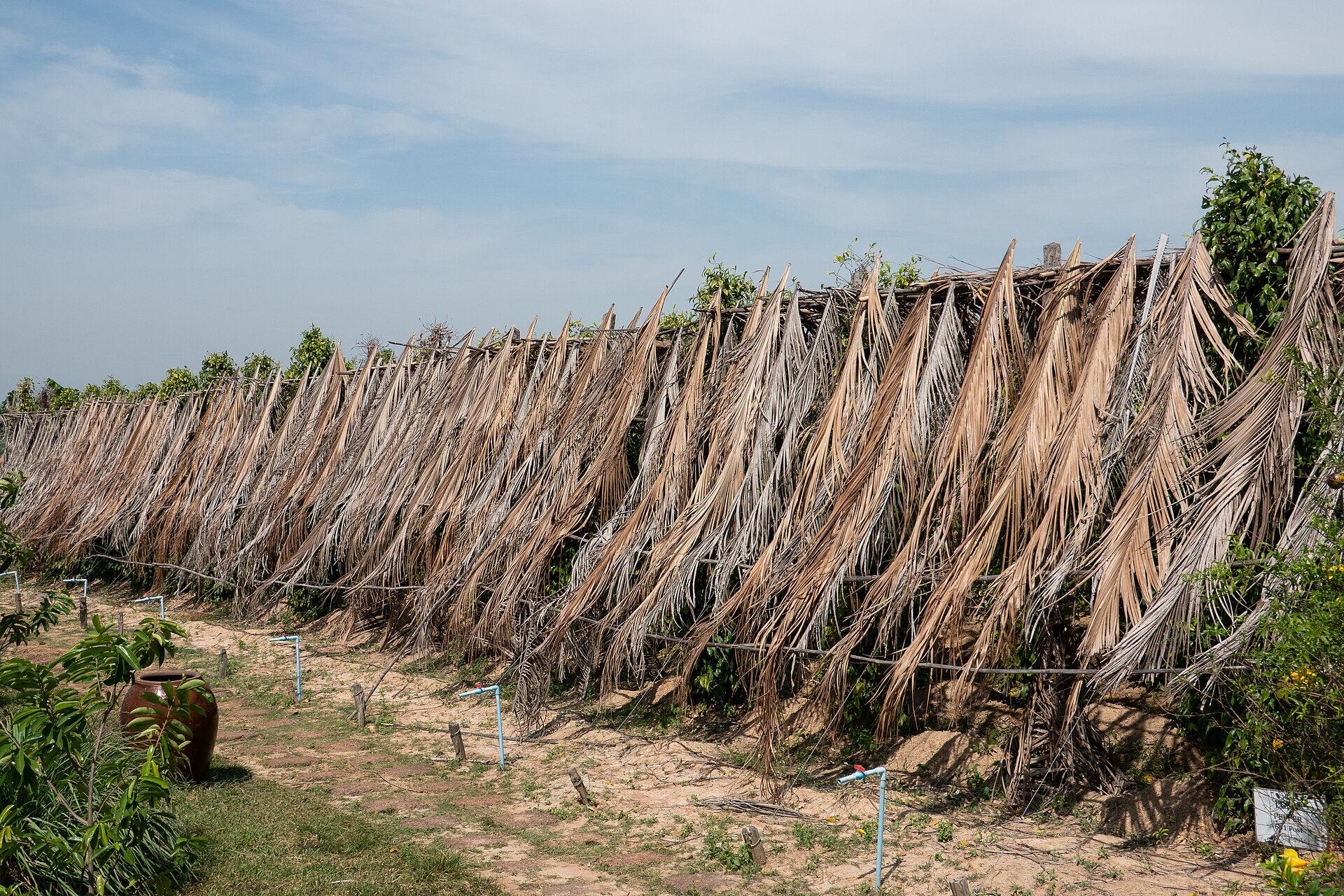
The vines are grown on tall poles and often shaded with dried palm fronds. Farms under the protected name must follow strict rules: hand harvesting and sorting, and organic inputs only. The quartz-rich soils, monsoon rain and sea breezes from the Gulf of Thailand all shape the flavour.
What a farm visit involves
A standard visit is relaxed and suitable for all ages. A guide walks you through the rows of vines, explains how the pepper is grown and processed, and shows you the drying and sorting areas.
Arrival Welcome and an introduction to the farm and the Kampot pepper story
15 to 30 minutes Walk through the plantation and see vines at different stages
10 to 20 minutes Drying, sorting and processing areas
15 to 20 minutes Tasting of green, black, red and white pepper, often with salts and local spices
Afterwards Shop, cafe or lunch, depending on the farm
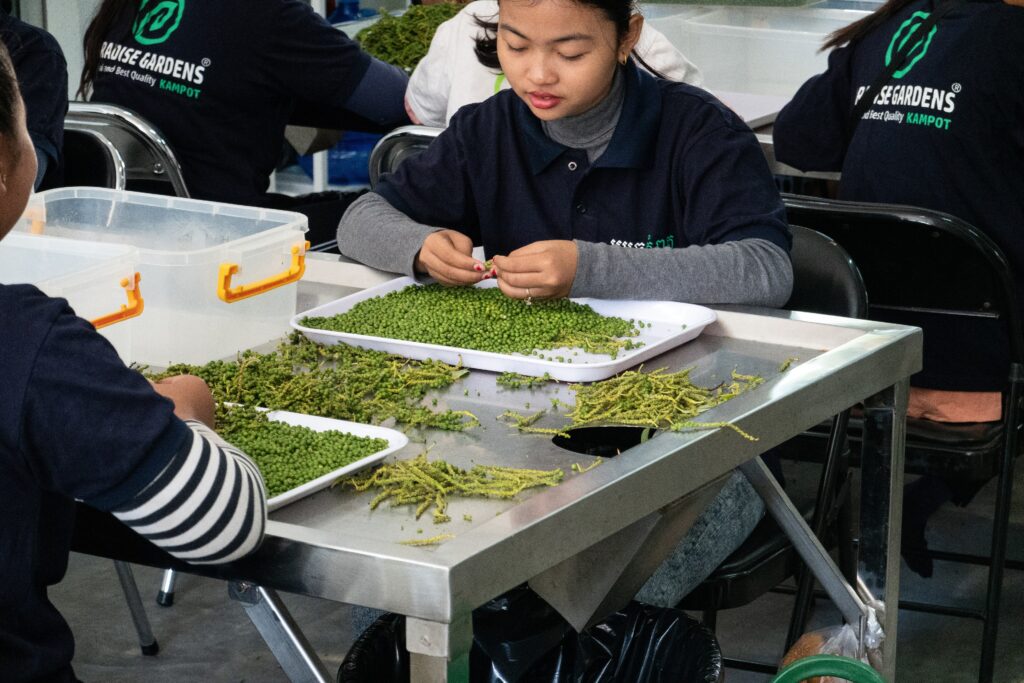
During the harvest season you may see workers picking and sorting pepper by hand. Some farms also offer cooking classes, longer private tours and meals made with their own spices.
Which farm to visit
There are dozens of pepper farms in the region, from tiny family plots to large estates. A few are set up for visitors, each with a different feel.
La Plantation: the best-known farm, a large organic estate with free guided tours, a restaurant, a spice bar and cooking classes. It runs social projects in the surrounding villages.
BoTree Farm: a smaller family-run farm nearby, with personal tours, tastings, a restaurant and a natural swimming pool.
Small family farms: simpler visits with a farmer or local guide, usually arranged through a Kampot guide. Less polished, but a closer look at rural life.
We choose the farm to suit your interests. For a first visit with good English explanations and a lovely lunch, La Plantation is hard to beat. For a quieter, more personal experience, a family farm is ideal.
Hours, costs and timing
Example opening hours
La Plantation: every day, 9:00 am to 6:00 pm, last visit at 4:00 pm
Entry and tours
Standard tours at La Plantation are free; private and specialist tours cost extra. Other farms vary, so confirm locally
Booking
La Plantation asks for advance booking from October to March; walk-ins from April to October
Time needed
60 to 90 minutes, or half a day with lunch or a cooking class
Harvest season
The main harvest falls in the dry season, roughly February to May; confirm locally
Best time of day
Morning, before the midday heat, or late afternoon
Our advice
Go in the morning. Plantations are exposed and hot by midday. An early visit also leaves time for lunch in Kep.
Visit in harvest season if you can. Seeing the red and green berries on the vine and the sorting tables in action makes the visit richer.
Wear a hat and closed shoes. Paths between the vines are sandy or muddy, and there is little shade.
Taste before you buy. Try each colour and buy what you love; red pepper is usually the most memorable gift.
Buying real Kampot pepper
The name is valuable, so imitations are common in markets across Cambodia. Genuine Kampot pepper carries the certification mark of the producers’ association and a lot number that traces it back to a registered grower.
Buy directly from a farm, or from certified shops in Kampot, Kep and Phnom Penh.
Look for the protected name on the label, together with a certification mark and lot number.
Be wary of very cheap loose pepper sold as Kampot pepper in tourist markets.
Most countries allow dried pepper in checked luggage, but check your home country’s rules.
How to get there
The main farms lie in the countryside between Kampot and Kep, reached along small roads through rice fields and villages. Depending on the farm, allow 30 to 60 minutes by car or tuk-tuk from either town.
A car with a driver, or a tuk-tuk hired for the half day, is the easiest option. Signposting is limited and some roads are unsealed, so a local driver saves time. Kampot is about three to four hours by road from Phnom Penh.
Pepper, crab and the coast
The perfect day in this region starts at a pepper farm and ends at the sea. After your tasting, head to the Kep crab market for crab with fresh green pepper, then spend the afternoon on the coast. Add a day on Bokor National Park and a sunset boat on the Kampot river for a well-rounded stay. Food lovers should also look at our food experiences.
Visiting with My Travel Factory
We arrange your pepper farm visit with a knowledgeable local guide, time it for the cool of the morning, and pair it with a crab lunch in Kep. It is part of our Pepper Coast & Islands journey and our Temples to the Coast dirt bike expedition itinerary, and we can add it to any trip through the south. Tell us what you enjoy and we will pick the right farm for you.
Questions travellers ask
Can you visit pepper farms in Kampot?
Yes. Several farms between Kampot and Kep welcome visitors, including La Plantation and BoTree Farm. Visits include a walk through the vines, an explanation of processing and a tasting.
Is the La Plantation pepper farm tour free?
At the time of writing, the standard guided tour with tasting at La Plantation is free. Private, sunset and cooking experiences cost extra. From October to March they ask visitors to book ahead.
What makes Kampot pepper special?
It is grown in a defined area of Kampot and Kep on quartz-rich soils, hand harvested and sorted with organic inputs only. It has Geographical Indication status in Cambodia since 2010 and in the EU since 2016.
What is the difference between green, black, red and white Kampot pepper?
They come from the same plant. Green is picked young and used fresh or brined; black is mature berries heated and sun-dried; red is fully ripe berries blanched and dried; white is ripe berries with the skin removed.
When is the Kampot pepper harvest?
The main harvest takes place in the dry season, roughly from February to May. Seasons vary a little from year to year, so confirm locally.
How long does a pepper farm visit take?
A standard tour and tasting takes 60 to 90 minutes. Allow half a day if you want lunch, a cooking class or a private tour.
How do I know if Kampot pepper is genuine?
Buy from a farm or certified shop and look for the protected name, the producers' association certification mark and a lot number on the pack. Very cheap loose pepper is often not the real thing.
How far are the pepper farms from Kampot?
The main farms are in the countryside between Kampot and Kep. Depending on the farm, allow 30 to 60 minutes by car or tuk-tuk from either town.
Can I take Kampot pepper home?
Dried pepper is a popular souvenir and is usually allowed in luggage, but check your home country's import rules before you travel.
What else is there to do near the pepper farms?
Combine a farm visit with a crab lunch at the Kep crab market, a day on Bokor National Park, or a sunset boat trip on the Kampot river.
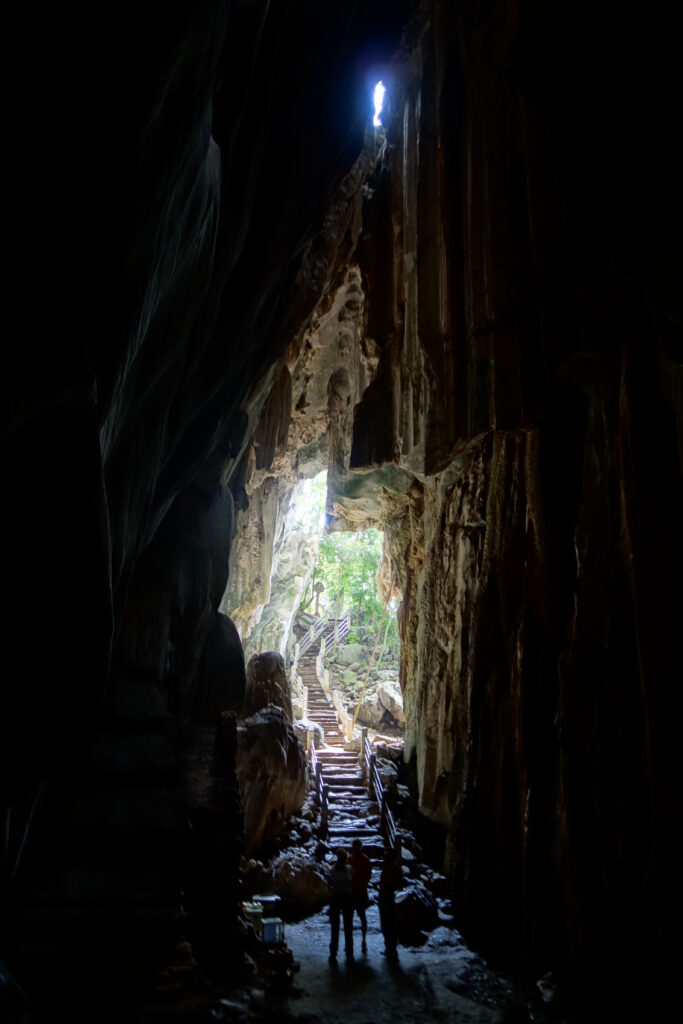
Phnom Chhngok is a cave temple about 8 km north-east of Kampot. Inside a limestone hill stands a small 7th-century brick temple dedicated to Shiva, built…
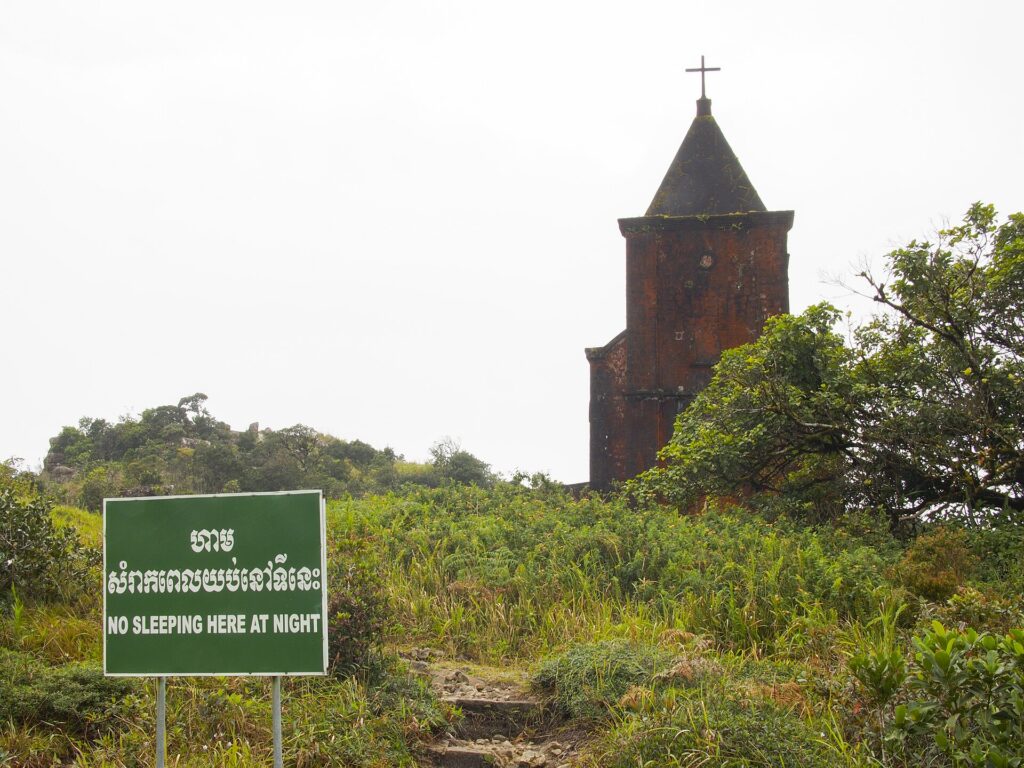
Bokor National Park (Preah Monivong Bokor National Park) is a protected area of about 1,544 square kilometres above Kampot in southern Cambodia. Its sandstone plateau, about…
The Kep crab market (Phsar Kdam) is a waterfront seafood market and row of stilted restaurants in Kep, a seaside town in Cambodia's smallest province, about…
Location
Kep seafront, Kep province, south Cambodia
Distance
About 25 km from Kampot, three to four hours from Phnom Penh
Read more
Free, no-obligation enquiry
Tell us about your trip
Enquiry received
Thank you — a local specialist will be in touch within 24 hours.