Travellers who love quiet, atmospheric places off the main trail
Temples and ruinsType
In short
Phnom Chhngok is a cave temple about 8 km north-east of Kampot. Inside a limestone hill stands a small 7th-century brick temple dedicated to Shiva, built in the pre-Angkorian era. Visitors walk across rice paddies from a village pagoda and climb about 200 steps to reach it.
20 to 30 minutes by tuk-tuk, then a short walk across the paddies
The climb
About 200 steps to the cave
Entrance fee
A small fee, reported at about $1 to $2; confirm locally
Time needed
1 to 2 hours
Best time
Late afternoon
Dress code
Shoulders and knees covered
Bring
A torch and shoes with grip
Phnom Chhngok is a limestone cave temple about 8 kilometres north-east of Kampot, hidden inside a karst hill among rice fields. Inside the cave stands a small 7th-century brick temple dedicated to Shiva, built in the pre-Angkorian era and still intact after some 1,300 years. The walk there through the paddies is half the pleasure.
7th centuryPre-Angkorian brick temple
ShivaThe temple’s dedication
About 200 stepsUp to the cave
8 kmFrom Kampot town
1 to 2 hoursTime to allow
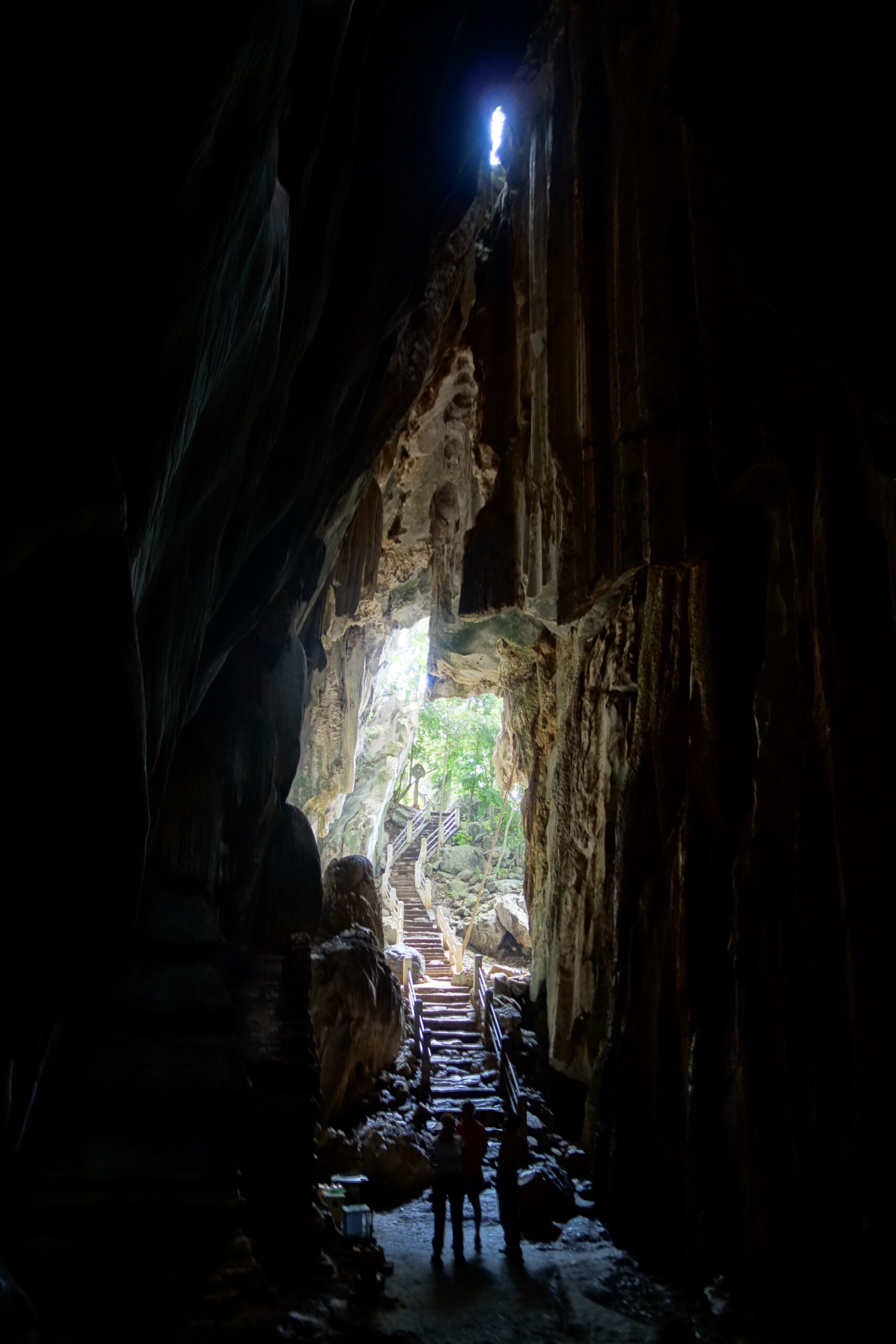
Few places in Cambodia feel as quietly magical as Phnom Chhngok. You arrive at a small village pagoda, cross a quilt of rice paddies and lotus ponds on foot, then climb a stone stairway into the hill. Light falls through openings in the rock onto a little brick tower that has stood in the cave since before Angkor was built. It is one of the highlights of the Kampot countryside, and rarely crowded.
History of the cave temple
7th century
A small brick temple is built inside the cave during the pre-Angkorian period, when this coast was part of the early Khmer kingdoms known in Chinese records as Funan and Chenla. It is dedicated to the Hindu god Shiva.
Angkorian era onward
The cave remains a sacred site. Like many Khmer holy places, it later becomes part of Buddhist practice as well.
Today
The temple is looked after by the monks of the pagoda at the foot of the hill, and local people still come to pray and make offerings.
The temple’s survival is remarkable. Sheltered inside the hill, it escaped much of the weathering and war damage that affected other early Khmer brick temples. It is a rare chance to see pre-Angkorian architecture in its natural setting.
What to see
The approach
Paddies and lotus ponds
The walk from the pagoda crosses rice fields and ponds with the karst hill ahead. It is especially beautiful in the late afternoon and in the green season.
The climb
The stone stairway
Around 200 steps lead up to the cave entrance. Inside, another set of steps descends into the main chamber.
The heart
The brick temple
A small, well-preserved brick sanctuary stands inside the cavern. Dedicated to Shiva, it dates from the 7th century and is one of the oldest standing structures in the region.
Natural features
Stalactites and rock shapes
Local guides point out rock formations said to resemble an elephant and a turtle, as well as stalactites that people believe are sacred.
Beliefs
A linga for luck
A natural linga-shaped rock is visited by couples hoping for children. It is a living place of faith, so treat it with respect.
Exploring
Passages and light
Openings in the rock let in shafts of light. A narrow passage leads further through the hill, but it is tight and best left to the adventurous with a guide.
Tickets and opening hours
Entrance fee
A small fee, reported at about $1 to $2, collected at the pagoda; confirm locally
Opening hours
Daylight hours
Time needed
1 to 2 hours, including the walk and climb
Best time
Late afternoon, for golden light over the paddies
Dress code
Shoulders and knees covered
Footwear
Shoes with grip; the steps can be wet and slippery
How to get there
Phnom Chhngok is about 8 kilometres north-east of Kampot town. A tuk-tuk takes 20 to 30 minutes along country lanes, and many drivers include it on a half-day countryside tour. You can also cycle or ride a scooter there in the dry season.
The road ends at the pagoda at the foot of the fields, where you pay the entry fee. From there it is a short, flat walk across the paddies to the stairway.
Tips for your visit
Our advice
Bring a torch. Parts of the cave are dim, and a phone light helps on the steps.
Watch your footing. Dripping water makes the stone slippery, especially in the rainy season.
Accept a young guide kindly, or decline politely. Local children often offer to guide you. If you accept, agree a small tip first.
Go late in the day. The light on the paddies in the late afternoon is the most beautiful part of the visit.
Please do
Cover your shoulders and knees
Remove your hat near the shrine
Leave a small offering if you light incense
Take your rubbish with you
Please don’t
Climb on the brick temple
Touch or break stalactites
Enter narrow passages without a guide
Make loud noise in the cave
A Kampot countryside day
Phnom Chhngok sits well with Kampot’s other countryside highlights:
Midday Lunch in Kampot or at the salt fields on the way to Kep
Afternoon The walk and climb to Phnom Chhngok
Sunset A boat on the Kampot river, or crab at the Kep crab market
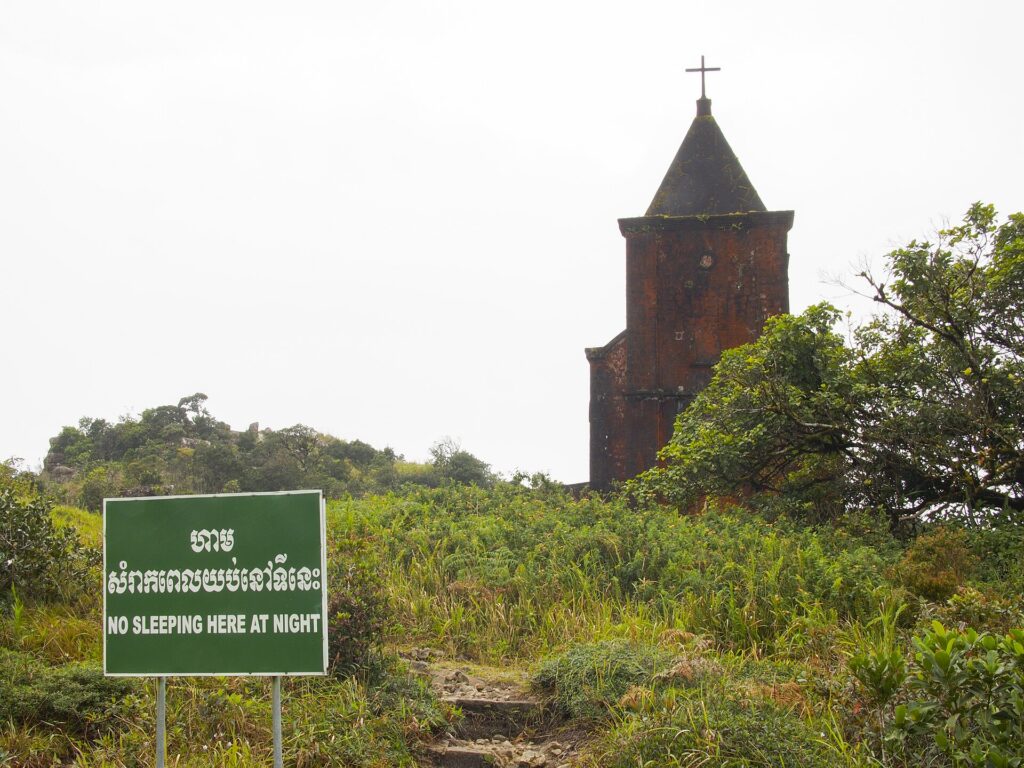
With more time, head up to Bokor National Park for the old hill station and views over the coast.
Visiting with My Travel Factory
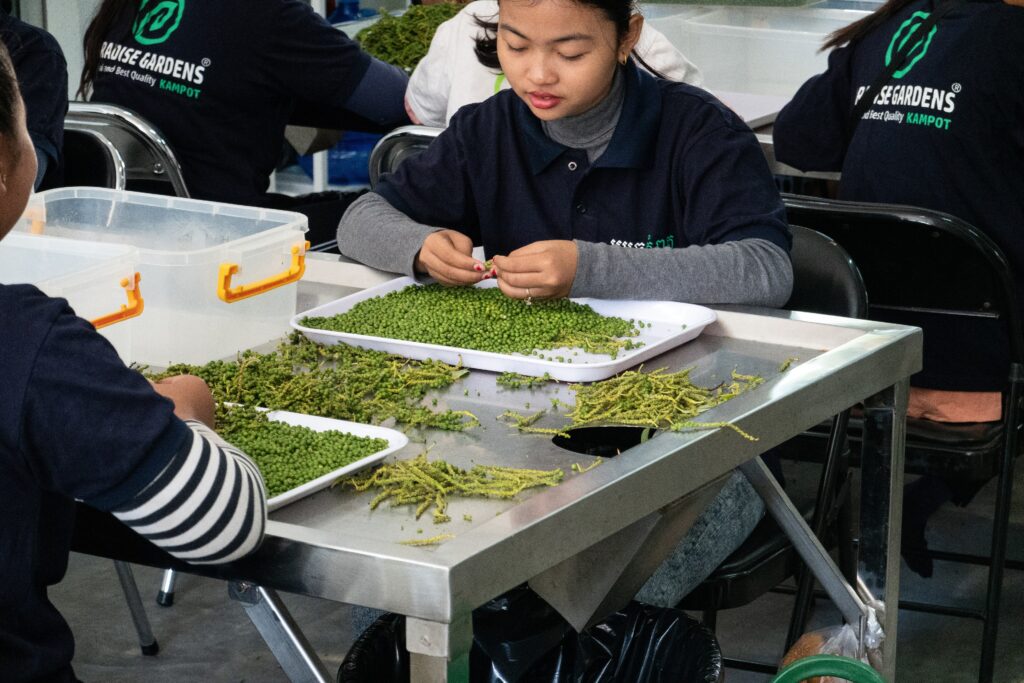
We plan relaxed Kampot days with a local guide and driver, combining the cave temple with pepper farms, the river and Kep. It is part of our Pepper Coast & Islands journey, and we can add Kampot to any Cambodia itinerary.
Questions travellers ask
What is Phnom Chhngok?
Phnom Chhngok is a limestone cave near Kampot that shelters a small 7th-century brick temple dedicated to Shiva, built in the pre-Angkorian period.
How far is Phnom Chhngok from Kampot?
About 8 km north-east of Kampot town, a 20 to 30 minute tuk-tuk ride.
How much is the entrance fee for Phnom Chhngok?
A small fee, reported at about $1 to $2, is collected at the pagoda at the foot of the fields. Confirm the current price locally.
How many steps are there at Phnom Chhngok?
About 200 steps lead up to the cave entrance, with more steps down into the main chamber.
How old is the Phnom Chhngok temple?
The brick temple dates from the 7th century, making it older than Angkor Wat by around 500 years.
When is the best time to visit Phnom Chhngok?
Late afternoon, when the light over the rice paddies is at its best. The rice fields are greenest in the rainy season.
Is Phnom Chhngok suitable for children?
Yes, for children who can manage the steps. Hold small hands on the wet stone and bring a torch.
What should I bring to Phnom Chhngok?
A torch or phone light, water, and shoes with good grip. Cover your shoulders and knees.
Can I combine Phnom Chhngok with other sights?
Yes. It fits easily into a Kampot countryside day with a pepper farm, the salt fields and the Kep crab market.
Bokor National Park (Preah Monivong Bokor National Park) is a protected area of about 1,544 square kilometres above Kampot in southern Cambodia. Its sandstone plateau, about…
The Kep crab market (Phsar Kdam) is a waterfront seafood market and row of stilted restaurants in Kep, a seaside town in Cambodia's smallest province, about…
Location
Kep seafront, Kep province, south Cambodia
Distance
About 25 km from Kampot, three to four hours from Phnom Penh
Kampot pepper farms are plantations in the countryside between Kampot and Kep in southern Cambodia, where Kampot pepper, the country's first Geographical Indication product (2010) and…
Location
Countryside between Kampot and Kep, southern Cambodia
Protected status
Geographical Indication 2010; EU PGI 2016
Read more
Free, no-obligation enquiry
Tell us about your trip
Enquiry received
Thank you — a local specialist will be in touch within 24 hours.