Art Deco architecture, jewellery and a Khmer street-food breakfast
MarketsType
In short
The Central Market, or Phsar Thmei, is a domed Art Deco market hall in central Phnom Penh, designed by Jean Desbois and opened in 1937. Its 26-metre dome and four wings hold around 3,000 stalls selling jewellery, clothing, souvenirs, fresh produce and street food. Entry is free and most stalls trade from about 7 am to 5 pm.
Central Phnom Penh, between Monivong and Norodom boulevards
Khmer name
Phsar Thmei, meaning new market
Opened
September 1937, designed by Jean Desbois
Dome
26 metres high, with four wings in an X shape
Restored
2009 to 2011, funded by the French Development Agency
Stalls
Around 3,000
Opening hours
Daily, most stalls about 7:00 am to 5:00 pm
Entry
Free
Best for
The building, gold and silver, fruit and breakfast
Bargaining
Expected for clothes and souvenirs, not for food
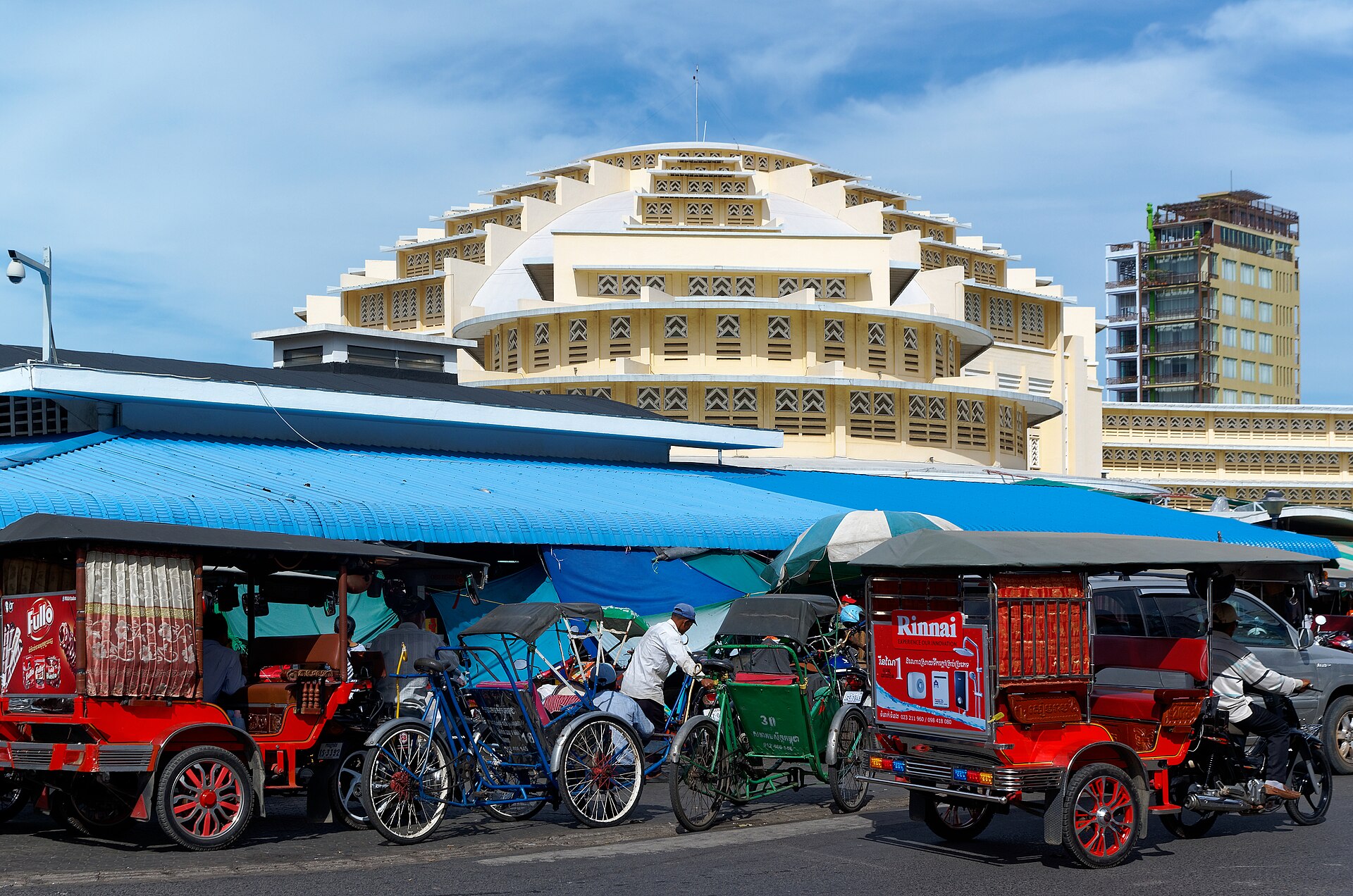
The Central Market, Phsar Thmei in Khmer, is Phnom Penh’s great Art Deco landmark: a butter-yellow dome with four long wings, completed in 1937 on drained marshland in the heart of the city. It is still a working market, with around 3,000 stalls selling gold and gems, fruit, flowers, clothes and street food.
1937Market inaugurated
26 mHeight of the central dome
3,000Stalls, roughly
2011French-funded restoration completed
FreeEntry
Its Khmer name, Phsar Thmei, means “new market”, which it was in 1937. Nearly a century later, it is still the one building most people picture when they think of Phnom Penh, and the best place in the city to see architecture and everyday commerce side by side.
History of the Central Market
By the 1920s Phnom Penh was the capital of the French protectorate and growing fast. The city needed a central market to replace scattered street trading, and the authorities chose a low, marshy site that flooded in the wet season. The marsh was drained and the new market built on it.
Late 1920s
A central market for the growing colonial capital is approved.
August 1935
Building begins to a design by the city architect Jean Desbois, with Louis Chauchon supervising the works and Wladimir Kandaouroff as engineer.
September 1937
The market opens after 22 months of construction. At the time it was said to be the largest market in Asia.
1975 to 1979
Under the Khmer Rouge, money and markets are abolished and the city is emptied. The building stands idle.
1979 onwards
Trading returns as people come back to the capital, and Phsar Thmei becomes the city’s commercial hub again.
2009 to 2011
A US$4.2 million restoration funded by the French Development Agency repairs the concrete, restores the original colour and adds new covered stall areas around the building.
The architecture
The market is one of the finest Art Deco buildings in Southeast Asia. Four long wings with arched roofs radiate from the central dome in an X shape, so the building fills its city block diagonally. From above it looks like a star.
The centrepiece
The dome
Built of reinforced concrete and 26 metres high, the dome is ribbed and lined with small windows that fill the hall with soft light. Stand under the centre and look up.
Clever design
Natural cooling
Louvred vents let cooler air in low down, while the dome draws hot air up and out like a chimney. Even without air conditioning, it is noticeably cooler inside than on the street.
The wings
Four arched arms
Each wing has its own entrance and its own trades. Walking the length of one gives you a sense of the building’s scale.
The colour
That famous yellow
The warm ochre was restored in the 2011 renovation. It looks best in the soft light of early morning or late afternoon.
What to buy, section by section
The market is loosely organised by trade, so it is easy to find your way around once you know the layout.
Under the dome: glass cases of gold, silver, gemstones and watches, run by family jewellers. This is where many locals buy wedding jewellery.
The wings: clothing, shoes, bags, fabrics, electronics, phone accessories, stationery and household goods.
Souvenir stalls: krama scarves, silver boxes, wood carvings, T-shirts, magnets and small Buddha images, mostly in the wings and outer rows.
Outer courtyards: fresh fruit, vegetables, meat and fish, dried goods, spices and flowers, busiest early in the morning.
For a wider choice of crafts, souvenirs and garment-factory clothing, the Russian Market is usually better. The Central Market wins on architecture, jewellery and atmosphere.
Eating at the market
The food stalls are one of the best reasons to come. Look for bowls of kuy teav, the Khmer rice-noodle soup that most Cambodians eat for breakfast, bai sach chrouk (grilled pork on rice), fresh spring rolls and sweet desserts made with coconut, sticky rice and palm sugar.
The fruit stalls are a feast in themselves. Depending on the season you will find mangoes, rambutans, mangosteens, dragon fruit, durian and longans. Buy a mixed bag to try on the go. If you are curious about insects, you may spot fried crickets and other snacks for sale around the edges.
Eat like a local
Go early. The breakfast stalls are at their best before 9:00 am.
Choose busy stalls. High turnover means fresh food.
Point and smile. Few stallholders speak much English, but pointing works well and prices are low.
Opening hours and practical details
Opening hours
Daily from early morning; most stalls trade from about 7:00 am to 5:00 pm
Entry
Free
Best time
Early morning for food and fresh produce; late afternoon for photos of the building
Time needed
45 minutes to two hours
Payment
Cash, US dollars or riel; small notes help
Facilities
Toilets and ATMs in and around the market
Individual stalls set their own hours, and food and produce sellers start well before the jewellery counters open. Confirm locally if you are coming very early or late.
Shopping and bargaining tips
Our advice
Bargain with a smile. Haggling is normal for clothing and souvenirs. Start at around half to two-thirds of the first price and meet in the middle. Food and fruit are usually sold at fixed prices.
Carry small notes. Change for a $50 or $100 bill can be hard to find. Riel are handy for small purchases.
Know your gold. Jewellery is usually priced by weight and purity. Ask for a receipt that states both.
Keep valuables close. The aisles are crowded, so keep your phone and wallet in a front pocket or zipped bag.
Watch your step. Floors near the fish and meat sections can be wet.
Please do
Ask before photographing stallholders
Try the local breakfast noodle soup
Walk right round the outside to see the whole building
Please don’t
Haggle hard over very small sums
Buy antiques or old statues, which cannot legally be exported
Block narrow aisles for photos
How to get there and what is nearby
Phsar Thmei sits in the city centre, between Monivong Boulevard and Norodom Boulevard. From the riverside it is about 15 minutes on foot or a very short tuk-tuk ride. PassApp and Grab both work well, and drivers all know it by name.
7:30 am Breakfast at the market food stalls
8:15 am Walk the dome and the wings, about an hour
9:30 am Tuk-tuk 5 to 10 minutes north to Wat Phnom
Later Continue to the riverside and the Royal Palace
The Russian Market is about 15 to 20 minutes south by tuk-tuk if you want to compare the two in one day.
Visiting with My Travel Factory
Markets are where Cambodian life happens, and our guides love showing guests around them, from the best breakfast stall to the right way to bargain. We include the Central Market in our Phnom Penh & Angkor Discovery journey, and our food experiences go further into Khmer cooking. Tell us what you enjoy and we will plan your Phnom Penh days around it.
Questions travellers ask
What are the Central Market opening hours in Phnom Penh?
The market opens daily from early morning. Most stalls trade from about 7:00 am to 5:00 pm, with food and produce sellers starting earliest.
Is there an entrance fee to the Central Market?
No. Entry is free, and you are welcome to walk around without buying anything.
What is the Central Market in Phnom Penh famous for?
Its 1937 Art Deco building, with a 26-metre dome and four radiating wings. It is also known for its gold and jewellery stalls under the dome.
What does Phsar Thmei mean?
Phsar Thmei means new market in Khmer. The name dates from when it opened in 1937.
Central Market or Russian Market: which is better?
Central Market for the architecture, jewellery and fresh food; Russian Market for clothing, crafts and souvenirs. They are 15 to 20 minutes apart and many visitors see both.
Can you bargain at the Central Market?
Yes, for clothes, bags and souvenirs. Start at around half to two-thirds of the first price and stay friendly. Food and fruit usually have fixed prices.
Is the Central Market air conditioned?
No, but the dome and vents were designed to ventilate the building naturally, so it is cooler inside than you might expect.
What can you eat at the Central Market?
Noodle soups such as kuy teav, grilled pork on rice, spring rolls, Khmer desserts and seasonal fruit. Go early for the best breakfast.
Who designed the Central Market?
The French city architect Jean Desbois designed it, with Louis Chauchon supervising construction between 1935 and 1937.
How long should I spend at the Central Market?
Allow 45 minutes to see the building, or up to two hours if you want to shop and eat.
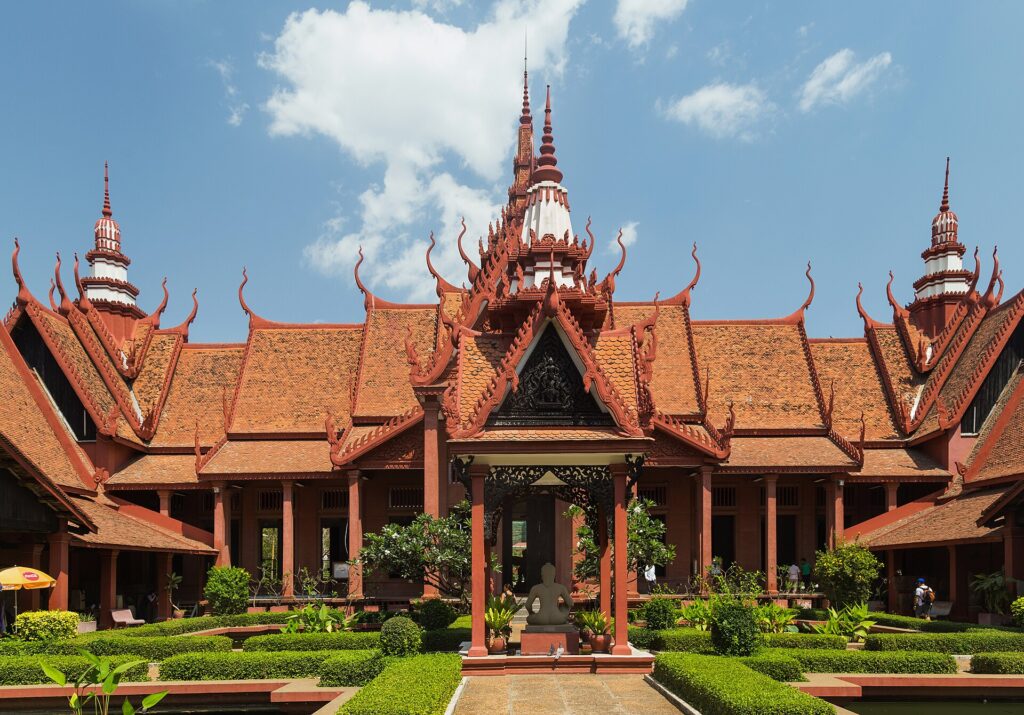
The National Museum of Cambodia in Phnom Penh holds the world's largest collection of Khmer art, more than 14,000 objects from prehistory to the post-Angkor period.…
Where
Corner of Street 13 and Street 178, beside the Royal Palace, Phnom Penh
Opened
13 April 1920, designed by George Groslier
Read more
Free, no-obligation enquiry
Tell us about your trip
Enquiry received
Thank you — a local specialist will be in touch within 24 hours.