Temple lovers and anyone exploring the Battambang countryside
Temples and ruinsType
In short
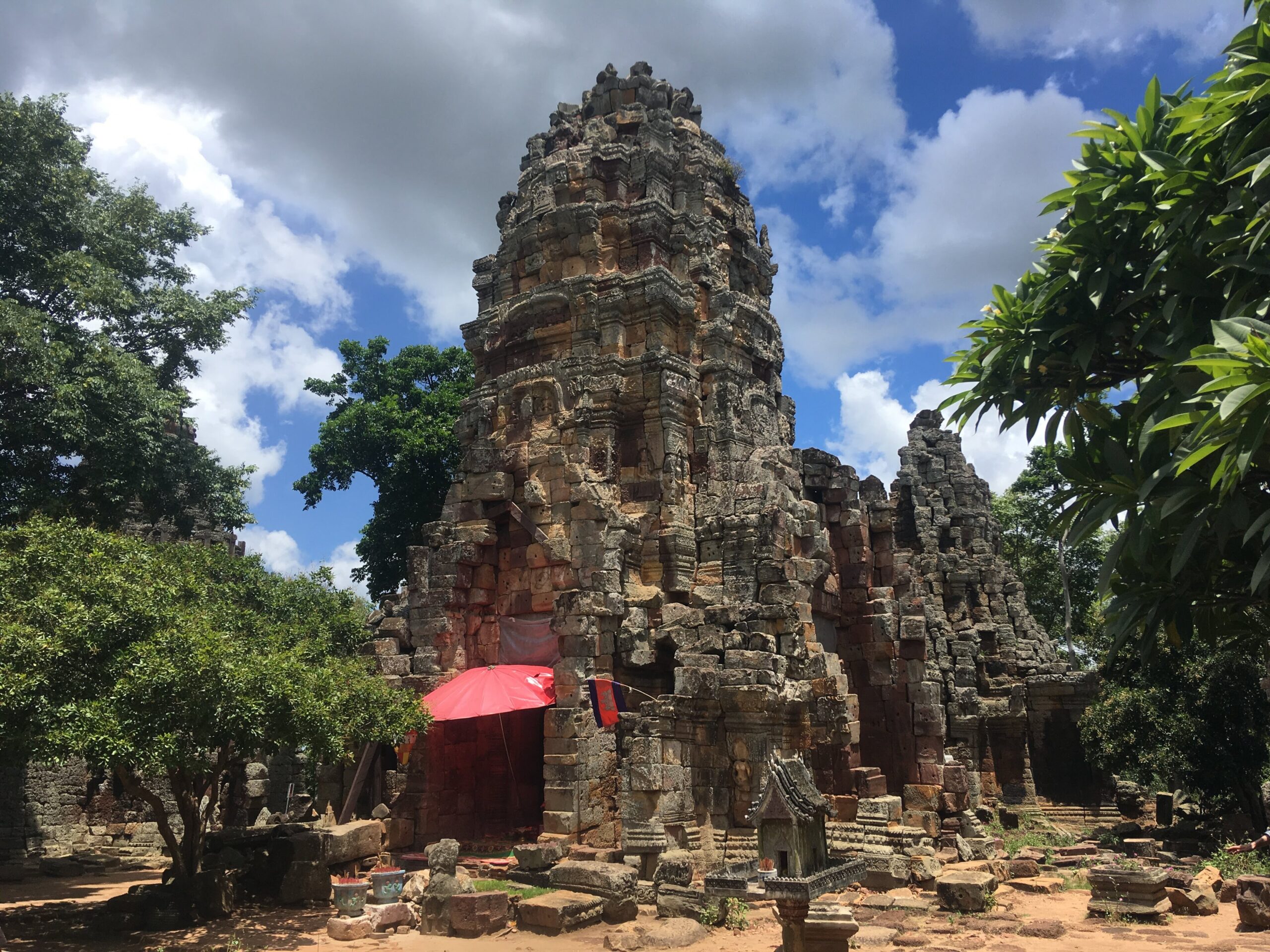
Wat Banan is an 11th-century Angkorian temple on top of Phnom Banan, about 25 km south of Battambang. Reached by 358 steps, its five sandstone towers are laid out like a small Angkor Wat. Built as a Hindu temple and later remade as Buddhist, it is the best-preserved Angkorian temple in Battambang province.
Phnom Banan, Banan district, about 25 km south of Battambang
Built
Mid-11th century under Udayadityavarman II; rebuilt as Buddhist under Jayavarman VII
Getting there
40 minutes to an hour by tuk-tuk along Road 155
The climb
358 steep stone steps with naga railings
Entrance fee
A few dollars ($2 to $3 reported); confirm locally
Time needed
1 to 2 hours
Best time
Early morning or late afternoon
Dress code
Shoulders and knees covered
Nearby
Prasat Phnom Banan winery, the bamboo train, Phnom Sampeau
Safety
Stay on worn paths; there may be unexploded ordnance off the trails
Wat Banan is an 11th-century Angkorian temple on top of Phnom Banan, a small hill in the countryside about 25 kilometres south of Battambang. Its five sandstone towers are sometimes called a small Angkor Wat. Few visitors make the climb, so you often have the ruins almost to yourself.
11th centuryFirst built
5 towersLaid out like Angkor Wat
358 stepsTo the summit
25 kmSouth of Battambang
1 to 2 hoursTime to allow
The best way to think of Wat Banan is as a small, atmospheric Angkor you have to earn. A long stone stairway lined with naga serpents climbs through the trees. At the top, weathered towers look out over sugar palms, rice fields and the winding Sangker River. It is the best-preserved Angkorian temple in Battambang province, and a highlight of any day in the countryside around the town.
History of Wat Banan
Mid-11th century
King Udayadityavarman II (reigned 1050 to 1066) founds the temple as a Hindu sanctuary dedicated to Shiva. It stands near the western edge of the Khmer Empire.
Late 12th century
King Jayavarman VII, who also built the Bayon, rebuilds the site as a Buddhist temple. This is why the surviving carvings are mainly Buddhist, even though the temple began as Hindu.
Centuries of decline
The temple slowly falls into ruin, but the hill stays a place of local worship and pilgrimage.
1970s to 1990s
War and looting take their toll. Many statues and apsara carvings are damaged or removed. Some of the finest lintels are now kept at the Battambang Provincial Museum.
Today
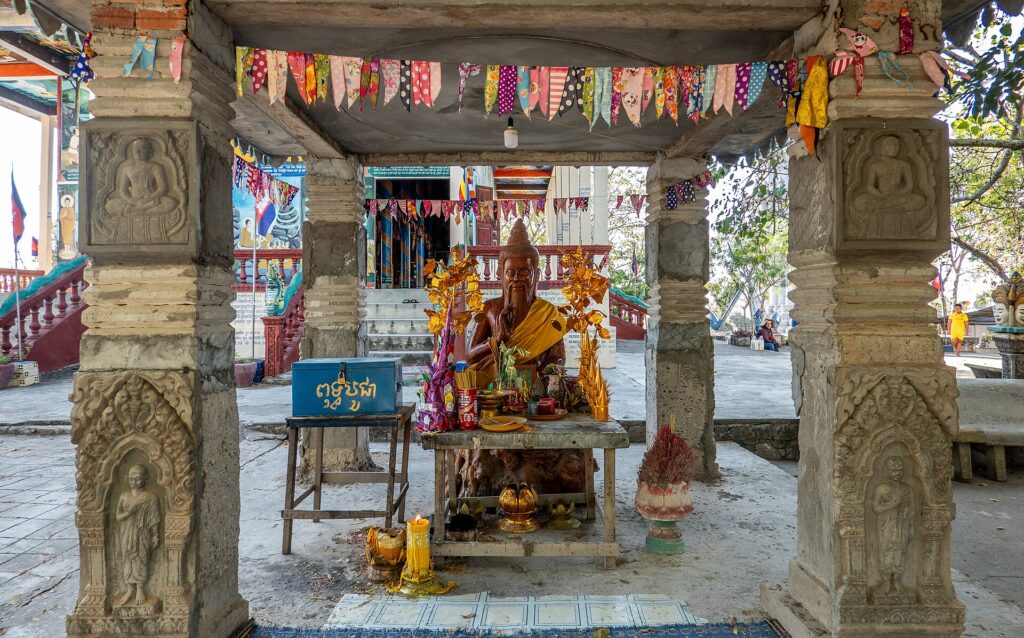
Wat Banan is a quiet, living pilgrimage site. A modern Buddhist shrine sits inside the central tower, and local families still climb the hill to make offerings.
The temple’s layout mirrors that of Angkor Wat on a small scale: a central tower surrounded by four others, one of which serves as the eastern gateway. Because it was built in two main phases a century apart, you can see a mix of styles in the stonework. Laterite foundations support sandstone towers.
What to see
The climb
The naga stairway
A steep stairway of 358 laterite steps, with naga serpent railings, rises from the pagoda at the foot of the hill. There are landings to rest on, and stone lions guard the approach.
The summit
The five towers
The central sandstone tower is the tallest. A modern shrine sits inside it, where you may find a monk or a caretaker with incense. The towers around it are partly collapsed but full of character.
Details
Lintels and devatas
Look for the carved lintels still in place above some doorways, and the faint devata figures on the central tower. Many carvings are damaged, but what survives is fine work.
The view
Panorama over the plains
From the top you look over sugar palms, rice fields and villages, with the Sangker River winding below. Come in the late afternoon for the softest light.
Below the hill
The cave of sacred water
On the lower slopes is a limestone cave with a small Buddhist shrine. Locals believe the water dripping from its stalactites has special powers.
Nearby
Cambodia’s own winery
Just down the road is the Prasat Phnom Banan winery, one of the very few vineyards in Cambodia. It makes an unusual stop for a tasting of local wine, brandy and fresh grape juice.
Tickets and opening hours
Entrance fee
A few dollars for foreign visitors. Recent reports give $2 to $3; some say the ticket also covers Phnom Sampeau, so keep it. Confirm locally
Opening hours
Daylight hours, usually from early morning to late afternoon
Time needed
1 to 2 hours, including the climb
Best time
Early morning or late afternoon, to avoid the midday heat
Best season
November to February, when it is cooler and the fields are green
Dress code
Shoulders and knees covered; it is an active place of worship
Facilities
Drinks stalls, simple food and toilets at the foot of the hill
How to get there
Wat Banan is about 25 kilometres south of Battambang town. The drive follows provincial Road 155 along the Sangker River, past stilt houses, rice fields and small pagodas, and takes 40 minutes to an hour by tuk-tuk.
Most people visit on a half-day or full-day tuk-tuk tour of the Battambang countryside. Tuk-tuk drivers in town offer these for a fixed price that covers several sights; agree the stops and the price before you set off. You can also go by private car or, if you are confident on rural roads, by rented motorbike.
Tips for your visit
Our advice
Climb early or late. The stairway is steep and exposed in places, and it gets very hot around midday.
Bring water and good shoes. Some steps are uneven and worn smooth. Take your time on the way down.
Stay on the paths. The hill saw fighting in the civil war and there may still be unexploded ordnance off the worn trails.
Combine it with Phnom Sampeau. The two hills make a natural pairing: ancient temple in the morning, bat caves at sunset.
Please do
Cover your shoulders and knees
Take off your shoes and hat inside the shrine
Greet the caretakers and monks respectfully
Leave a small donation if you light incense
Please don’t
Climb on the towers or fallen stones
Touch or move carvings
Wander off the marked paths
Leave litter on the hill
A Battambang countryside day
Wat Banan fits neatly into a full day south and west of Battambang:
8:00 am Leave Battambang and follow the river road south
9:00 am Climb to Wat Banan before the heat
11:00 am Wine and grape-juice tasting at the Prasat Phnom Banan winery
For more on village life, the bamboo train and homestays around Battambang, see our village experiences. For other Angkorian sites beyond Siem Reap, see Koh Ker and Beng Mealea.
Visiting with My Travel Factory
On our private tours a local guide takes you through the Battambang countryside at an easy pace, with a comfortable car or tuk-tuk. Wat Banan is part of our Grand Cambodia journey, and we can add a Battambang day to any Cambodia itinerary. Tell us your dates and we will plan it around you.
Questions travellers ask
What is Wat Banan?
Wat Banan, also called Phnom Banan or Prasat Banan, is an 11th-century Angkorian temple on a hill about 25 km south of Battambang. It has five sandstone towers arranged like a small Angkor Wat and is the best-preserved Angkorian temple in Battambang province.
How many steps are there to Wat Banan?
There are 358 stone steps with naga serpent railings from the foot of the hill to the temple. The climb is steep in places and takes 10 to 20 minutes at an easy pace.
How much is the entrance fee for Wat Banan?
Foreign visitors pay a few dollars. Recent reports give $2 to $3, and some say the ticket also covers Phnom Sampeau. Confirm the current price at the ticket booth.
How far is Wat Banan from Battambang?
About 25 km south of Battambang town, a 40 minute to one hour tuk-tuk ride along the river road.
Who built Wat Banan?
King Udayadityavarman II founded it in the mid-11th century as a Hindu temple to Shiva. King Jayavarman VII later rebuilt it as a Buddhist temple in the late 12th century.
Is Wat Banan like Angkor Wat?
Its five-tower layout echoes Angkor Wat, but on a much smaller scale. It is quieter and more ruined, with sweeping views over the countryside.
When is the best time to visit Wat Banan?
Early morning or late afternoon, when it is cooler for the climb. November to February is the most comfortable season.
Can I combine Wat Banan with Phnom Sampeau?
Yes. Most countryside tours visit Wat Banan in the morning and Phnom Sampeau in the late afternoon for the bat exodus at dusk.
Is there a winery near Wat Banan?
Yes. The Prasat Phnom Banan winery is a short drive away and offers tastings of local wine, brandy and grape juice.
What should I wear to Wat Banan?
Cover your shoulders and knees, as it is an active place of worship, and wear shoes with good grip for the steps.
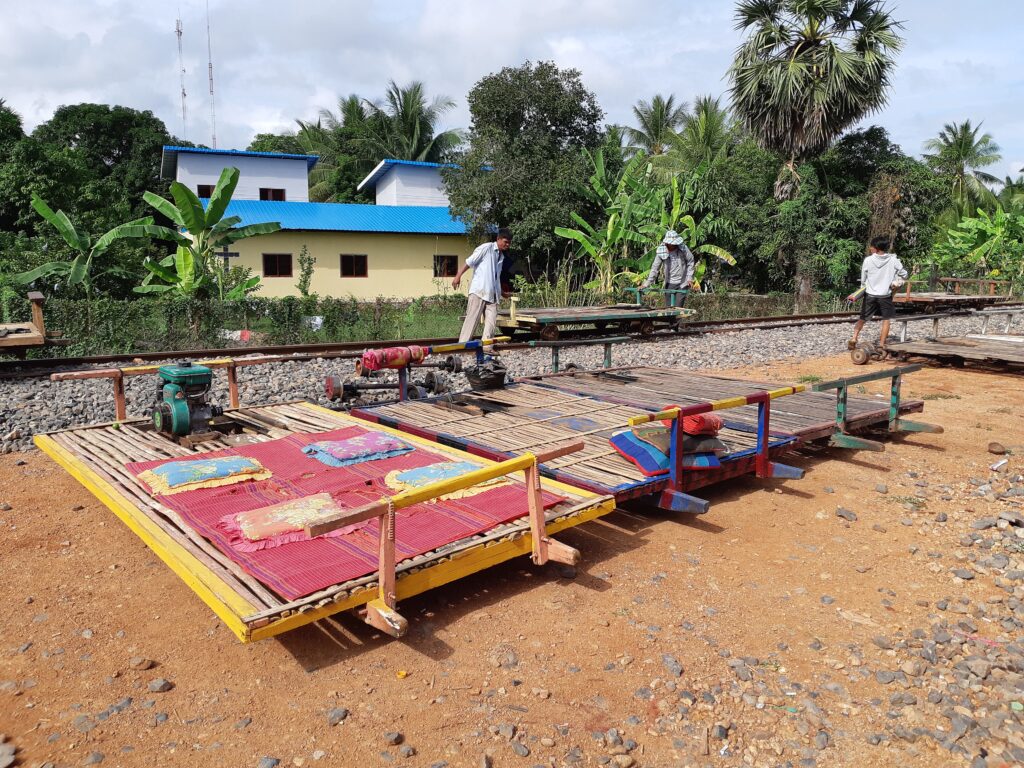
The Battambang bamboo train, or norry, is a bamboo platform on steel wheels, driven by a small engine along railway tracks through the countryside. The original…
What
A bamboo platform on steel wheels, driven by a small engine along the rails
Where
Tourist line near Phnom Banan, about 20 km south of Battambang