Preah Vihear Temple is an 11th-century Khmer sanctuary to Shiva, built along an 800-metre axis on the Dangrek escarpment at Cambodia's border with Thailand, ending at a cliff more than 500 metres above the plain. It has been a UNESCO World Heritage Site since 2008. The temple was damaged in the 2025 border clashes and has been closed to visitors since July 2025.
Closed to visitors since July 2025; no reopening date announced
Location
Dangrek escarpment, Preah Vihear province, on the Thai border
Built
Mainly first half of the 11th century, with a 9th-century hermitage
Dedicated to
Shiva
Layout
800 m north-south axis with five gopuras
Setting
Cliff edge 525 m above the plain
UNESCO
World Heritage Site, inscribed 7 July 2008
From Siem Reap
About four hours each way by road
Nearest town
Sra Em, about 20 to 30 km
Entry fee before closure
$10 for foreign visitors; not on the Angkor Pass
Preah Vihear Temple is an 11th-century Khmer sanctuary to Shiva, laid out for 800 metres along the top of the Dangrek escarpment on Cambodia’s northern border. Its final shrine stands at the lip of a cliff more than 500 metres above the plain. It has been a UNESCO World Heritage Site since 2008.
11th centuryMain building period
800 mLength of the processional axis
5Gopuras (gateway pavilions)
525 mCliff above the plain
2008UNESCO World Heritage
Current status: closed to visitors
Preah Vihear has been closed to the public since the Cambodia and Thailand border clashes of July 2025. Further fighting in December 2025 caused heavier damage, and in early 2026 the authorities reported damage at 562 points across the complex, including all five gopuras. Unexploded ordnance and unstable masonry keep the site off limits while conservation work goes on. There is no announced reopening date. We check the position before every trip and will update this page when access returns.
No other Khmer temple is built quite like this. Instead of rising in tiers around a central tower, Preah Vihear climbs a slope in a long line, gate after gate, until the ground simply runs out. Standing at the end, with the forests of the northern plains spread out below, you understand why the builders chose the spot.
History of Preah Vihear
A hermitage on the escarpment is recorded from the 9th century, and the site was sacred long before the stone temple took shape. Most of what stands today was built in the first half of the 11th century, above all under Suryavarman I, with further work under Suryavarman II, the king who built Angkor Wat. The temple was dedicated to Shiva as lord of the mountain, and the cliff itself was part of the idea.
9th century
A hermitage is founded on the escarpment, the start of the site’s religious life.
Early 11th century
Suryavarman I builds much of the complex, including several of the gopuras that line the axis.
12th century
Further additions and carving under Suryavarman II, the builder of Angkor Wat.
1962
The International Court of Justice rules that the temple lies in Cambodian territory.
7 July 2008
UNESCO inscribes the Temple of Preah Vihear on the World Heritage List, as an outstanding masterpiece of Khmer architecture.
2008 to 2011
Periodic armed clashes along the border near the temple.
2013
The ICJ clarifies its 1962 judgment, confirming that the promontory around the temple belongs to Cambodia.
July and December 2025
Renewed border fighting damages the temple and closes it to visitors. A ceasefire follows at the end of the year.
The border dispute and the 2025 damage
Preah Vihear sits exactly on the line where Cambodia meets Thailand. The easiest natural approach has always been from the Thai side, up the gentle northern slope, while the Cambodian side is a sheer cliff. That geography, and a colonial-era map, lie behind a dispute that has run for more than a century.
The 1962 ICJ ruling gave the temple to Cambodia, and the 2013 judgment confirmed it. UNESCO listing in 2008 brought the question back to the surface, and fighting broke out several times between 2008 and 2011. For more than a decade after that the temple was peaceful and increasingly visited.
In 2025 the conflict returned. Cambodian officials recorded damage at 142 points after the July clashes and 420 more after heavier fighting in December. The northern staircase, several gopuras and parts of the galleries were hit. UNESCO has pledged emergency support, and restoration is expected to take many years.
What you see along the axis
The temple is a procession. You walk from north to south, uphill, through five gopuras linked by causeways and stairways, each gate a little grander than the last. The sanctuary comes at the very end, and just beyond it is the cliff.
The approach
The great stairway
A monumental stairway of 163 steps, about 78 metres long, begins the climb from the north. It was among the parts damaged in 2025.
Gopuras I to III
Gateways on the rise
Cruciform gate pavilions with carved pediments, linked by stone causeways lined with boundary posts. Look up at the pediments, some of the finest carving on the site.
Along the way
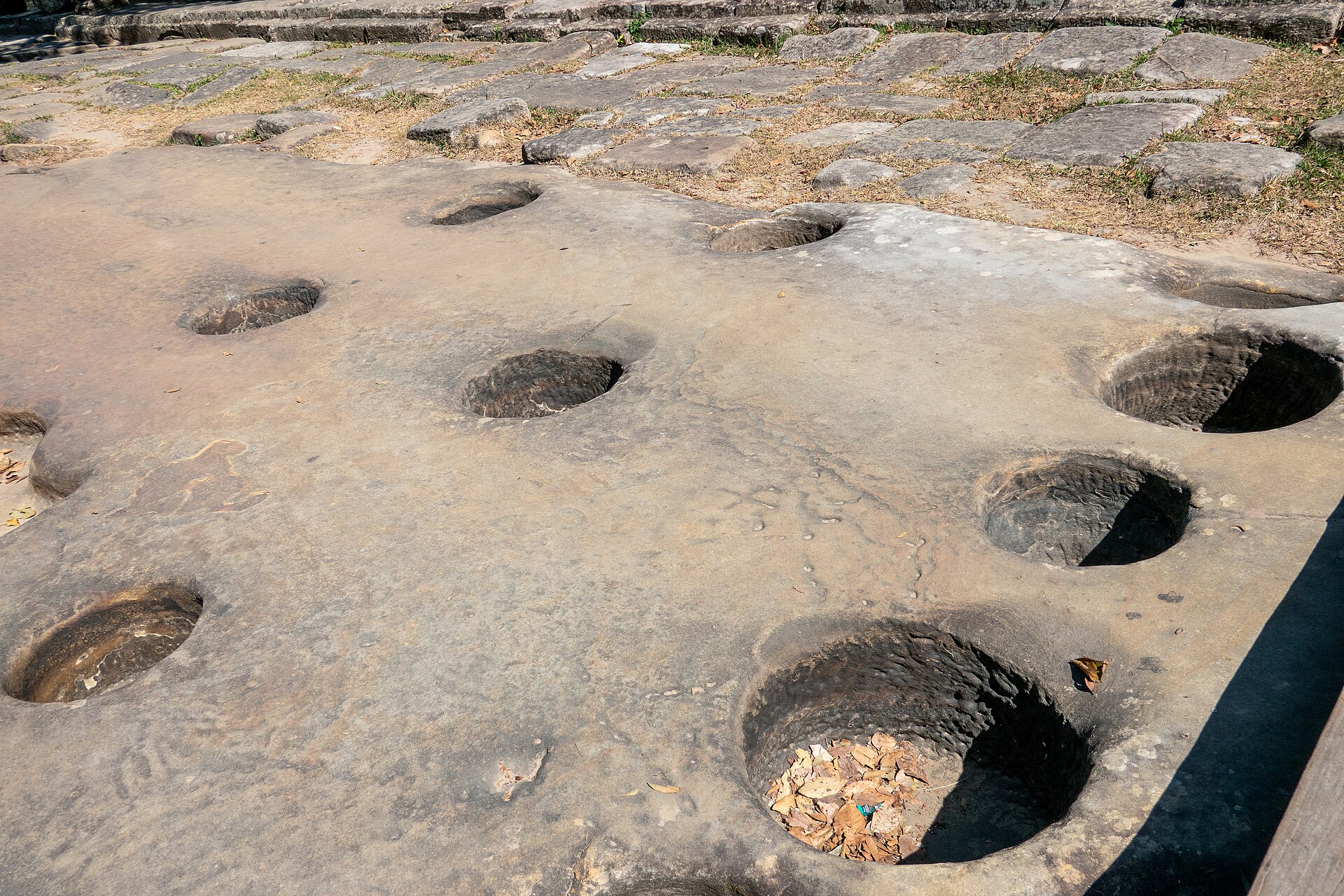
The sacred pool
A stepped rock-cut basin beside the causeway, which held water for the temple. It is one of the quiet corners of the site.
The upper gopuras
Myths in stone
Lintels and pediments carved with Hindu stories, including the Churning of the Ocean of Milk also shown at Angkor Wat, here on a far more intimate scale.
The summit
The central sanctuary
Galleries and courtyards around the main shrine. Much of the tower has fallen, but the enclosure walls and window balusters remain.
The edge
The cliff edge
The bare rock platform beyond the sanctuary, where the escarpment drops away and the plains of northern Cambodia stretch to the horizon.
The carving is among the best of its period. Pediments and lintels are deep and crisp because the site was so remote for so long, and the grey and ochre sandstone looks especially warm in low afternoon light.
Tickets, hours and access
These are the arrangements that applied before the 2025 closure. Treat them as a guide and confirm locally before you travel, because prices and access are likely to change when the site reopens.
Current status
Closed to visitors since July 2025; no reopening date announced
Entry fee (before closure)
$10 for foreign visitors, with passport; confirm locally
Angkor Pass
Not valid; Preah Vihear is managed separately
Transfer to the top (before closure)
Moto taxi or 4×4 pick-up from the ticket office at the foot of the hill, paid separately
Time needed
Two to three hours on site
Access from Thailand
Closed for many years; visits are from the Cambodian side only
How to get there
The temple is in Preah Vihear province, on the Dangrek range. The nearest town with guesthouses is Sra Em, about 20 to 30 kilometres from the foot of the mountain. From Siem Reap the road runs north through Anlong Veng, or east past Koh Ker, and takes about four hours each way on paved roads.
Before the closure, the final climb to the temple was by a steep road from the ticket office, covered in a pick-up or on the back of a motorbike. Private cars were not allowed up the last stretch. A day trip from Siem Reap was possible but long, and most of our guests preferred to stay a night in Sra Em or combine the temple with Koh Ker.
Tips for when it reopens
Our advice
Check the status first. This is an active border area. Ask us, or check official Cambodian sources, before you commit to the drive.
Stay overnight. Eight hours in a car for two hours at a temple is hard work. An overnight near Sra Em or at Koh Ker makes the trip far more enjoyable.
Go in the afternoon, or very early. The cliff faces south, and the light over the plain is best in the late afternoon. Early morning is cooler for the climb.
Stay on the paths. Landmines and unexploded ordnance remain in the wider area. Never wander off marked routes.
Wear proper shoes. The stairways are uneven and the rock at the summit is bare and slippery after rain.
Please do
Cover your shoulders and knees; this is still a sacred place
Carry your passport for the ticket office and any checkpoints
Follow instructions from soldiers and site staff
Bring water, a hat and sun cream
Please don’t
Leave marked paths or step past warning signs
Photograph soldiers or military positions
Climb on fallen blocks or damaged masonry
Fly a drone near the border
Best season. The dry months from November to March have the clearest views and the easiest roads. In the wet season, from about May to October, cloud can sit on the escarpment and hide the plain below.
Where to go instead for now
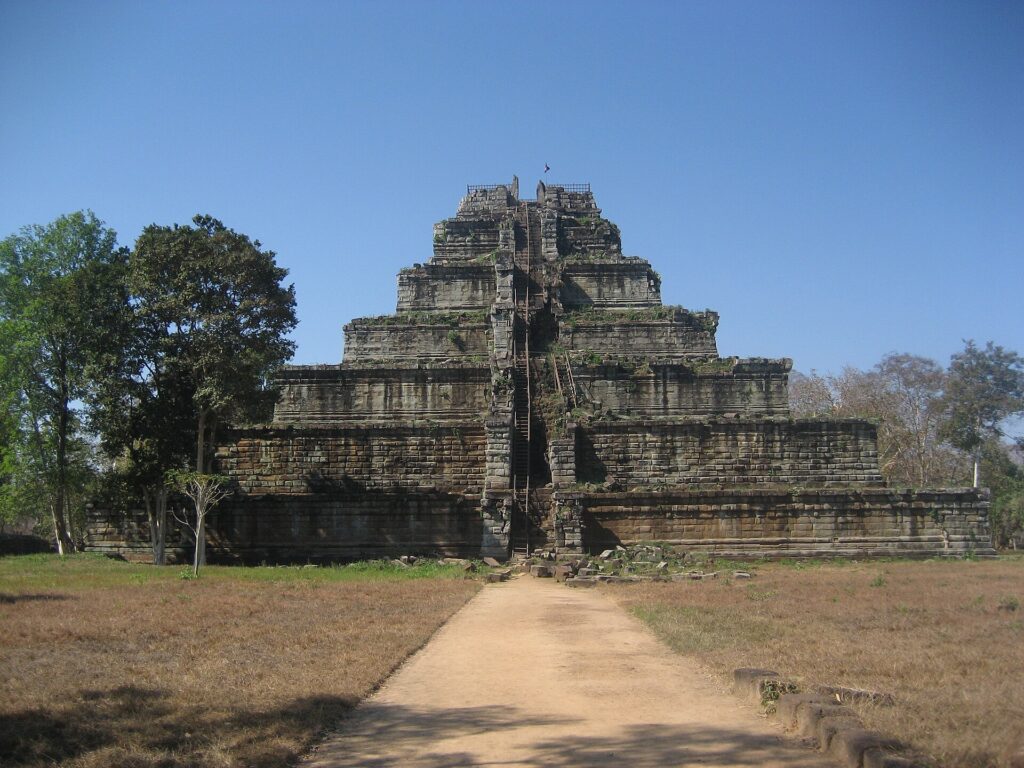
While Preah Vihear is closed, the rest of the northern temple country is open and wonderfully quiet. Koh Ker, also in Preah Vihear province and also a World Heritage Site, is the best substitute, with its seven-tiered pyramid rising out of the forest. On the way it is easy to stop at Beng Mealea, a vast jungle-covered temple that most visitors to Angkor Wat never reach.
7:00 am Leave Siem Reap by car
8:30 am Beng Mealea, about 90 minutes
11:30 am Koh Ker, lunch and the Prasat Thom pyramid
Late afternoon Back in Siem Reap, or on to an overnight in the north
For adventurous travellers, Preah Khan of Kampong Svay, a huge and rarely visited Angkorian complex further east in the same province, is another option. It needs a 4×4 and a full day.
Visiting with My Travel Factory
We follow the situation at Preah Vihear closely and will build it back into our routes as soon as it is safe. For now our Northern Temple Trail dirt bike expedition and Hidden Temples of the Heartland take you to Koh Ker, Beng Mealea and the quiet temples of the north with a private guide and driver. Tell us your dates and we will tell you honestly what is open. See more of our heritage experiences.
Questions travellers ask
Is Preah Vihear temple open to visitors?
Not at present. It has been closed since the border clashes of July 2025, and there is no announced reopening date. Check before you plan a trip.
Why is Preah Vihear closed?
The temple was damaged in fighting between Cambodia and Thailand in July and December 2025. Unstable masonry and unexploded ordnance make it unsafe for visitors while conservation work continues.
Who owns Preah Vihear temple?
The International Court of Justice ruled in 1962 that the temple is in Cambodian territory, and confirmed in 2013 that the surrounding promontory is Cambodian too.
When was Preah Vihear built?
A hermitage existed in the 9th century, but most of the temple was built in the first half of the 11th century under Suryavarman I, with additions under Suryavarman II.
Why is Preah Vihear a World Heritage Site?
UNESCO inscribed it in 2008 as an outstanding masterpiece of Khmer architecture, notable for its plan, its carving and the way it is fitted to the cliff.
How far is Preah Vihear from Siem Reap?
About four hours each way by car on paved roads, via Anlong Veng or via Koh Ker.
Can I visit Preah Vihear as a day trip from Siem Reap?
It was possible before the closure but made a very long day. An overnight near Sra Em, or combining it with Koh Ker, works much better.
Is Preah Vihear included in the Angkor Pass?
No. It has always had its own entry fee, paid at the site.
What can I visit instead of Preah Vihear?
Koh Ker and Beng Mealea are open and make an excellent day from Siem Reap. Preah Khan of Kampong Svay is a more remote option.
What is the best time of year to visit Preah Vihear?
The dry season from November to March gives the clearest views from the cliff and the easiest roads.