Understanding the Khmer Rouge years without leaving Siem Reap
Memorials and historyType
In short
Wat Thmey is an active Buddhist pagoda on the road from Siem Reap to Angkor Wat that was used by the Khmer Rouge as a place of detention and killing between 1975 and 1979. Today it is Siem Reap's main memorial to the victims, with a memorial stupa holding their remains and a small photo exhibition. Entry has traditionally been free, with donations welcome, and a visit takes 30 minutes to an hour.
Daylight hours, usually until about 6:00 pm; confirm locally
Time needed
30 minutes to an hour
Children
Some displays are graphic and unsuitable for young children
Dress
Cover shoulders and knees, as for any pagoda
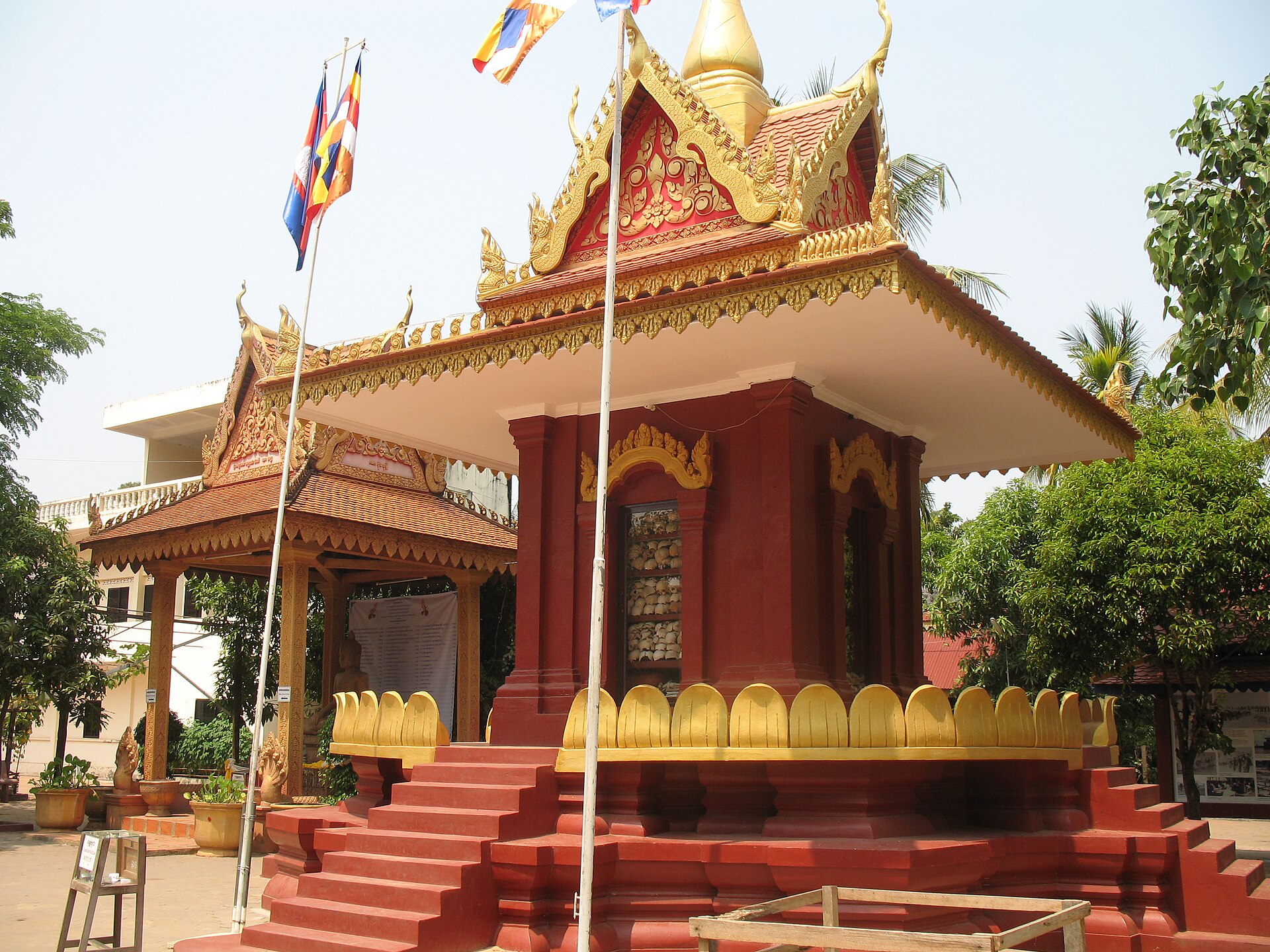
Wat Thmey is a working Buddhist pagoda on the road from Siem Reap to Angkor Wat, and the town’s memorial to the victims of the Khmer Rouge. During the regime of 1975 to 1979 the pagoda was used as a place of detention and killing. Today a memorial stupa holds the remains of victims, and a small exhibition tells the story of those years in Siem Reap.
1975 to 1979Khmer Rouge period
ActiveWorking pagoda with resident monks
FreeEntry; donations welcome
30 to 60 minTime to allow
Most visitors to Siem Reap come for the temples and leave without ever touching the country’s recent past. Wat Thmey is a short stop, and a quiet one, but it changes how many people see the rest of their trip. The monks, the schoolchildren and the Cambodians you meet over the following days all live with this history, and a half-hour here helps you understand that.
What happened here
On 17 April 1975 the Khmer Rouge took power in Cambodia. Over the next three years and eight months, between 1.5 and 2 million people died from execution, forced labour, starvation and disease. Cities were emptied, religion was banned, and pagodas across the country were closed, damaged or turned to other uses.
1975
The Khmer Rouge take control. Siem Reap’s population is forced into the countryside, and Wat Thmey stops functioning as a pagoda.
1975 to 1979
The pagoda grounds are used to hold prisoners. Many are killed here and buried in pits and a well nearby.
January 1979
The regime falls. Families begin, slowly, to search for the missing.
1980s
Remains are recovered from the well and mass graves around the pagoda.
1990s
The pagoda is restored as a place of worship, and a memorial stupa is built to hold the remains of victims.
Today
Wat Thmey is again an active monastery, with a school, resident monks and a small exhibition about the Khmer Rouge period.
Estimates of how many people died at Wat Thmey vary, and the true number will probably never be known. Those who were held here came from Siem Reap and the surrounding villages: farmers, teachers, former soldiers and officials, monks and their families.
What you see at Wat Thmey
The site is small and simple. There are no ticket barriers or audio guides, and the information boards are basic. What matters is the setting: a living pagoda where the memorial stands a few steps from the classrooms and the monks’ quarters.
The memorial
The stupa
A red and gold memorial stupa in the courtyard. Behind its glass panels are the skulls and bones of victims recovered nearby. It is the centre of the site and a place of prayer.
The exhibition
Photographs and panels
A photo exhibition prepared with the Documentation Center of Cambodia, showing the forced evacuations and the life of ordinary people under the regime.
Testimony
A survivor’s paintings
A series of paintings telling the story of a man held and tortured here who survived. Some scenes are distressing.
The grounds
The well and the pagoda
A marked well where remains were found, beside the prayer hall and monastery buildings that are in daily use again.
Some of the displays describe and depict violence directly. Adults can decide for themselves how closely to look. With children, it is worth walking ahead and choosing what to share.
A survivor’s story
One of the few people known to have survived imprisonment at Wat Thmey is Sum Rithy. He was brought here in 1976 as a young man and was kept alive because of his skill as a mechanic. He later wrote a memoir, Surviving the Genocide in the Land of Angkor.
For many years he has often been at the pagoda to talk with visitors and sign copies of his book. Whether you meet him on a given day is a matter of chance, and it is best treated as a privilege rather than something to plan around. If you do meet him, listening is the most important thing you can do.
Why the monks may approach you
Young monks and students at Wat Thmey sometimes ask visitors to practise English with them. It is a friendly custom, not a sales pitch. A few minutes of conversation is a gentle way to end a difficult visit, and a reminder of the country’s recovery.
Opening hours and entry
Opening hours
Daily, in daylight hours, usually from early morning to about 6:00 pm; confirm locally
Entry
Traditionally free; a donation to the pagoda is appreciated. Some visitors report a small fee, so carry a few dollars
Time needed
30 minutes to an hour
Guides
No official guide service; a private guide gives valuable context
Children
Some displays are graphic and unsuitable for young children
Rules and etiquette
Wat Thmey is first of all a place of worship and a grave. Please treat it with the same respect you would give a cemetery at home.
Please do
Cover your shoulders and knees
Take off your shoes before entering the prayer hall
Keep your voice low near the stupa
Leave a donation in the box if you can
Please don’t
Take selfies or posed photos at the stupa
Photograph the remains close up
Touch or climb the memorial
Photograph monks or students without asking first
Our advice
Go early or late. Mornings and late afternoons are cooler and quieter, and the monks are often about.
Come with a guide if you can. The signs are brief. A Cambodian guide can explain what the displays do not, and often has family stories of the period.
Leave some space afterwards. It is a short visit but a heavy one. A quiet coffee or a walk by the river works better than rushing to the next sight.
How to get there
Wat Thmey is on the road from Siem Reap town to Angkor Wat, on the northern edge of town. From the Old Market or Pub Street it is a 5 to 10 minute tuk-tuk ride, and PassApp and Grab both work well. Many travellers stop here on the way back from the temples. The Angkor National Museum is also on the way to the temples, and the two fit easily into one afternoon.
Wat Thmey, Tuol Sleng and Choeung Ek
If you are also travelling to Phnom Penh, you will have the chance to visit the two most important memorials in the country: the Tuol Sleng Genocide Museum (S-21) and the Choeung Ek killing fields. Since 2025 both have been part of a UNESCO World Heritage Site. They tell the story on a national scale, in far more depth.
Wat Thmey is not a substitute for them, but it matters in its own right. It shows that the killing was not confined to the capital, and that every town and district has its own memorial. If Siem Reap is your only stop in Cambodia, it is a respectful and honest way not to leave the subject out.
In Siem Reap, the War Museum Cambodia covers the wider decades of conflict, from the civil war to the last Khmer Rouge holdouts in the 1990s.
Visiting with My Travel Factory
On our private tours, a Cambodian guide can take you to Wat Thmey and share the context the displays leave out, at a pace that suits you. We add it to Siem Reap stays such as our Siem Reap Slow Travel, and pair it with Tuol Sleng and Choeung Ek on journeys that include Phnom Penh, like our Phnom Penh & Angkor Discovery. Get in touch and we will plan it with care.
Questions travellers ask
What is Wat Thmey in Siem Reap?
An active Buddhist pagoda that was used by the Khmer Rouge as a place of detention and killing. It is now Siem Reap's memorial to the victims of that period.
Is Wat Thmey the killing fields of Siem Reap?
Yes. It is often called the Siem Reap killing fields, because prisoners were killed and buried in the grounds and nearby.
Is there an entrance fee at Wat Thmey?
Entry has traditionally been free, with donations to the pagoda welcome. Some visitors report a small fee, so carry a few dollars.
How long do you need at Wat Thmey?
30 minutes to an hour is enough for the stupa, the exhibition and the grounds.
Where is Wat Thmey?
On the road from Siem Reap to Angkor Wat, on the northern edge of town, 5 to 10 minutes by tuk-tuk from the Old Market.
Is Wat Thmey suitable for children?
Some displays are graphic. It is not suitable for young children, and parents of older children may want to look first and choose what to share.
What should I wear to Wat Thmey?
Cover your shoulders and knees, and remove your shoes if you enter the prayer hall.
Is Wat Thmey worth visiting if I am also going to Phnom Penh?
Yes, though Tuol Sleng and Choeung Ek tell the story in much more depth. Wat Thmey shows that the killing reached every part of the country.
Can I take photos at Wat Thmey?
Photos of the pagoda and grounds are generally fine, but please avoid selfies and close-up photos of the remains, and ask before photographing monks.
Who is Sum Rithy?
One of the few known survivors of imprisonment at Wat Thmey, kept alive for his skill as a mechanic. He wrote a memoir and has often been at the pagoda to meet visitors.
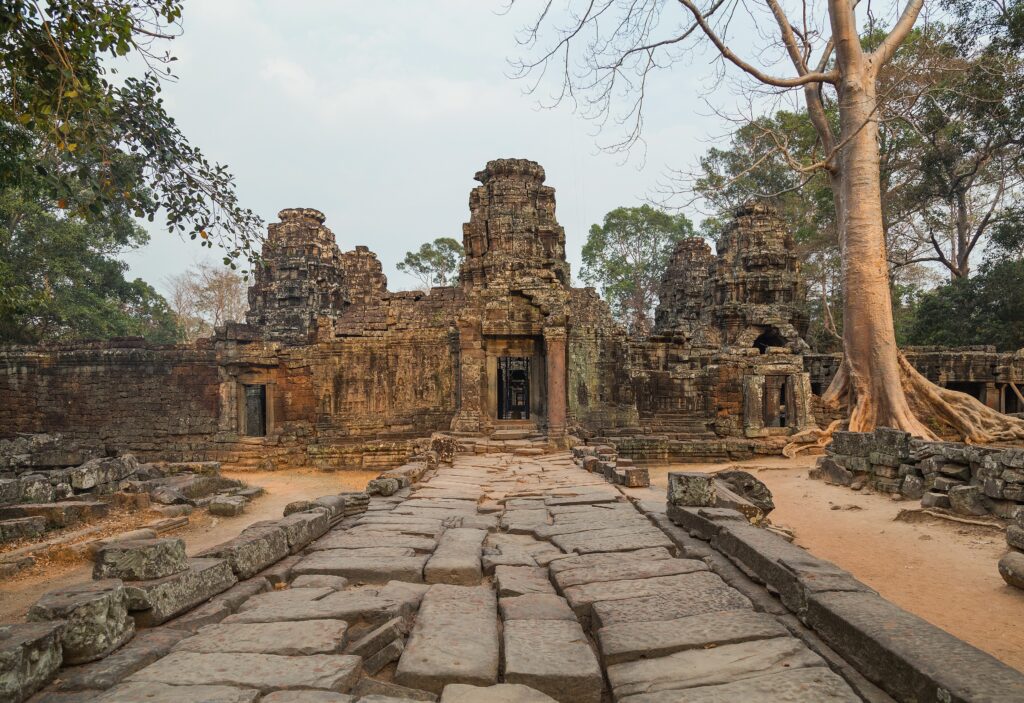
Banteay Kdei is a late 12th-century Buddhist monastery temple in the Angkor Archaeological Park, built by King Jayavarman VII in the Bayon style. It lies just…
Where
Small Circuit, Angkor Archaeological Park, just east of Ta Prohm
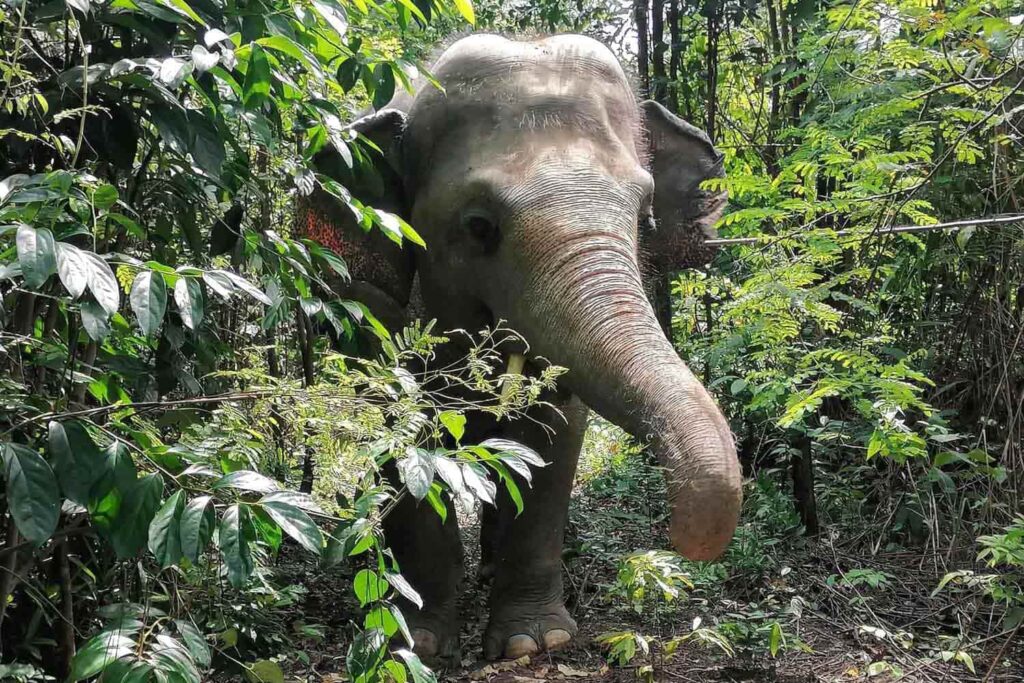
Cambodia Wildlife Sanctuary is an elephant rescue and forest conservation project about 100 km north of Siem Reap, developed with the Save Elephant Foundation. It protects…
Where
About 100 km north of Siem Reap, on the edge of Kulen Promtep Wildlife Sanctuary