Visiting with Tuol Sleng, as one difficult half-day
Memorials and historyType
In short
Choeung Ek, about 17 km south of Phnom Penh, is the best known of the Khmer Rouge killing fields, where most prisoners from the S-21 prison were executed and buried between 1977 and 1979. Of 129 mass graves identified, 86 were excavated, and a Buddhist memorial stupa now holds the remains of victims. It is open daily from 8:00 am to 5:30 pm, the ticket includes an audio guide, and since 2025 it has been part of a UNESCO World Heritage Site.
Dangkao district, about 17 km south of central Phnom Penh
Getting there
30 minutes to an hour by tuk-tuk or car
Period
Main period of killings 1977 to 1979
Mass graves
129 identified, 86 excavated
Memorial
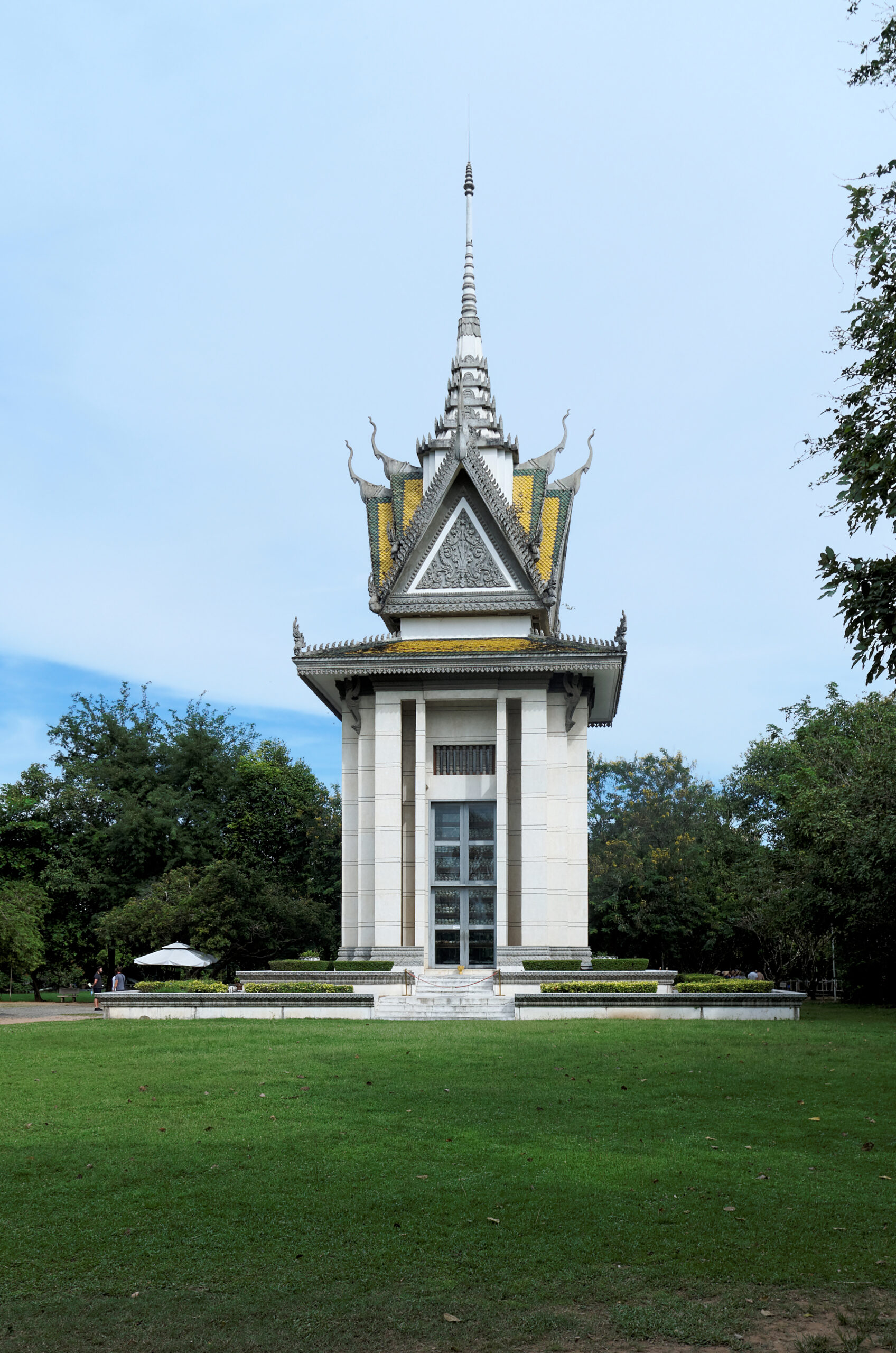
Buddhist stupa holding the remains of victims, established 1988
UNESCO
Part of the Cambodian Memorial Sites, inscribed 11 July 2025
Opening hours
Every day, 8:00 am to 5:30 pm
Ticket
$6 for foreign visitors including audio guide; confirm locally
Time needed
90 minutes to two hours
Best combined with
Tuol Sleng Genocide Museum, visited first
The Choeung Ek killing fields, about 17 kilometres south of central Phnom Penh, are the best known of the sites where the Khmer Rouge executed and buried their prisoners. Most of those killed here had been held at the S-21 prison in the city. Today Choeung Ek is a memorial, centred on a Buddhist stupa, and since July 2025 it has been part of a UNESCO World Heritage Site.
1977 to 1979Main period of killings
129Mass graves identified
1988Memorial established
17 kmSouth of Phnom Penh
2025UNESCO World Heritage
Choeung Ek is green and quiet now. There are trees, a pond, birdsong and neat paths between grassy hollows. That calm is part of what makes the visit so affecting. The audio guide carries the story, and most people walk the route slowly and in silence, stopping often.
History of Choeung Ek
Before the war, Choeung Ek was an orchard and a Chinese cemetery on the outskirts of Phnom Penh. After the Khmer Rouge emptied the city in April 1975, the regime used the site to kill and bury people sent from the S-21 prison. Most of the killings here took place between 1977 and early 1979, as the regime’s purges grew.
Before 1975
The land is an orchard and a Chinese cemetery south of the city.
17 April 1975
The Khmer Rouge take Phnom Penh and force its population into the countryside.
1977 to 1979
Prisoners from S-21 are brought to Choeung Ek by truck, usually at night, and killed.
7 January 1979
The regime falls. The site is discovered in the months that follow.
1980
Excavation begins. Of 129 mass graves identified, 86 are opened, and the remains of 8,895 people are recovered.
1988
A memorial is established, and the Buddhist memorial stupa is completed soon after to house the remains.
11 July 2025
Choeung Ek, Tuol Sleng and the former M-13 prison are inscribed together on the UNESCO World Heritage List as the Cambodian Memorial Sites.
The remaining graves have been left undisturbed. After heavy rain, fragments of bone and cloth still sometimes surface on the paths. Staff collect them, and visitors are asked not to touch anything they see.
The link with Tuol Sleng (S-21)
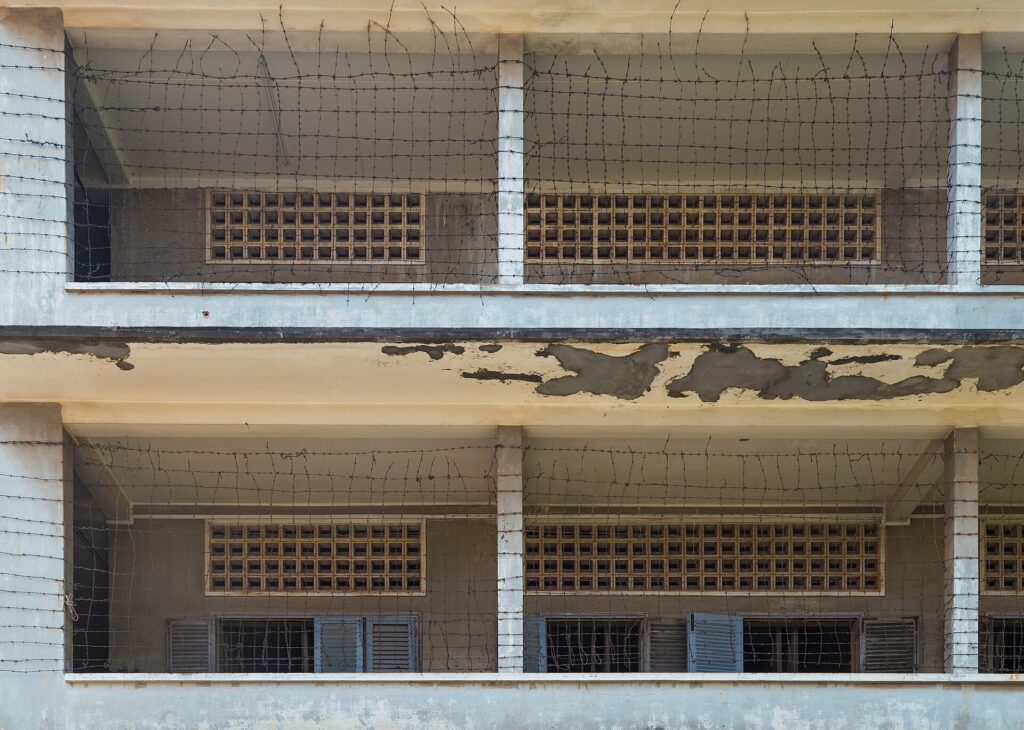
Choeung Ek is the second half of the story that begins at the Tuol Sleng Genocide Museum in central Phnom Penh. At S-21, prisoners were photographed, interrogated and forced to confess. When the prison had no further use for them, most were taken south to Choeung Ek.
Seeing both places, in that order, gives the fullest understanding of what happened. It is also the order events happened in. Many people find that each site makes the other easier to comprehend, even as it makes the whole harder to bear.
What you see on the walk
The visit follows a numbered route around the site, with around twenty stops on the audio guide. There are benches along the way, and you can pause the audio at any point.
The approach
The truck stop and buildings
Markers show where the trucks from S-21 arrived and where the few wooden buildings once stood. Nothing of them remains.
The graves
The excavated pits
Grass-covered hollows where the mass graves were opened, some fenced and marked with signs explaining what was found.
The trees
Places of tribute
Certain trees on the route are now hung with thousands of coloured bracelets left by visitors. The audio guide explains why, and many people find these the hardest places on the walk.
Reflection
The lakeside path
A quiet path around a pond, where the audio guide plays testimony and music. A good place to sit for a while.
The memorial
The stupa
The tall white memorial stupa at the centre of the site. Behind glass, it holds the skulls of more than 5,000 victims, arranged by age and sex. Visitors remove their shoes and may leave flowers or incense.
Context
The museum
A small museum with objects found on site, photographs and a short documentary film, which gives background on the regime and its leaders.
Opening hours, tickets and audio guide
Opening hours
Every day, 8:00 am to 5:30 pm
Ticket
$6 for foreign visitors, including the audio guide; confirm locally, as prices change
Audio guide
Included, in many languages, with around twenty stops and survivor testimony
Payment
Cash, US dollars or riel
Time needed
90 minutes to two hours
Children
Not recommended for young children; better suited to prepared teenagers and adults
Our advice
Go in the morning. The site is open and shaded only in parts. It is cooler early, and quieter too.
Use the audio guide, not a group commentary. The site is kept quiet so that everyone can listen. Even with a private guide, the audio is the heart of the visit.
Take your time. Sit on the benches, listen to the optional tracks, and let the place speak.
Plan something gentle afterwards. Lunch by the river or a rest at your hotel is better than more sightseeing straight away.
Rules and etiquette
Choeung Ek is a grave site and a place of prayer for Cambodian families. Please treat it with the respect you would give a cemetery at home.
Please do
Cover your shoulders and knees
Take off your hat and shoes at the memorial stupa
Stay on the marked paths and boardwalks
Keep your voice low throughout
Please don’t
Take selfies or posed photographs
Touch or pick up anything you see on the ground
Walk on the graves or step over fences
Fly a drone or play music
How to get there
Choeung Ek is in Dangkao district, about 17 kilometres south of central Phnom Penh. By tuk-tuk or car the journey takes 30 minutes to an hour, depending on traffic. Most visitors hire a tuk-tuk or driver for a half day, who waits while you walk the site and then takes you back or on to Tuol Sleng. PassApp and Grab can take you there, but finding a ride back may take longer, so a return arrangement is easier.
Tuol Sleng and Choeung Ek in one morning
This is the plan we recommend to most of our guests:
8:00 am Tuol Sleng Genocide Museum, two to three hours with the audio guide
30 to 40 minutes by road south to Choeung Ek
Late morning Choeung Ek, 90 minutes to two hours
Afternoon Free time; few people feel like more sightseeing
If you are also visiting Siem Reap, the Wat Thmey memorial shows that the killing reached every province, not only the capital.
Visiting with My Travel Factory
On our private tours, a Khmer guide takes you to Tuol Sleng and Choeung Ek, gives the context the sites cannot, and leaves you space when you need it. Many of our guides have these stories in their own families. The visit is part of our Phnom Penh & Angkor Discovery and Cambodia Classic Highlights journeys, and we can add it to any trip through Phnom Penh.
Questions travellers ask
What is Choeung Ek?
The best known of the Khmer Rouge killing fields, where most prisoners from the S-21 prison in Phnom Penh were executed and buried. It is now a memorial and part of a UNESCO World Heritage Site.
Which should I visit first, Tuol Sleng or Choeung Ek?
Tuol Sleng, then Choeung Ek. That is the order events happened in, and each visit makes more sense that way.
How far is Choeung Ek from Phnom Penh?
About 17 km south of the city centre, or 30 minutes to an hour by tuk-tuk depending on traffic.
How much does it cost to visit Choeung Ek?
The ticket for foreign visitors has been $6 including the audio guide. Prices can change, so confirm locally.
What are the Choeung Ek opening hours?
Every day from 8:00 am to 5:30 pm.
How long do you need at Choeung Ek?
90 minutes to two hours to walk the route with the audio guide and visit the museum.
Is Choeung Ek upsetting?
Yes, and it is meant to be. Go early, allow quiet time afterwards, and do not schedule anything social straight after.
Is Choeung Ek suitable for children?
It is not recommended for young children. Teenagers who have been prepared for the visit often find it meaningful.
What should I wear to Choeung Ek?
Clothes that cover your shoulders and knees. You will remove your hat and shoes at the memorial stupa.
Is Choeung Ek a UNESCO World Heritage Site?
Yes. Since 11 July 2025 it has been part of the Cambodian Memorial Sites, with Tuol Sleng and the former M-13 prison.
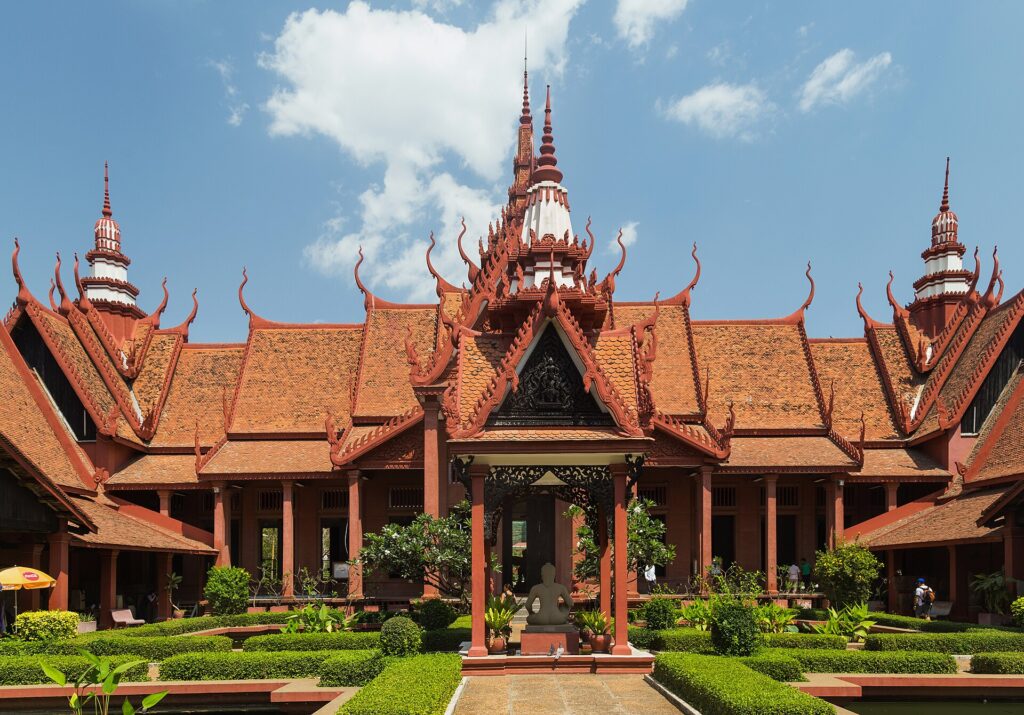
The National Museum of Cambodia in Phnom Penh holds the world's largest collection of Khmer art, more than 14,000 objects from prehistory to the post-Angkor period.…
Where
Corner of Street 13 and Street 178, beside the Royal Palace, Phnom Penh