A peaceful early morning on the Mekong with rare wildlife
Wildlife and conservationType
In short
The Irrawaddy dolphins at Kampi are a critically endangered population of river dolphins living in a deep pool of the Mekong 15 km north of Kratie, in north-east Cambodia. Around 100 survive in the Cambodian Mekong: a 2020 census counted 89 and the government estimated about 105 in 2024. Community boats take visitors out for 60 to 90 minutes, for about $8 to $10 per person, and cut their engines so the dolphins can be watched quietly as they surface.
20 to 30 minutes by tuk-tuk, or by bicycle along the river road
Boat price
About $10 per person for one or two, about $8 per person for three or more
Trip length
About 60 minutes in the dry season, up to 90 minutes in the wet season
Best time of day
Early morning, 7:00 to 9:00 am, or late afternoon, 4:00 to 6:00 pm
Best season
December to May, when low water concentrates the dolphins
Population
89 in the 2020 census; about 105 by 2024 government estimate
Status
Mekong population critically endangered
What to expect
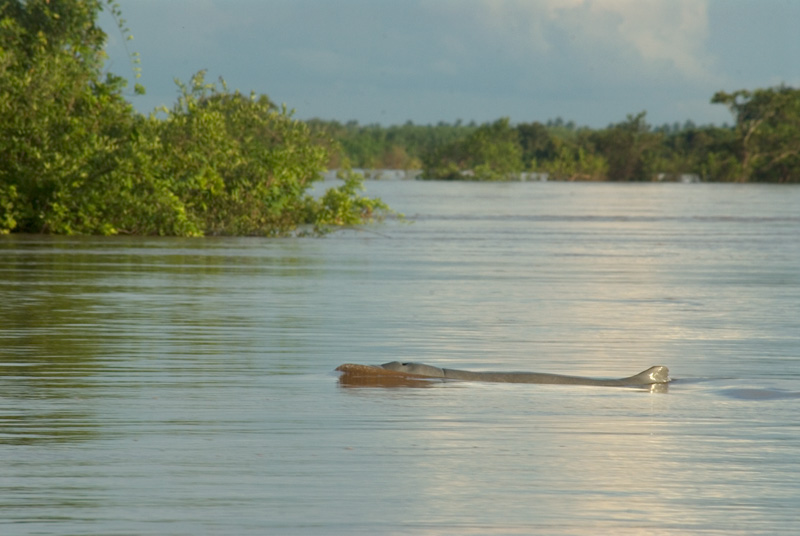
Brief surfacings and soft breaths, not jumps or tricks
Nearby
Kampi rapids, Phnom Sambok pagoda, Koh Trong island, Kratie riverfront
The Irrawaddy dolphins at Kampi live in a deep pool of the Mekong River 15 kilometres north of Kratie, in north-east Cambodia. Kampi is the most reliable place in the country to see these rare, round-headed river dolphins, from small wooden boats that cut their engines and drift while the dolphins surface around them.
15 kmNorth of Kratie town
Around 100Dolphins in the Mekong
$8 to $10Per person for a boat
60 to 90 minOn the water
Critically endangeredMekong population
This is not a dolphin show. There are no leaps and no tricks, just a broad, quiet river, the knock of a paddle and, every few minutes, the soft puff of a dolphin breathing as a grey back rolls through the water. For many travellers it is one of the most peaceful and moving hours in Cambodia.
About the Mekong dolphins
The Irrawaddy dolphin is found in coastal waters and a few great rivers of South and South-East Asia. It looks quite unlike the sea dolphins most people know. It has no beak, a high rounded forehead, a small, blunt dorsal fin and a grey body paler underneath. Adults reach about 2.3 metres and weigh 90 to 200 kilograms.
The Mekong population is one of only three river populations of the species in the world. The dolphins live along about 180 kilometres of the river between Kratie and the Khone Falls on the Laos border, gathering in deep pools, and Kampi is one of the most important of them.
Look for
A rounded head
When they surface you see a smooth, round head and a short back with a small fin, rather than a pointed snout.
Listen for
The breath
On a calm day you often hear them before you see them: a short, sharp puff as they breathe at the surface.
Behaviour
Gentle and shy
They surface briefly, often in small groups, and dive for a minute or more. Occasionally one spy-hops or splashes, but that is a bonus.
Local belief
Held in regard
Many river communities along the Mekong hold the dolphins in special regard, and their survival is a point of local pride.
A population on the edge
The Mekong’s Irrawaddy dolphins are listed as critically endangered. After decades of decline, a census by WWF and Cambodia’s Fisheries Administration counted 89 dolphins in 2020, a figure described as stable, with more calves surviving than before. In mid-2024 the Ministry of Agriculture, Forestry and Fisheries put the number at about 105.
Nets. Accidental drowning in gillnets is the biggest single danger, along with illegal electrofishing.
Dams and flow. Dams upstream and changes to the river’s flow affect the deep pools and the fish the dolphins feed on.
Protection. Conservation zones restrict fishing around key pools, including Kampi, and patrols enforce them.
Recovery. New calves are recorded every year, and each birth is reported in the Cambodian press as good news.
Tourism plays a part. Boat fees give local families an income that depends on living dolphins, and a visit shows that the community and the country value them.
What to expect on the water
You buy a ticket at the riverside, climb into a small wooden boat with a boatman and a life jacket, and head out into the pool. Near the dolphins the engine is cut and the boatman paddles or lets the boat drift, keeping a respectful distance.
Sightings are very likely but never guaranteed. On a typical trip you see dolphins surface several times, sometimes close to the boat, sometimes further off. Patience is rewarded; the quieter you are, the better it goes.
Photography. Dolphins surface for only a second or two, so photographing them takes patience. Use a fast shutter, keep the camera ready rather than raised, and watch the water where the last one went down. Many people find it more rewarding to put the camera away after a few tries and simply watch.
From the bank. You can sometimes spot dolphins from the riverbank at Kampi, but a boat takes you into the pool and gives you a far better chance of seeing them well.
Please do
Use the official community boats at the Kampi landing
Stay seated and keep your voice low
Ask your boatman to cut the engine near the dolphins
Wear the life jacket provided
Please don’t
Chase, crowd or approach the dolphins
Throw food or anything else into the water
Use a drone over the pool
Expect jumps or performances; this is wild wildlife
Boat tickets and times
Location
Kampi dolphin pool, Sambok commune, 15 km north of Kratie
Boat price
About $10 per person for one or two people, about $8 per person for three or more; children less
Trip length
About 60 minutes in the dry season and up to 90 minutes in the wet season
Booking
Not needed; buy at the landing
Boat size
Small wooden boats for four or five passengers
Best times
Early morning, roughly 7:00 to 9:00 am, or late afternoon, 4:00 to 6:00 pm
Prices are set by the local cooperative and are reviewed from time to time, so confirm them when you arrive.
Best time to see the dolphins
Dolphins are at Kampi all year, but the dry season, from about December to May, is best. Low water concentrates them in the deep pool and the river is calmer, making them easier to spot. In the wet season the river is high and fast, and the dolphins spread out, so boat trips last longer to compensate.
Our advice
Go early or late. The water is calmer, the light softer, and the heat bearable. Late afternoon ends with a Mekong sunset.
Bring binoculars. A pair of binoculars and a camera with a zoom lens make a big difference.
Protect yourself from the sun. The boats have little or no shade; wear a hat and sunscreen.
Be patient. Give it the full hour. The best moments often come just as you think it is over.
Getting there and nearby
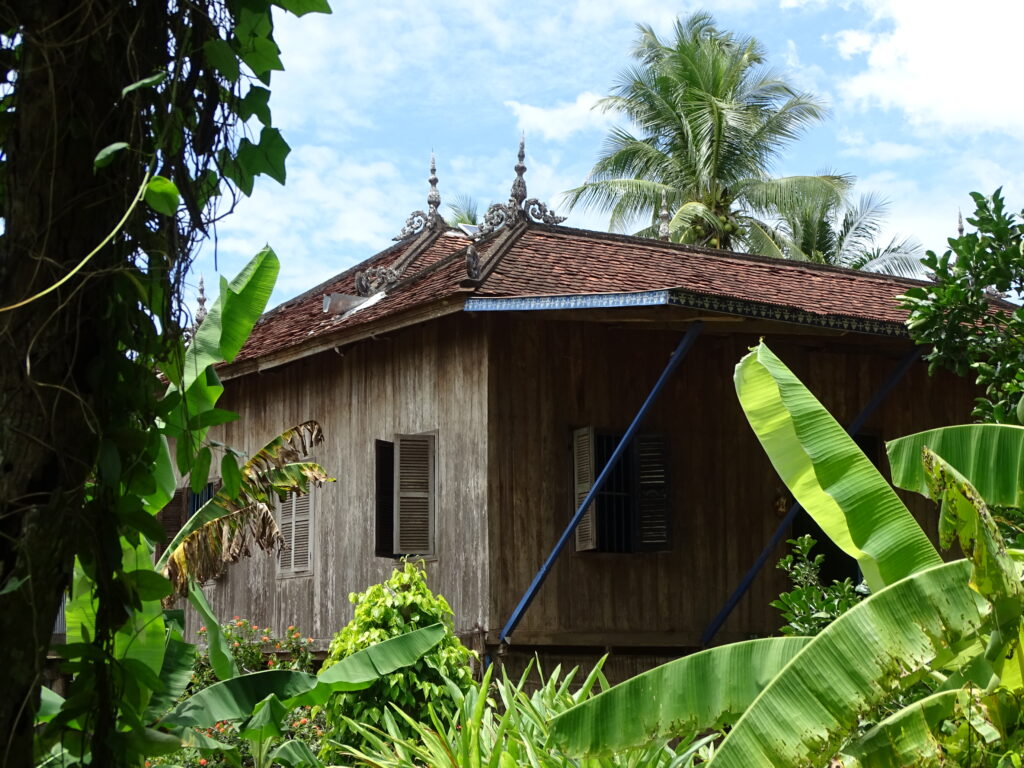
Kampi is 20 to 30 minutes north of Kratie town by tuk-tuk along the river road, which passes stilt houses, pagodas and sugar palms. Many people cycle it, which is lovely in the early morning. Kratie itself is a long half-day’s drive from Phnom Penh and a natural stop between the capital and the north-east.
6:30 am Tuk-tuk or bicycle north from Kratie along the Mekong
7:00 am Boat trip at the Kampi pool, about an hour
8:30 am Breakfast by the river, then on to the Kampi rapids and the hilltop pagoda of Phnom Sambok
Afternoon Ferry across to Koh Trong, a car-free island of farms and cycling tracks
We plan Kampi at the right time of day, with a guide who knows the river and a community homestay or riverside hotel nearby. A stop at Kratie fits naturally into our Highlands Expedition by dirt bike and Mondulkiri Farm Immersion journeys to the north-east. Ask us to add the dolphins to your trip.
Questions travellers ask
Where can you see Irrawaddy dolphins in Cambodia?
The most reliable place is the Kampi pool on the Mekong, 15 km north of Kratie. The dolphins live along the river between Kratie and the Laos border.
How many Irrawaddy dolphins are left in the Mekong?
A 2020 census by WWF and the Fisheries Administration counted 89. In 2024 the Cambodian government estimated about 105, helped by more calves surviving.
How much does the Kampi dolphin boat cost?
About $10 per person for one or two people and about $8 per person for groups of three or more, with lower prices for children. Confirm current prices at the landing.
How long is the dolphin boat trip at Kampi?
About 60 minutes in the dry season and up to 90 minutes in the wet season.
What is the best time to see the dolphins at Kratie?
Early morning or late afternoon, and in the dry season from December to May, when low water concentrates them in the pool.
Am I guaranteed to see dolphins at Kampi?
Sightings are very likely but never guaranteed. Be patient and quiet, and stay out for the full trip.
Do Irrawaddy dolphins jump?
Rarely. They usually surface briefly to breathe, showing a rounded head and back. It is a gentle, quiet experience.
Is dolphin watching at Kampi ethical?
Yes, when done properly. Use the community boats, which cut their engines near the dolphins and keep their distance. The fees support local families.
How far is Kampi from Kratie?
About 15 km north, 20 to 30 minutes by tuk-tuk along the river road.
Why are Mekong dolphins endangered?
Mainly because of accidental drowning in gillnets, illegal electrofishing and changes to the river from dams.
What else is there to do near Kratie?
Cycle car-free Koh Trong island, visit the Kampi rapids and the hilltop pagoda of Phnom Sambok, and watch sunset from the riverfront.