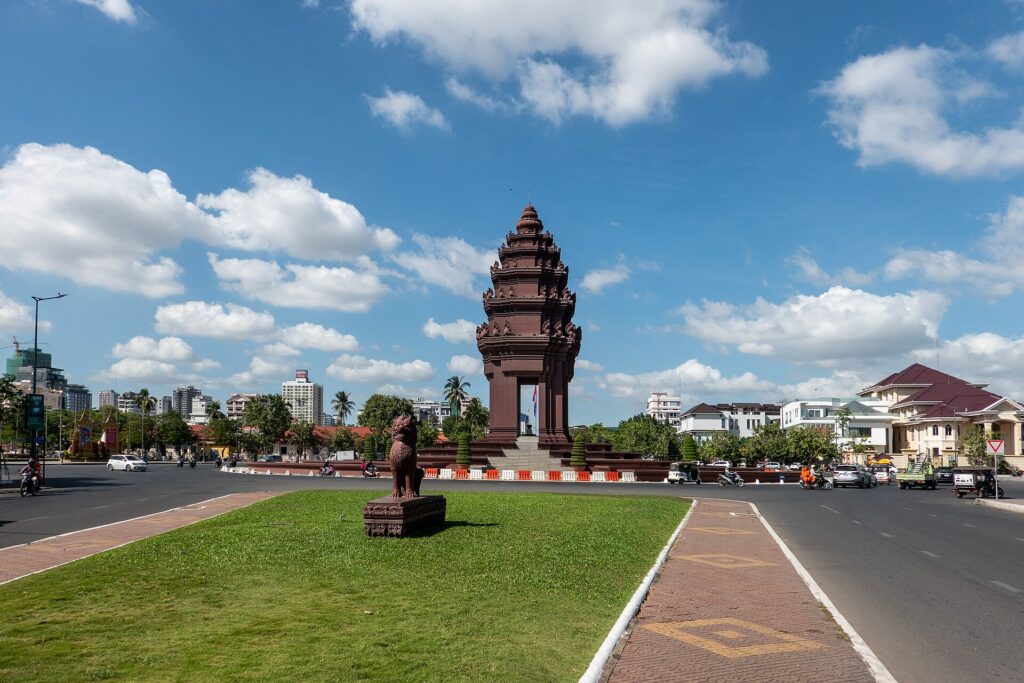
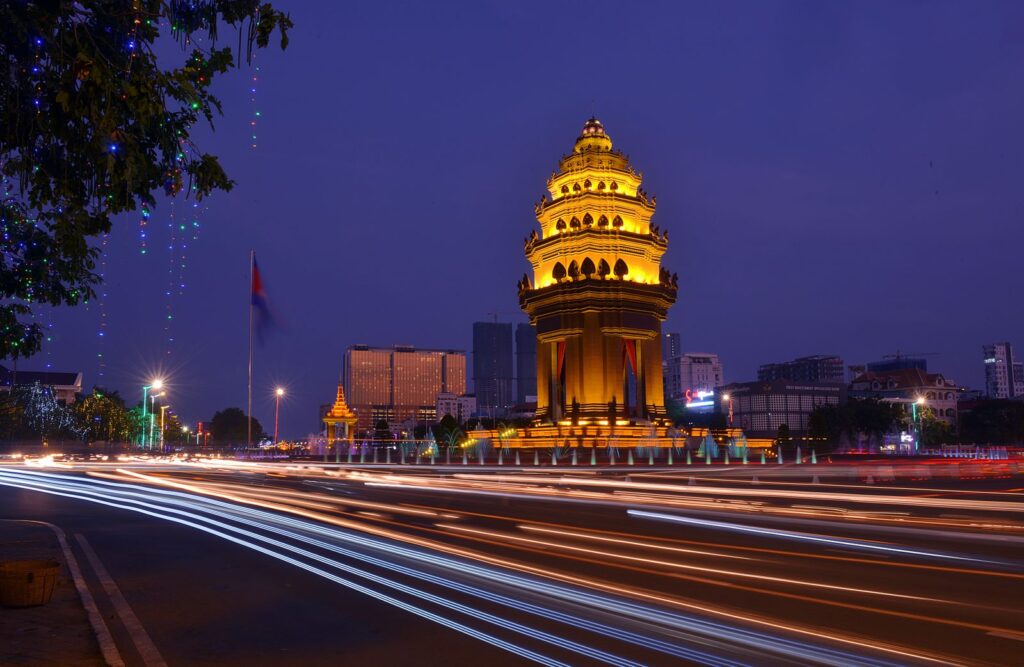
The Independence Monument by Vann Molyvann, Phnom PenhPhoto: PsamatheM, via Wikimedia Commons (CC BY-SA 4.0)
Journey III - Sangkum modernism & today - 5 days

New Khmer

After independence in 1953, a generation of architects led by Vann Molyvann created a style the world is only now rediscovering. New Khmer Architecture fused international modernism with Khmer ideas about water, climate and monumentality. This journey reads that legacy, and asks what is being preserved and lost today.

5Days 1953Onwards 1Architect meeting 24 hrReply time
In short

What this trip is

New Khmer is a 5 day, 4 night private architecture tour starting and ending in Phnom Penh. It covers the work of Vann Molyvann, Lu Ban Hap and their contemporaries - the Independence Monument, Chaktomuk Conference Hall, the National Olympic Stadium and the Institute of Foreign Languages - then today's skyline, a conversation with a local architect or heritage group, the ruined 1960s villas of Kep and the planned port city of Sihanoukville.

  • 1

    Molyvann

    The Independence Monument, Chaktomuk Hall and the Olympic Stadium - the buildings that defined a young nation.

  • 2

    Kep and the dialogue

    Ruined 1960s modernist villas reclaimed by jungle, and a meeting with local architects on heritage and the city's future.

  • 3

    The architect's note

    New Khmer buildings are designed for heat and monsoon: raised floors, double roofs, deep overhangs, perforated screens and cross-ventilation. Long before "sustainable design" was a slogan, these architects were building for the tropics without air-conditioning.

Highlights

What you will actually do

01 - Molyvann The National Olympic Stadium by Vann Molyvann, Phnom PenhPhoto: I G, via Wikimedia Commons (CC BY 2.0)

Vann Molyvann's Phnom Penh

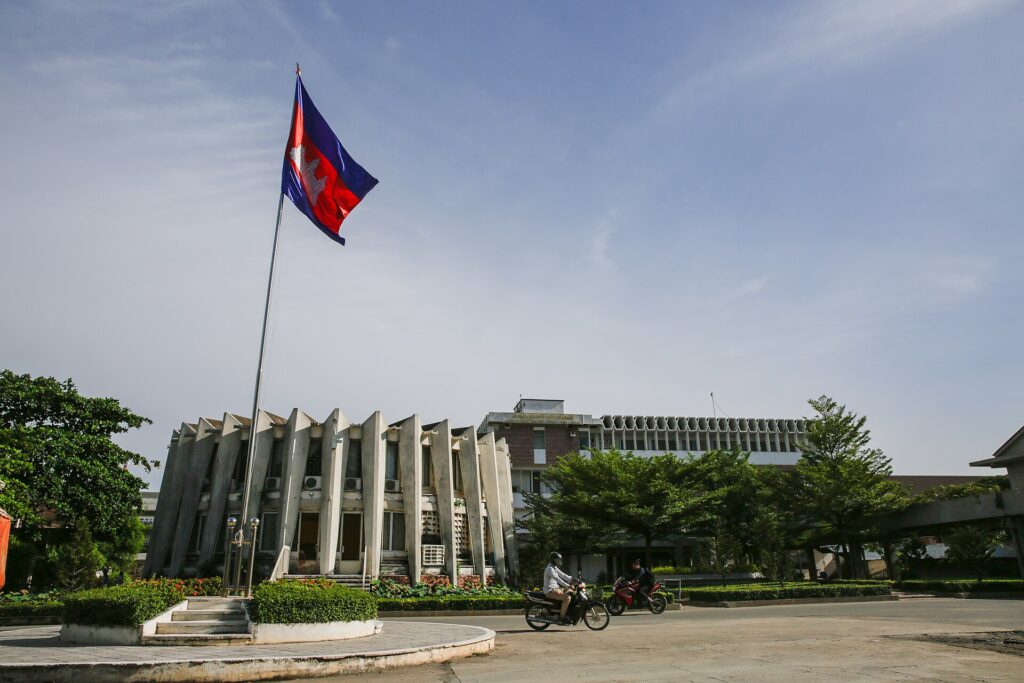
The lotus-bud Independence Monument (1962), Chaktomuk Conference Hall (1961) with its fan-shaped plan, and the Olympic Stadium, where moats and earthworks recall the Angkorian baray.

1961-1964MonumentStadium
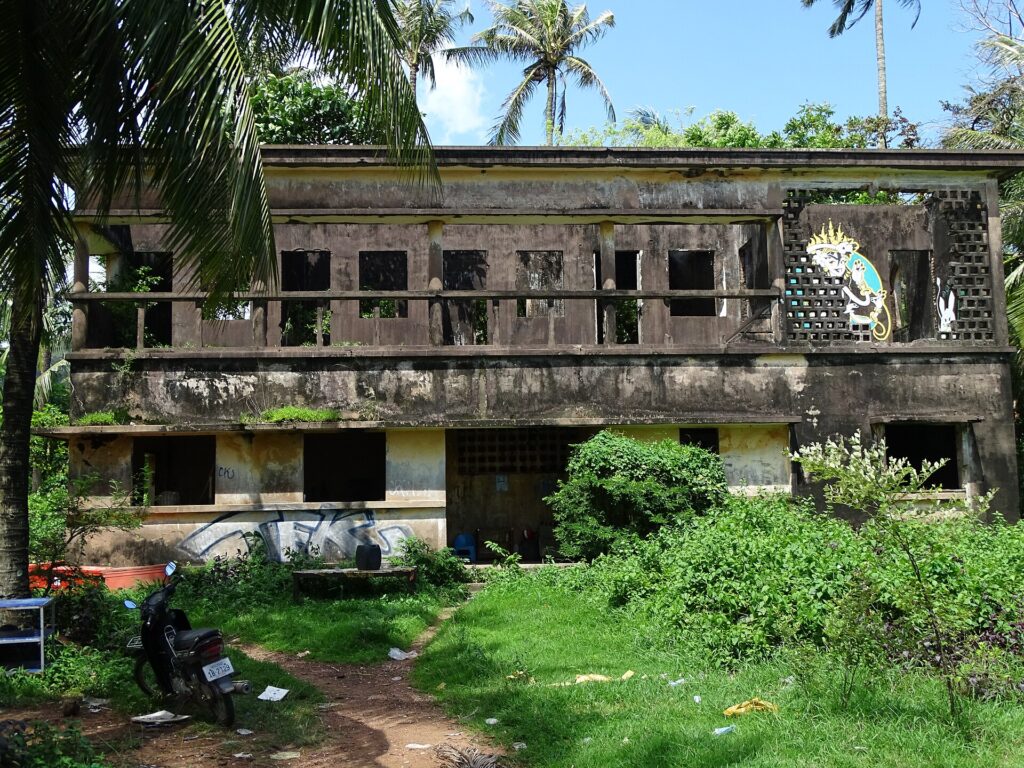
02 - Kep A roofless modernist villa reclaimed by jungle, KepPhoto: Adam Jones from Kelowna, BC, Canada, via Wikimedia Commons (CC BY-SA 2.0)

Modernist villas in the jungle

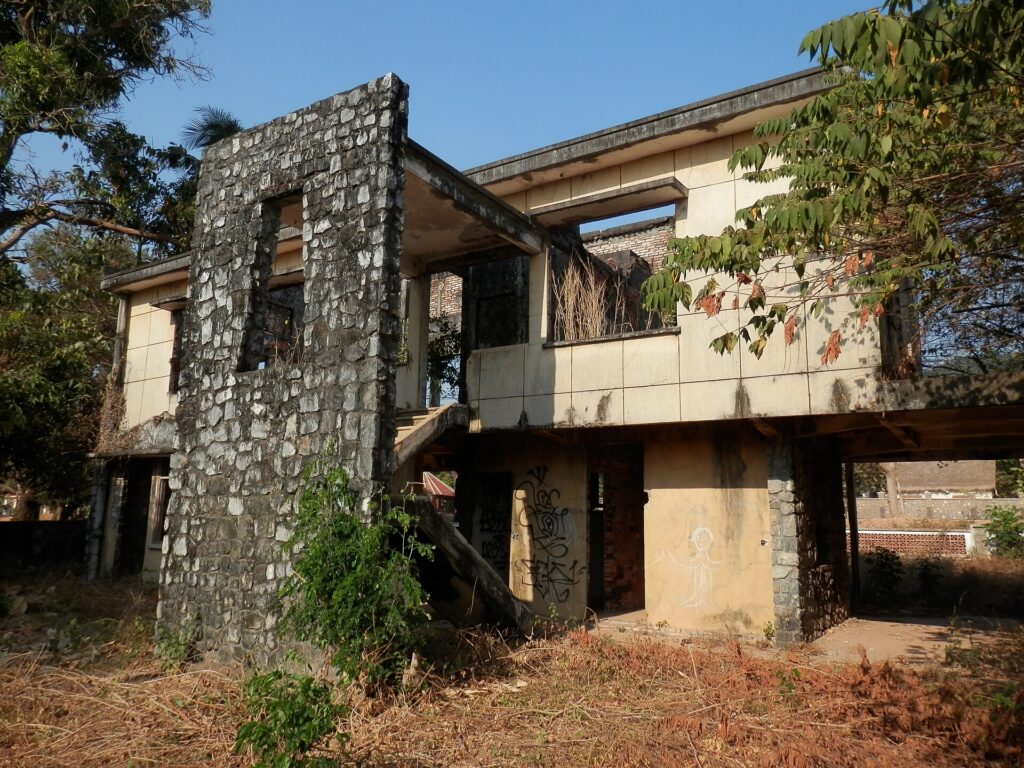
Kep was the seaside retreat of Phnom Penh's elite in the 1960s. Many of its villas are now roofless shells - among the most atmospheric modernist ruins in Asia.

1960sRuinsCrab market
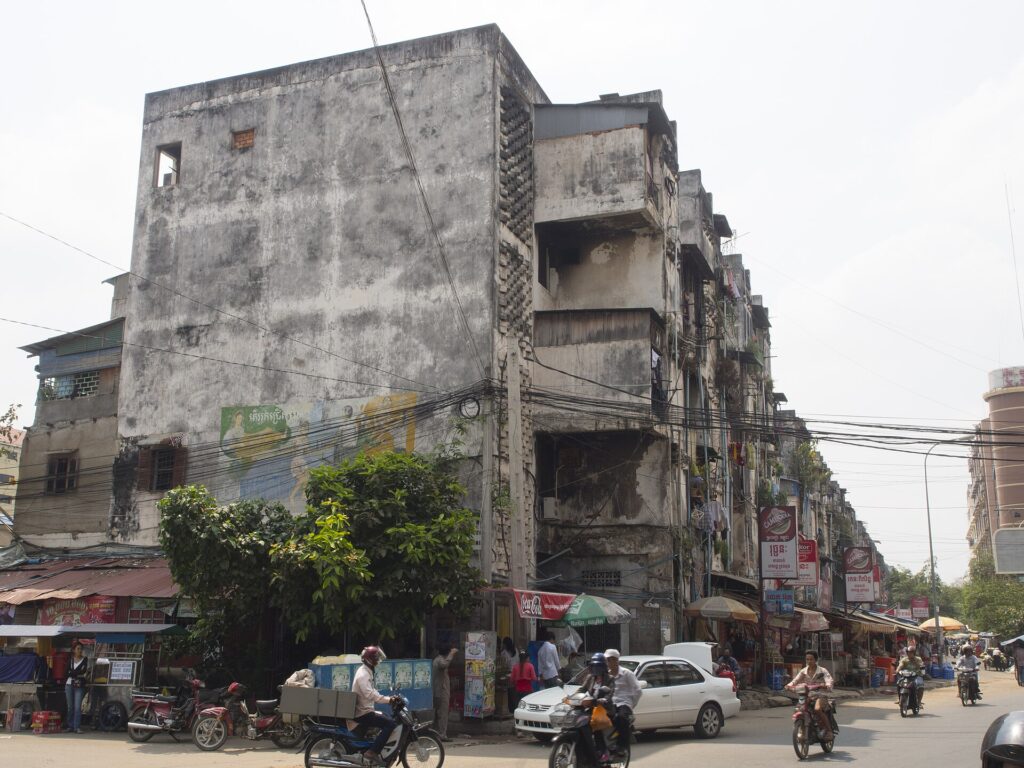
03 - Dialogue The White Building, Phnom Penh, before its demolition in 2017Photo: Myrmux, via Wikimedia Commons (CC BY-SA 4.0)

What is kept, and what is lost

The White Building (1963) was demolished in 2017. A conversation with a local architect or heritage group on preservation and the future of the city.

Local architectsHeritageToday
Day by day

5 days / 4 nights, hour by hour

Every timing below is a starting point, not a rule. Tell us your flights and we rebuild the shape of the trip around them.

Day 1

Vann Molyvann's Phnom Penh

Phnom Penh

The Independence Monument by Vann Molyvann, Phnom Penh
Photo: PsamatheM, via Wikimedia Commons (CC BY-SA 4.0)
Focus

Vann Molyvann's Phnom Penh

The Independence Monument (inaugurated 1962), a lotus-bud tower inspired by Angkorian prasats, then Chaktomuk Conference Hall (1961), its fan-shaped plan drawn from a palm leaf, and Vann Molyvann's own house, from outside or by arrangement.

Day 2

Modernism for a new nation

Phnom Penh

The Institute of Foreign Languages, Royal University of Phnom Penh
Photo: Nov Povleakhena, via Wikimedia Commons (Public domain)
Focus

Modernism for a new nation

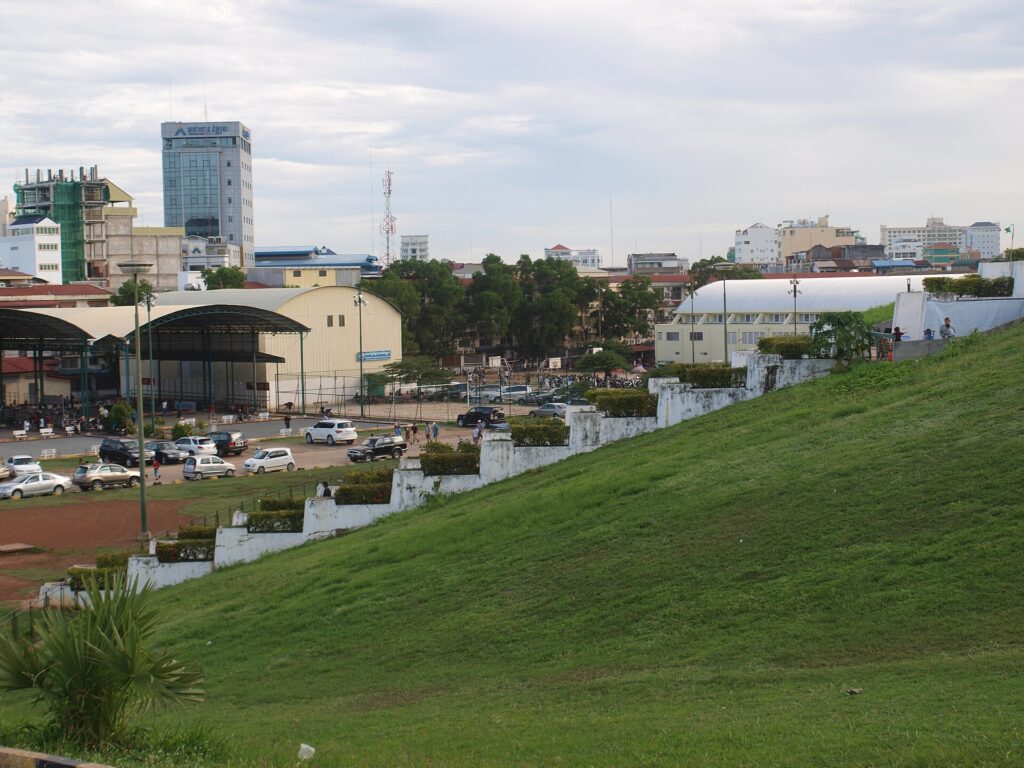
The National Olympic Stadium (1964), where moats and earthworks recall the Angkorian baray; the Institute of Foreign Languages at the Royal University of Phnom Penh; and the Institute of Technology of Cambodia, built with Soviet cooperation. End at the site of the White Building (1963, demolished 2017).

Day 3

Contemporary Phnom Penh

Phnom Penh

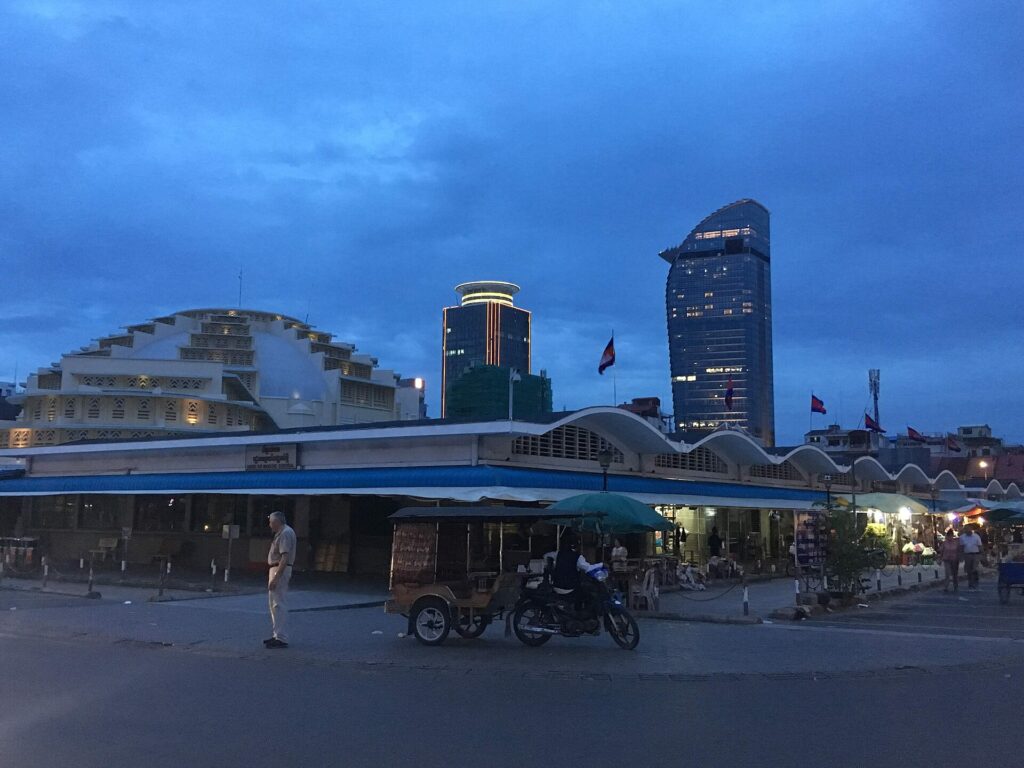
The contemporary Phnom Penh skyline
Photo: Pierre André, via Wikimedia Commons (CC BY-SA 4.0)
Focus

Contemporary Phnom Penh

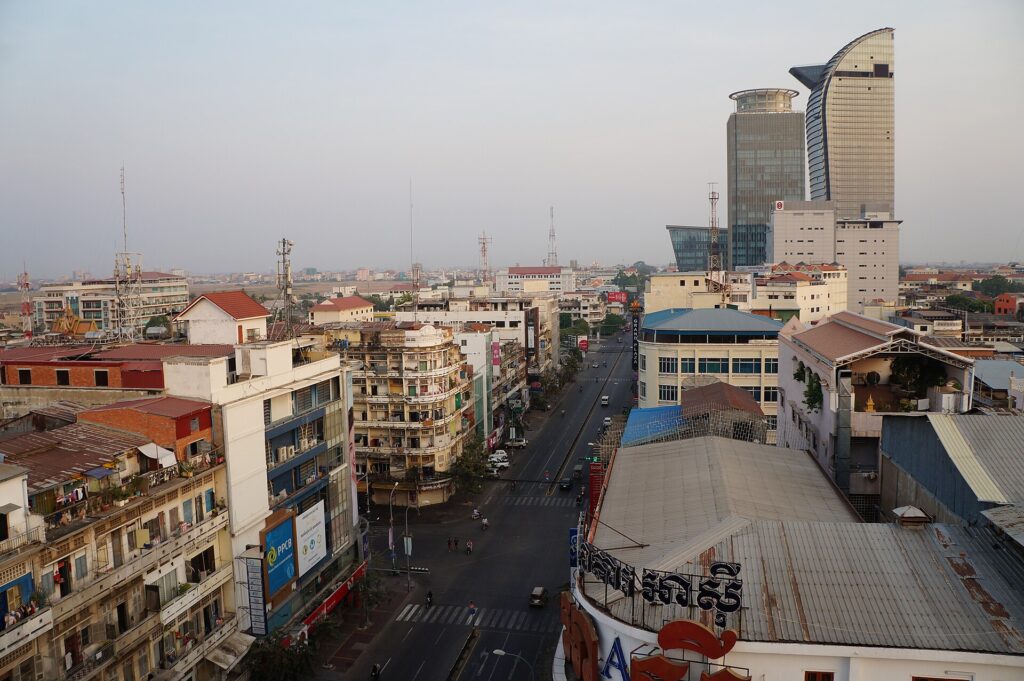
The Sangkum era set against today's skyline, from the Vattanac Capital tower to the Diamond Island developments and newer projects that reinterpret Khmer motifs. Afternoon conversation with a local architect or heritage group on preservation and the future of the city.

Day 4

Kep's modernist villas

Overnight Kep

A ruined 1960s modernist villa at Kep
Photo: Gonzo Gooner, via Wikimedia Commons (CC BY 3.0)
Focus

Kep's modernist villas

Transfer to Kep, the 1960s seaside retreat of Phnom Penh's elite. Its modernist villas, many now roofless shells overgrown with jungle, are among the most atmospheric modernist ruins in Asia. Sunset and fresh crab at the Kep crab market.

Day 5

Sihanoukville and return

Sihanoukville - Phnom Penh

Sihanoukville in 1964, the new port city
Photo: Don Christie, via Wikimedia Commons (CC BY-SA 4.0)
Focus

Sihanoukville and return

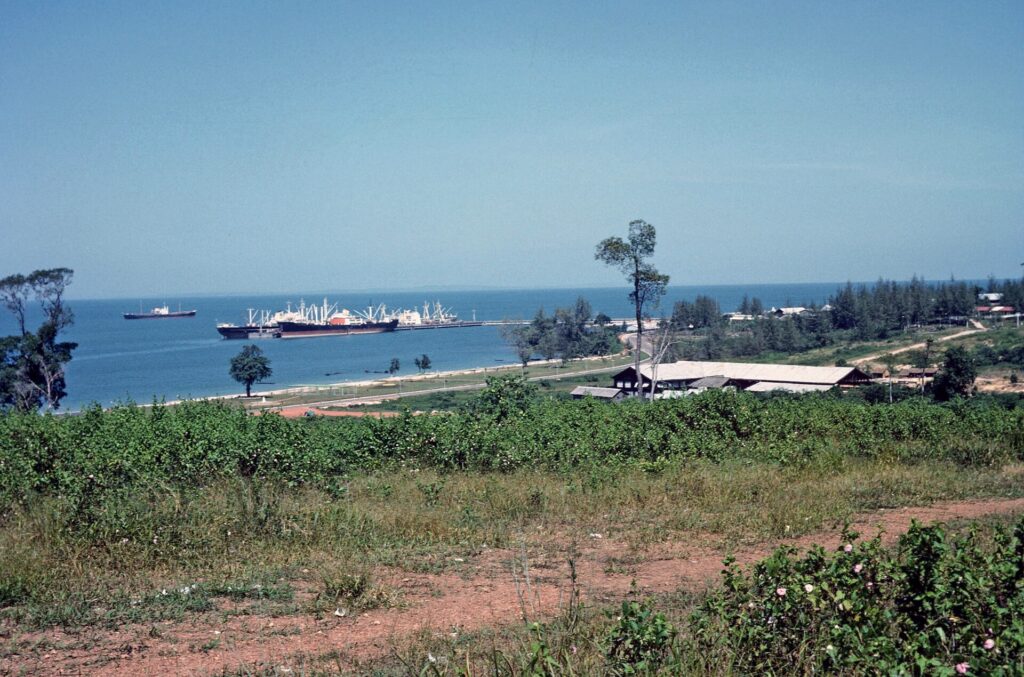
Sihanoukville, planned in the 1950s and 60s as Cambodia's modern port gateway, and the restored 1960s Independence Hotel. Back to Phnom Penh by expressway in the late afternoon.

No surprises

What is included, and what is not

Included

  • 4 nights' accommodation with daily breakfast
  • Private air-conditioned vehicle and driver
  • Specialist architecture guide
  • Entrance and access arrangements where available
  • Meeting with a local architect or heritage group
  • Seafood dinner at the Kep crab market
  • Bottled water daily

Not included

  • International flights and Cambodian visa fees
  • Travel insurance (strongly recommended)
  • Meals not listed as included
  • Drinks, tips and personal expenses
  • Optional activities and camera fees where charged
Answers

New Khmer questions, answered

Which hotel tier should I choose?
Every journey runs in three tiers, priced per person on request. Classic: characterful 3-star and boutique hotels with a private vehicle and guide - ideal for independent travellers and students. Superior, our most popular: handpicked 4-star and heritage boutique hotels, a specialist guide and selected dinners. Luxury: 5-star resorts and landmark heritage hotels, a premium vehicle, a senior specialist guide and curated dining.
Can the three journeys be combined?
Yes - as the Grand Architectural Journey of about 18 days. Begin with the Khmer Empire in Siem Reap, travel west to colonial Battambang, drop south to Kampot, Bokor and the modernist villas of Kep, and finish in Phnom Penh among the New Khmer landmarks. Transfers are sequenced so no ground is covered twice.
Who are these journeys for?
Architects, designers and students; culture-focused travellers; photographers; alumni and professional groups; and returning visitors who have done Angkor and want to understand the rest of the country. We also tailor them for universities and architecture associations.
Can every building be visited inside?
Not always. Several modernist buildings are private, government-occupied or under redevelopment, and access can change at short notice. We confirm arrangements close to travel and offer alternatives where needed.
What add-ons are available?
Banteay Chhmar temple (with Stone Kingdoms), an extra night in Kep, architectural sketching sessions, a professional photography guide and private dinners at heritage venues.
Go deeper

Experiences inside this trip

All experiences
Architecture experiences in Cambodia New Khmer & colonial

Architecture

Three private journeys: Stone Kingdoms, Colonial Traces and New Khmer.
Island experiences in Cambodia Beaches & isles

Island

Koh Rong beach escapes, snorkelling and island hopping.
Food experiences in Cambodia Khmer cuisine

Food

Cooking classes, street-food tours and Kampot pepper tastings.
Compare

The other architectural journeys

All journeys
01 Stone Kingdoms — Cambodia tour package 8 days / 7 nights
8 days - 7th to 13th century

Stone Kingdoms

Khmer temple building in the order it happened - from the brick towers of Sambor Prei Kuk to Angkor Wat and the clifftop at Preah Vihear.

  • RoutePhnom Penh - Kampong Thom - Siem Reap - Koh Ker - Preah Vihear
  • Best forArchitects, students and returning Angkor visitors
Read the day by day
02 Colonial Traces — Cambodia tour package 7 days / 6 nights
7 days - 1860s to 1953

Colonial Traces

French planning, Art Deco and Khmer tradition - Phnom Penh's boulevards, Battambang's shophouses, Kampot and the Bokor hill station.

  • RoutePhnom Penh - Battambang - Kampot - Bokor - Phnom Penh
  • Best forHeritage lovers and photographers
Read the day by day
Ready when you are

Send your dates and group size. We come back with a costed version of this trip, reshaped around you.

Plan New Khmer
New Khmer 5 days / 4 nights · Private Enquire